Trump, Putin, Xi to Hold Historic Joint Meeting in China – 2026 Nuclear Talks Unveiled
Background
The last time the United States, Russia, and China sat together in a formal diplomatic setting was during the 2008 Shanghai Cooperation Organization summit, a gathering that focused on counterterrorism rather than nuclear policy. Since then, the three powers have largely operated through separate bilateral channels, with the United States and Russia engaged in a cold war‑style rivalry and China pursuing a more assertive regional posture. The nuclear arms race, however, remains a global concern, prompting occasional high‑level calls for disarmament.
Former President Donald Trump’s political re‑emergence has added a new dynamic to U.S. foreign relations. Trump’s personal rapport with Russian President Vladimir Putin, established during their 2018 summit in Singapore, contrasts sharply with his strained relationship with Chinese President Xi Jinping, who has maintained a cautious but firm stance toward U.S. policy. Despite these tensions, all three leaders share a vested interest in reducing the risk of accidental nuclear conflict.
In the past decade, there have been sporadic attempts to revive trilateral talks. A 2014 proposal for a “three‑party summit” was shelved due to domestic opposition in the United States, while a 2017 meeting between Putin and Xi in Beijing focused on economic cooperation rather than arms control. The current announcement marks the first time the United States, Russia, and China will convene together with a nuclear agenda in mind.
What Happened
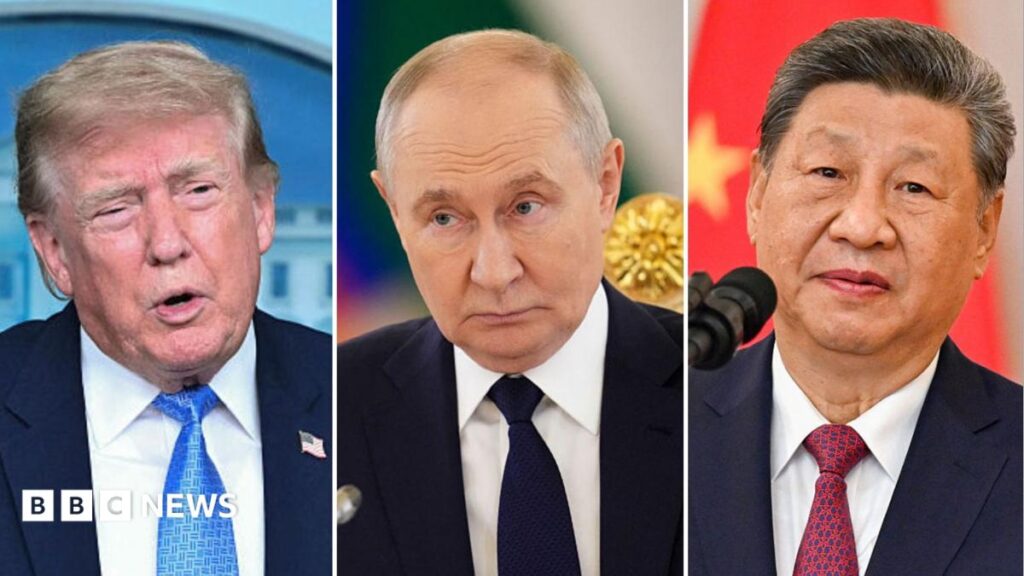
On Thursday, the White House issued a statement confirming that Trump will travel to Beijing next week for a joint meeting with Putin and Xi. The summit is scheduled to take place at the National Centre for the Performing Arts on November 21, 2026, with a formal press conference to follow. Trump is expected to lead the U.S. delegation, while Russian Foreign Minister Sergei Lavrov and Chinese Foreign Minister Wang Yi will represent their respective governments.
According to the White House, Trump’s primary focus will be the reduction of nuclear weapons. He is slated to present a proposal for a phased approach to dismantling strategic arsenals, drawing on his administration’s 2019 nuclear strategy that called for a 50‑percent reduction in deployed nuclear forces. The proposal will be framed as a means of enhancing global stability while preserving deterrence.
Other topics on the agenda are likely to include the verification of disarmament steps, the role of international treaties such as the New START, and the potential for a new framework to address emerging threats like cyber‑warfare and autonomous weapons. The leaders have also signalled an interest in exploring cooperation on climate change and pandemic preparedness, reflecting a broader trend toward multilateral problem‑solving.
Why It Matters
Nuclear disarmament is a cornerstone of global security. The United Nations’ New START Treaty, signed in 2010, has helped limit the number of deployed strategic weapons, but the treaty is set to expire in 2026. A trilateral agreement could provide a fresh foundation for reducing nuclear arsenals, potentially averting a new arms race.
Geopolitically, the meeting signals a rare convergence of the world’s three most powerful nations. The U.S. has historically been the primary advocate for nuclear non‑proliferation, but China’s growing military capabilities and Russia’s nuclear deterrent have complicated the picture. A joint statement could recalibrate the balance of power and reduce the likelihood of miscalculation.
For the global community, the outcome of the talks could influence the trajectory of arms sales, defense budgets, and regional security arrangements. A credible commitment to nuclear reduction would likely encourage other countries to pursue similar measures, potentially easing tensions in hotspots such as the Korean Peninsula and the Middle East.
African Implications
Africa is a key player in the Non‑Proliferation Treaty (NPT), with all 54 African Union members being signatories. The continent has long advocated for a comprehensive approach to nuclear disarmament, citing the disproportionate impact of nuclear weapons on developing nations.
African countries also rely heavily on defense contracts with the United States, Russia, and China. The United States has a strong defense presence in West Africa, Russia has supplied aircraft to Ethiopia, and China has been a major supplier of military equipment to several African states. A shift in global arms policy could alter the dynamics of these relationships.
If the trilateral meeting results in a tangible reduction in nuclear arsenals, it could free up resources for investment in infrastructure, health, and education across Africa. Conversely, any perception of a weakened deterrent might embolden non‑state actors in the region, heightening the need for robust security cooperation among African nations.
Reactions
In the United States, the announcement has been met with cautious optimism. Congressional leaders from both parties have called for transparency and accountability, emphasizing the need for a clear roadmap and verification mechanisms.
Russian officials welcomed the initiative, with President Putin’s spokesperson noting that “the United States is taking a responsible step toward global security.” The Kremlin has expressed confidence that the summit will strengthen Russia’s strategic position by ensuring that nuclear disarmament does not compromise its deterrent.
Chinese officials have framed the meeting as a demonstration of “peaceful cooperation.” Xi’s spokesperson highlighted the importance of multilateralism and stressed that China’s nuclear strategy is based on deterrence and defensive posturing.
Internationally, the United Nations has praised the move, with Secretary‑General António Guterres calling the summit “a positive step toward a safer world.” The African Union’s Secretary‑General, Nkosazana Dlamini‑Zuma, urged that the outcomes of the talks be communicated transparently to African member states.
What’s Next
Following the summit, the three leaders are expected to issue a joint communiqué outlining their commitments. The White House has indicated that the U.S. will seek a formal treaty to codify the agreed-upon reductions, subject to Senate ratification.
If the talks succeed, the next logical step would be to engage the broader international community through the United Nations Security Council. This would involve establishing verification protocols, potentially through an expanded role for the International Atomic Energy Agency (IAEA).
In the longer term, the success of the summit could set a precedent for other disarmament negotiations, such as those involving the United Kingdom, France, and India. It could also influence the trajectory of emerging technologies, prompting a global framework for the governance of autonomous weapons and cyber‑security.
Quick Answers
When will the Trump, Putin, and Xi joint meeting take place?
The summit is scheduled for November 21, 2026, at the National Centre for the Performing Arts in Beijing.
What nuclear topics will be discussed at the summit?
Trump is expected to propose a phased reduction of deployed nuclear weapons, with verification and treaty renewal likely on the agenda.
How could this meeting impact African nations?
A successful nuclear reduction could free up defense budgets for development, while changes in global arms dynamics may affect African security arrangements.
Source: www.bbc.co.uk




💬 Comments 0