Trump vows to pull Rwanda and South Africa out of US‑Africa Trade Deal after sanctions, 2026
Background: The US‑Africa Trade Partnership and its recent turbulence
The United States and the African continent have been negotiating a bilateral trade framework known as the US‑Africa Trade Partnership (UATP) since 2022. The deal was meant to modernise tariff schedules, open new markets for American technology and agricultural products, and give African exporters better access to US supply chains. While the agreement never reached full ratification, several pilot programmes were already underway, especially in the manufacturing and services sectors of Rwanda and South Africa.
Rwanda, a fast‑growing economy that has positioned itself as a logistics hub for East Africa, signed a provisional memorandum of understanding (MoU) with the US in early 2024. South Africa, the continent’s most industrialised market, signed a similar MoU focusing on automotive parts, renewable energy components and digital services. Both countries were counting on the UATP to diversify export destinations beyond China and the EU, whose market shares have been rising steadily.
The US Treasury’s Office of Foreign Assets Control (OFAC) slapped sanctions on Rwanda’s defence ministry in late October 2026, citing alleged violations of the Arms Trade Treaty. The move shocked investors and prompted a wave of speculation about the stability of the broader US‑Africa trade agenda.
What happened: Trump’s announcement and the legal steps being taken
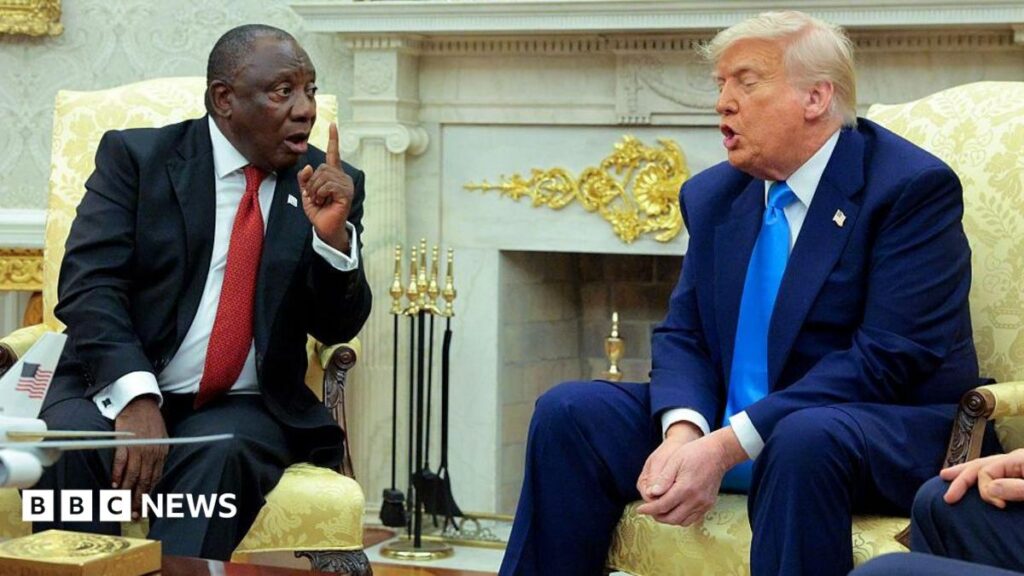
On 2 November 2026, former President Donald Trump, now leading a coalition of Republican lawmakers, announced his intention to withdraw Rwanda and South Africa from the pending UATP. In a televised interview, Trump said the sanctions on Rwanda’s defence ministry “showed that the deal was being abused” and that South Africa’s recent trade disputes with the US over steel tariffs “made it clear the partnership was one‑sided”.
The announcement was quickly followed by a draft executive order filed with the White House Counsel’s office. The document, obtained by local reporters, calls for a formal termination of the MoUs within 60 days, the revocation of any preferential tariff treatment, and the suspension of all joint‑venture projects that had been approved under the UATP framework. The order also instructs the Department of Commerce to halt any ongoing market‑access studies for the two countries.
Sources close to the US State Department say the move is being framed as a “national‑security” decision, even though the sanctions themselves were limited to a specific defence ministry. Critics argue that the timing – just a week after the Rwanda sanctions – suggests a political calculation aimed at pressuring African leaders ahead of the upcoming 2027 African Union summit.
Why it matters: Economic and diplomatic stakes for Africa
For Rwanda, the UATP represented a potential $1.2 billion boost in export revenues over the next five years, according to a 2025 World Bank projection. The loss of preferential US market access could force Kigali to rely more heavily on Chinese financing for its infrastructure projects, a shift that may deepen Beijing’s influence in the Great Lakes region.
South Africa’s automotive sector, which accounts for roughly 15 % of its GDP, had secured a promise of a 10 % tariff reduction on US‑made components under the UATP. The sudden revocation threatens to raise input costs for manufacturers like BMW South Africa and local supplier firms, potentially leading to job cuts in a sector already grappling with high unemployment rates.
Beyond the immediate financial hit, the decision undermines the credibility of the United States as a reliable trade partner. African business councils have warned that investors may view the US as an unpredictable market, prompting a pivot toward the European Union’s new Africa‑Europe Trade Initiative (AETI) and the China‑Africa Cooperation Forum, both of which are actively courting the same industries.
Reactions across the continent and the diaspora
Rwandan President Paul Kagame issued a statement calling the US move “unjustified” and pledged to deepen ties with the East African Community (EAC) and the African Continental Free Trade Area (AfCFTA). Kigali’s Ministry of Trade announced an accelerated rollout of the “Made in Rwanda” certification scheme to boost intra‑African sales, a strategy that mirrors Ethiopia’s recent export‑driven push.
South African President Cyril Ramaphosa convened an emergency cabinet meeting, with the finance minister urging the Treasury to explore a contingency plan that includes a bilateral trade pact with the United Kingdom, which has been offering a 12 % tariff cut on South African wine and minerals. Civil society groups in Johannesburg staged protests, arguing that the US decision jeopardises years of progress toward a more diversified export base.
In the diaspora, Nigerian‑American entrepreneurs in Silicon Valley expressed concern that the US withdrawal could set a precedent for other emerging markets. A poll conducted by the African Diaspora Business Network (ADBN) showed that 68 % of respondents would reconsider investing in US‑based startups that rely on African supply chains, fearing regulatory volatility.
What’s next: Negotiations, alternative alliances and long‑term implications
Analysts predict that the United States will seek a “re‑calibrated” version of the trade deal that excludes defence‑related clauses and adds stricter compliance checks. A bipartisan group of US senators has already drafted a counter‑proposal that would keep tariff benefits for agricultural products while imposing quarterly audits on partner governments.
Meanwhile, Rwanda and South Africa are actively courting other partners. Kigali is finalising a customs‑union agreement with Kenya and Uganda that could create a seamless market of over 100 million consumers. Pretoria is in advanced talks with the United Arab Emirates to launch a joint renewable‑energy fund, aiming to offset any short‑term loss from US tariffs by attracting Gulf investment.
The broader narrative points to a shifting global trade architecture in which African nations are no longer passive recipients but strategic negotiators. The episode underscores the importance of the AfCFTA as a safety net: by deepening intra‑continental trade, African economies can reduce dependence on any single external power and better weather political shocks such as the one initiated by Trump.
Quick Answers
What is the US‑Africa Trade Partnership?
The UATP is a provisional bilateral trade framework launched in 2022 to lower tariffs and boost cooperation between the United States and selected African economies.
How will the withdrawal affect Rwanda’s exports?
Rwanda could lose up to $1.2 billion in projected export revenue, pushing it to seek alternative markets within the East African Community and the AfCFTA.
Is there a chance the deal will be revived?
US lawmakers are drafting a revised proposal that would keep some tariff benefits while tightening compliance, so a partial reinstatement is possible.
Source: www.bbc.co.uk




💬 Comments 0