Turkish police raid gay bars and activists’ homes, detaining 45 in 2026 family-values crackdown
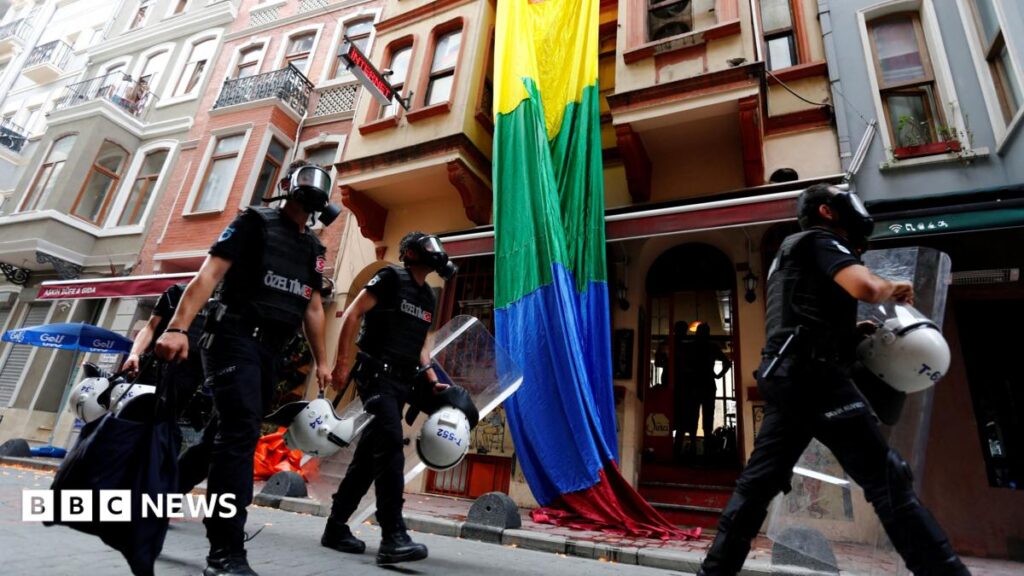
A wave of raids hits Turkey’s LGBTQ+ spaces
On September 12, 2026, police units in Istanbul, Ankara and Izmir entered at least seven nightclubs and private apartments known to host LGBTQ+ gatherings. According to local human‑rights monitors, 45 people were taken into custody, including bar owners, performers and two prominent activists from the organization Queer Istanbul. The operations were carried out under the pretext of enforcing public order, but witnesses say officers brandished banners that read “protect family values” as they moved through the venues.
The detainees were held for varying lengths of time; most were released after questioning, while three individuals—identified as key organizers of a recent pride march—remain in pre‑trial detention. Lawyers for the arrested reported that police seized phones, laptops and printed flyers that promoted LGBTQ+ events, citing them as “evidence of illegal assembly”. The raids have sparked immediate protests outside the police headquarters, with dozens of supporters chanting slogans demanding an end to the harassment.
Human‑rights groups such as Amnesty International and the Turkish Human Rights Platform have condemned the sweeps as part of a broader state‑sanctioned campaign to silence sexual minorities. They note that the timing coincides with the government’s newly launched “Family First” media campaign, which frames LGBTQ+ visibility as a threat to traditional Turkish values.
The ‘family values’ narrative and its political roots
President Recep Tayyip Erdoğan’s Justice and Development Party (AKP) has increasingly leaned on religious‑conservative rhetoric to consolidate its waning electoral base. Since the 2023 local elections, the administration has rolled out a series of bill drafts that tighten restrictions on gender‑affirming care and ban public displays of same‑sex affection in schools. The latest “family values” drive, launched in June 2026, employs state‑run television spots that depict a stereotypical nuclear family while warning that “alternative lifestyles” erode social cohesion.
Legal scholars point out that the current raids are not isolated law‑enforcement actions but the practical enforcement of ambiguous statutes passed in 2024 that criminalise “public indecency” when directed at “non‑heteronormative behavior”. The wording, they argue, gives police wide discretion to target any gathering they deem “morally suspect”. This mirrors earlier crackdowns on feminist groups and Kurdish activists, suggesting a pattern of using loosely defined morality clauses to suppress dissent.
Critics also argue that the campaign serves a geopolitical purpose. By positioning itself as the defender of “traditional family structures”, the AKP hopes to curry favour with conservative allies in the Middle East and to deflect criticism from its handling of the economy and democratic backsliding. The move, according to analysts at the Brookings Institution, is a calculated attempt to re‑brand Turkey as a cultural bulwark against Western liberalism.
Why the crackdown matters beyond Turkey’s borders
Turkey’s LGBTQ+ community has long been a cultural bridge between Europe, the Middle East and Africa, with Istanbul hosting a sizable diaspora of African students, artists and entrepreneurs. Many of those residents rely on queer spaces as safe havens in a city that otherwise offers limited legal protection. The recent raids have therefore sent ripples through African diaspora networks, prompting community groups in Lagos, Nairobi and Johannesburg to issue statements of solidarity and to warn of potential spill‑over effects on African migrants who may now fear police scrutiny.
Tourism is another sector poised to feel the impact. Istanbul’s nightlife, especially its LGBTQ+ clubs, has attracted visitors from across the continent, contributing an estimated €250 million to the city’s economy each year. Travel‑industry reports from the Turkish Ministry of Culture indicate a 12 % drop in bookings from European gay‑tourism markets after the government’s 2025 “family‑first” policy was announced. If the crackdown deepens, the sector could lose additional revenue, undermining a post‑pandemic recovery plan that the government has touted as a priority.
On the diplomatic front, the European Union has repeatedly linked Turkey’s accession talks to its human‑rights record. The European Commission’s latest progress report, released in August 2026, warned that the “systematic targeting of LGBTQ+ individuals” could trigger formal sanctions. While Turkey’s strategic importance in NATO and its role as an energy corridor keep accession talks alive, the raids add another layer of complexity to already strained negotiations.
A pattern of rights erosion in authoritarian regimes
Turkey’s latest moves echo a global wave of conservative backlashes against sexual minorities. In 2024, Hungary passed a law banning the portrayal of LGBTQ+ content to minors, and Poland’s ruling party has pursued “family protection” bills that limit gender‑affirming medical care. Russia continues to enforce its 2013 “gay propaganda” law, while in the Global South, countries such as Uganda (2025) and Nigeria (2022) have reinforced criminal penalties for same‑sex relations.
What distinguishes Turkey is its unique position as a bridge between East and West. The country’s legal system, once praised for its secularism, now allows the executive to wield cultural policy as a tool of repression. This hybrid model—combining authoritarian enforcement with a veneer of democratic institutions—offers a template for other regimes seeking to legitimize crackdowns without overtly abandoning international norms.
Experts at the African Centre for the Study of Human Rights note that the Turkish case provides a cautionary tale for African governments that claim to protect “family values” while simultaneously curbing civil liberties. They argue that the same legal ambiguities used in Turkey could be imported into African legislation, especially in nations where foreign policy is increasingly influenced by conservative Gulf states.
What’s next for Turkey’s LGBTQ+ community and allies
Legal avenues remain open, albeit fraught. The Constitutional Court is expected to hear a petition filed by Queer Istanbul’s legal team, challenging the 2024 “public indecency” provision as unconstitutional. Past rulings have occasionally granted limited relief, but the court’s composition—now dominated by AKP‑aligned judges—makes a decisive victory uncertain.
International NGOs are mobilising resources to document the raids and provide legal aid. The International Lesbian, Gay, Bisexual, Trans and Intersex Association (ILGA) has announced a €1 million emergency fund for Turkish activists, while the European Union’s Fundamental Rights Agency plans to send a monitoring mission in October. Digital activism is also on the rise; encrypted messaging groups are coordinating “safe house” networks for at‑risk individuals, and a crowdsourced map of LGBTQ+ friendly venues has gone viral on Twitter.
For the African diaspora, community organisations are establishing support lines in partnership with Turkish NGOs, offering translation services and emergency accommodation. The Nigerian Association of Students in Turkey (NAST) has already issued a joint statement with Queer Istanbul, urging the Turkish Ministry of Interior to halt the raids and to respect the rights of foreign nationals residing in the country.
Quick Answers
How many people were detained in the Turkish raids on gay bars in September 2026?
Authorities detained 45 individuals, including bar owners, performers and LGBTQ+ activists.
What law does the Turkish government use to justify the raids on LGBTQ+ venues?
Police cite the 2024 public‑indecency statute that criminalises “non‑heteronormative behavior” in public spaces.
How could the raids affect African diaspora members living in Turkey?
African migrants who frequent queer venues may face increased police scrutiny, prompting community groups to offer legal and shelter support.
Source: www.bbc.co.uk




💬 Comments 0