Twelve Women Killed in South Africa’s Eastern Cape Since July 2024 – Why It Sparks National Outcry
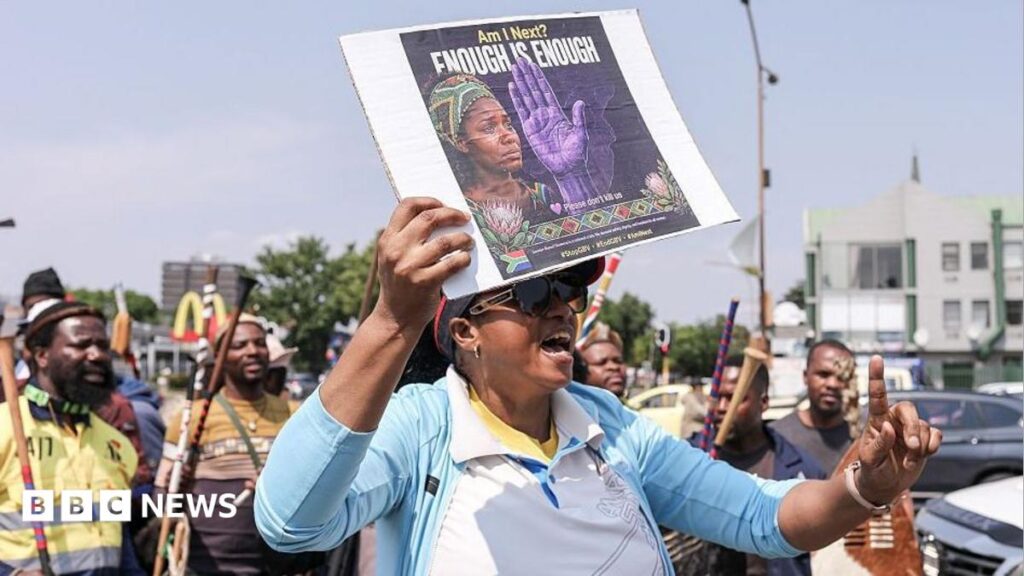
The grim toll: twelve women lost in the Eastern Cape
Since July 2024, twelve women have been found dead in a cluster of rural townships around the town of Mthatha in the Eastern Cape province. The victims, ranging in age from early twenties to late forties, were discovered in homes, abandoned shacks and a few remote fields, each case marked by signs of violent assault. Local police have confirmed that the bodies were identified through family testimony and forensic examinations, but the exact motive behind each killing remains officially undetermined.
The string of murders has sent shockwaves through the tight‑knit communities that depend on informal trade and subsistence farming. Neighbours recount a climate of fear that has forced many women to stay indoors after dark, curtailing their ability to earn income at local markets. Community leaders say the killings have also sparked a surge in internal displacement, with several families moving to neighboring towns in search of safety.
President Cyril Ramaphosa described the killings as "a stain on our national conscience" during a televised address on September 27, urging swift police action and calling for a national dialogue on gender‑based violence. The president’s statement was the first high‑level acknowledgment of the specific cluster of murders, although critics argue that such rhetoric has become routine in the face of South Africa’s broader femicide crisis.
A pattern of gender‑based violence in South Africa
South Africa records one of the highest femicide rates in the world, with the South African Police Service (SAPS) reporting more than 2,500 women murdered in 2023 alone. The Eastern Cape, despite its relatively low population density, consistently registers a murder rate above the national average, a trend linked to chronic poverty, limited policing resources and entrenched patriarchal norms. According to a 2022 study by the Institute for Justice and Reconciliation, gender‑based violence accounts for roughly 40% of all homicide cases in the province.
The current wave of killings mirrors past spikes in the region, such as the 2018 series of murders in the town of Qumbu that prompted a temporary deployment of additional SAPS units. In both instances, the perpetrators were never publicly identified, fueling speculation about organized crime, domestic disputes or ritualistic motives. NGOs like the Women’s Legal Centre note that the lack of clear forensic links often hampers prosecutions, leaving many cases to linger in the courts for years.
International observers have flagged South Africa’s struggle with gender‑based violence as a systemic failure. A 2024 Human Rights Watch report warned that the country’s legal framework, while robust on paper, suffers from implementation gaps, especially in rural districts where police stations are understaffed and community trust is low. The report recommended a coordinated approach that includes survivor‑centred services, community policing and targeted economic empowerment.
Government response and civil society backlash
In response to the recent murders, the national government announced a special task force comprising SAPS officers, forensic experts and representatives from the Department of Women, Youth and Persons with Disabilities. The task force is slated to operate for a three‑month period, with a budget of roughly 150 million rand earmarked for rapid forensic testing and victim support services. Critics, however, argue that the funding is insufficient given the scale of the problem and that past task forces have dissolved without delivering convictions.
Civil society groups have staged nationwide protests, demanding not only arrests but also long‑term structural reforms. The #EndFemicideSouthAfrica movement, which gained momentum after the 2023 murder of a university student in Johannesburg, organized a candlelight vigil in Mthatha on September 25. Organisers called for the establishment of community safety courts that would prioritize swift adjudication of gender‑based crimes.
The diaspora community has also weighed in, with South African expatriates in the United Kingdom and Canada launching online petitions that have gathered over 50,000 signatures. These petitions call for the South African government to adopt the UN’s “Safe Cities” framework, a set of guidelines that emphasise urban planning, lighting, and public transport safety as tools to curb violence against women.
Economic and social ripple effects for local communities
Beyond the immediate loss of life, the murders have begun to erode the informal economy that sustains many households in the Eastern Cape. Market stalls that once thrived on the participation of women traders have seen a 30% decline in foot traffic since August, according to a survey conducted by the Rural Development Agency. The decline threatens food security for families that rely on daily sales of produce and crafts.
Education outcomes are also being affected. Local schools report a noticeable drop in female enrolment for secondary grades, as parents keep daughters at home to avoid potential danger on the commute. The Department of Basic Education has warned that a sustained drop could widen the gender gap in literacy rates, reversing gains made over the past decade.
Health services are under pressure as well. Clinics in the area have reported an increase in mental‑health consultations, particularly for post‑traumatic stress among women who have witnessed the violence. Yet, mental‑health professionals are scarce, with only two psychologists serving a catchment area of over 150,000 residents, according to the Eastern Cape Health Directorate.
What the future holds: policy shifts and international attention
The spotlight on the Eastern Cape murders could catalyse policy change if the government follows through on its commitments. Analysts at the African Development Bank suggest that linking gender‑based violence prevention to broader development funding could unlock an additional $200 million in aid for community‑based safety projects across the continent. South Africa’s upcoming 2027 budget discussions will likely feature proposals to expand the National Strategic Plan on Gender‑Based Violence, which aims to increase police presence in rural hotspots and expand survivor counselling services.
Internationally, the case has attracted media attention from outlets such as the BBC and Al Jazeera, raising the profile of South Africa’s femicide crisis on the world stage. This attention may pressure multinational corporations operating in the region to adopt stricter workplace safety standards for female employees, a demand already voiced by the Global Compact’s Women’s Empowerment Principles.
Ultimately, the resolution of the twelve murders will hinge on a coordinated effort that blends swift law‑enforcement action with long‑term socioeconomic interventions. If the task force can produce at least one conviction within the next six months, it could restore a measure of public confidence. More importantly, sustained investment in education, health and economic opportunity for women could begin to break the cycle of violence that has plagued the Eastern Cape for decades.
Quick Answers
How many women have been killed in South Africa's Eastern Cape since July 2024?
Twelve women have been found dead in the Eastern Cape region between July and September 2024.
What actions has the South African government taken after the murders?
The government announced a three‑month task force with a 150 million‑rand budget for forensic testing and victim support, and pledged to strengthen the national gender‑based violence strategy.
Why does the Eastern Cape have a higher murder rate than other provinces?
Factors include chronic poverty, understaffed police stations, limited access to justice and entrenched patriarchal attitudes that together fuel gender‑based violence.
Source: www.bbc.co.uk




💬 Comments 0