Two killed in domestic violence incident at Berlin-area school, 19‑year‑old arrested
Background: a school on the outskirts of Berlin
The tragedy unfolded at a secondary school in the town of Werder (Havel), a commuter community about 30 kilometres north‑west of Germany’s capital. The school, which serves roughly 1,200 pupils from the surrounding districts, has not previously been linked to violent incidents, making the event stand out in a region where school safety is generally regarded as high. Germany records about 30 school‑related homicides per year, a figure that, while low compared to some other countries, still sparks intense public debate whenever a new case emerges.
Domestic violence, on the other hand, remains a persistent challenge across Europe. In 2023, German courts recorded over 140,000 cases of intimate‑partner violence, and NGOs warn that many incidents go unreported. When such personal conflicts spill into public spaces like schools, they expose gaps in both protective legislation and community awareness, prompting calls for tighter coordination between social services and law‑enforcement.
What happened: the sequence of events
According to the Berlin‑Brandenburg police, the incident began shortly after the school day ended on Monday, August 26. A 19‑year‑old male, identified by authorities as a former student of the school, entered the premises armed with a knife. He confronted a woman he was reportedly in a relationship with, and a physical altercation quickly escalated into a lethal attack that also claimed the life of a second person, believed to be a close family member of the woman.
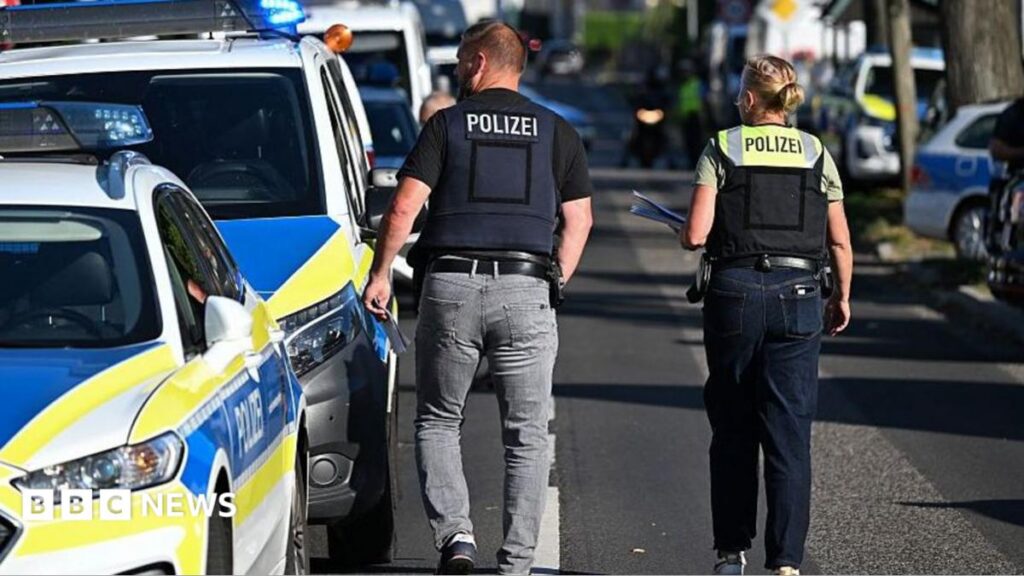
Police arrived on scene within minutes, subdued the suspect, and took him into custody without further injury. The two victims, both in their early thirties, were pronounced dead at a nearby hospital. The suspect remains in pre‑trial detention, and investigators have opened a homicide probe while also reviewing the school’s security protocols.
Why it matters: safety, policing and social services intersect
The incident underscores how domestic disputes can quickly transcend private walls and threaten public safety. While German law already allows for restraining orders and rapid response teams in cases of intimate‑partner violence, critics argue that enforcement is uneven, especially when the perpetrator has a known connection to a public institution such as a school. The tragedy therefore raises questions about whether schools receive timely alerts when a former pupil is subject to protective orders.
From a policing perspective, the swift arrest demonstrates the efficiency of the regional response unit, yet it also highlights the need for better intelligence sharing. A 2022 study by the German Institute for Criminology found that 12 % of violent crimes in public spaces were linked to prior domestic‑violence reports that had not been adequately flagged to local authorities. This case could become a catalyst for revisiting data‑exchange mechanisms between courts, social workers and school administrations.
A broader pattern: school‑related violence and the African diaspora in Europe
While the victims in this case were not identified as members of the African diaspora, the incident arrives at a time when several European schools with sizable immigrant populations have reported heightened anxiety over safety. In France and the United Kingdom, recent surveys show that pupils of African descent feel disproportionately vulnerable to both bullying and external threats, a sentiment echoed by community groups in Germany. According to the German Federal Anti‑Discrimination Agency, schools in Berlin’s outskirts host an estimated 15 % of students with African or Afro‑German backgrounds.
The broader trend of domestic‑violence spill‑over into educational settings has prompted NGOs such as the African Women’s Development Fund in Europe to call for culturally sensitive support services. They argue that many immigrant families face language barriers and limited awareness of protective legislation, which can delay reporting and exacerbate risk. If the suspect in this case had ties to an immigrant community, the incident could spur targeted outreach programs that bridge those gaps.
Reactions: officials, NGOs and the local community
Berlin’s Senator for Education, Sandra Bussmann, expressed “deep sorrow” and pledged an immediate review of security measures at all schools in the state. In a press conference, she announced a temporary increase in on‑site security personnel and a rapid‑response hotline for teachers who suspect a domestic‑violence threat linked to former students.
Local NGOs, including the Women’s Shelter Berlin and the migrant‑rights group ProAsyl, called for a “holistic approach” that couples law‑enforcement action with counseling and safe‑housing options for victims. A spokesperson for the German Association for Victims of Domestic Violence noted that the case could serve as a test of Germany’s newly introduced 2024 “Protection‑First” law, which aims to prioritize victim safety over procedural delays.
What’s next: policy implications and prevention strategies
The investigation is still ongoing, but several policy threads are already emerging. First, the state may adopt a mandatory notification system that alerts school administrators when a former pupil is subject to a restraining order, a measure already in place in some German federal states. Second, experts suggest integrating domestic‑violence risk assessments into school safety drills, ensuring that teachers know how to respond when a personal dispute becomes a public threat.
For the African and Afro‑German student body, the incident could act as a catalyst for stronger community networks. Student associations are reportedly planning town‑hall meetings to discuss safety concerns, and diaspora media outlets are expected to amplify resources on legal rights and support hotlines in multiple languages. The hope is that a coordinated response will not only bring justice for the victims but also prevent similar tragedies from reaching classrooms across Europe.
Quick Answers
Who was arrested in the Berlin‑area school shooting?
A 19‑year‑old male, identified as a former student of the school, was taken into custody by police.
How many people died in the domestic‑violence incident near Berlin?
Two adults were killed; both were in their early thirties.
What steps is Berlin planning to improve school safety after the attack?
The state will review security protocols, increase on‑site personnel, and consider a notification system for restraining orders involving former pupils.
Source: www.bbc.co.uk




💬 Comments 0