Two sailors missing after El Gaia tanker attack in Strait of Hormuz 2026: implications for African oil trade
Strategic backdrop: why the Strait of Hormuz matters to Africa
The Strait of Hormuz, a 21‑mile waterway linking the Persian Gulf with the Gulf of Oman, handles roughly 20 percent of the world’s daily oil flow. For African exporters, especially Nigeria, Angola and Libya, the passage is a vital conduit for getting crude to Asian refineries, where demand and prices are highest. Any disruption reverberates through the continent’s balance‑of‑payments sheets, because oil earnings fund everything from infrastructure projects to social programmes.
Since early 2024, the strait has seen a spike in hostile incidents – from missile strikes on merchant vessels to alleged drone attacks – as Iran and its regional allies test the limits of U.S. naval deterrence. Shipping firms have responded by rerouting ships around the Cape of Good Hope, a detour that adds up to 10,000 kilometres and can increase freight costs by 30‑40 percent. Those extra costs are ultimately passed on to African oil producers, eroding profit margins that are already squeezed by volatile global prices.
African maritime stakeholders have long warned that a sustained security crisis could push insurers to raise premiums on vessels that transit the Gulf. In 2025, the International Group of P&I Clubs raised the war‑risk surcharge for Hormuz‑bound ships from 0.5 percent to 1.2 percent of cargo value, a hike that translates into millions of dollars for each tanker load. The latest attack on the El Gaia therefore threatens to intensify a cost spiral that could make African crude less competitive in the global market.
The El Gaia incident: conflicting accounts and missing crew
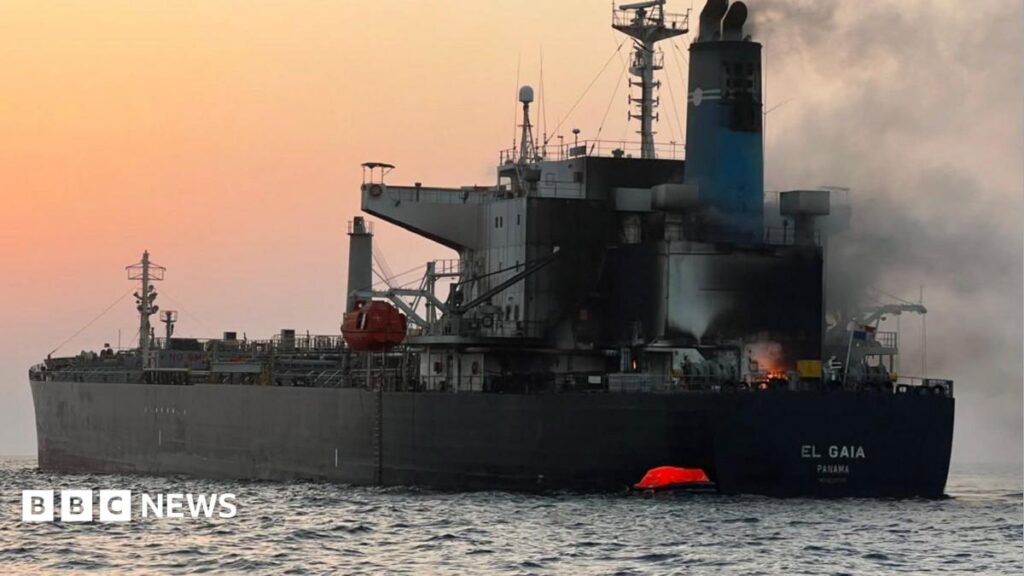
On 14 September 2026, the Liberian‑flagged oil tanker El Gaia was transiting the strait with a cargo of 2 million barrels of light crude destined for a refinery in South Korea. According to Iranian officials, the vessel struck a series of naval mines that exploded, igniting a fire that forced the crew to abandon ship. Iran’s Ministry of Foreign Affairs released a statement saying the mines were “unexploded ordnance left by hostile forces” and that the attack was a “defensive response to aggression.”
U.S. Central Command, however, offered a different narrative. In a briefing, a spokesperson said the tanker was first hit by a surface‑to‑air missile, followed seconds later by a small, loitering drone that delivered a secondary strike. The combined damage, they said, caused a hull breach and a rapid fire outbreak. Both accounts agree that the vessel’s crew was forced to evacuate, but they diverge on the weapon used, which matters for how insurers and governments classify the event under war‑risk clauses.
Two Filipino seafarers were reported missing after the chaotic evacuation, while the remaining 18 crew members were rescued by a nearby U.S. Navy destroyer. The missing sailors have been listed as “unaccounted for” by the Philippine Maritime Industry Authority, prompting concerns among diaspora communities in the United States and the United Arab Emirates, where many Filipino mariners work.
African oil markets feel the heat: price spikes and routing dilemmas
Within hours of the El Gaia attack, Brent crude jumped 1.8 percent, while West African light sweet crude benchmarks such as the Nigeria‑Congo (NC) spread widened by roughly 0.6 dollars per barrel. Traders cited the heightened risk of supply interruptions through Hormuz as the primary driver. For Nigeria, which exported about 1.5 million barrels per day in 2025, a sustained price premium could boost revenue, but only if the extra earnings offset higher shipping costs and insurance fees.
Shipping companies that service Nigerian crude have already begun to factor the incident into their operational models. A senior analyst at Nigerian National Petroleum Corporation (NNPC) told reporters that the company is reviewing “contingency routes” and exploring partnerships with South African port operators to off‑load some cargoes for onward shipment via the Cape. While the longer route adds roughly $2‑$3 per barrel in freight, it eliminates the war‑risk surcharge that insurers are now threatening to double.
The diaspora angle emerges in the form of higher gasoline prices in African cities that import refined products from Asia. In Lagos, fuel stations reported a 4‑percent price rise the day after the attack, a spike that directly impacts commuters and small‑business owners. Diaspora remittance flows, which often help families cope with rising living costs, may see a modest dip if higher energy bills squeeze household budgets across the continent.
Policy and security responses: what African states can do
In the wake of the El Gaia episode, the African Union’s Committee on Trade, Customs and Immigration convened an emergency session to discuss maritime security cooperation. Delegates from Kenya, Nigeria, Ghana and South Africa called for a joint task force that could share intelligence with the International Maritime Organization and coordinate naval patrols in high‑risk corridors. Such a framework mirrors the EU’s “Operation Sophia” anti‑piracy mission, but would need funding mechanisms that African states can sustain.
Nigeria’s Ministry of Defence announced plans to increase naval patrols in the Gulf of Guinea, arguing that a stronger presence in one hotspot can deter adversaries elsewhere. While the Gulf of Guinea faces its own piracy challenges, a coordinated African naval response could signal to Tehran and its allies that attacks on commercial shipping will have broader regional repercussions, potentially deterring future missile or drone strikes.
On the diplomatic front, the African Export‑Import Bank (Afreximbank) is reviewing its financing terms for oil exporters, considering a temporary waiver of war‑risk premiums for projects that can prove they are using alternative routes. If approved, the measure could soften the fiscal blow for countries like Angola and Nigeria, buying them time to adapt logistics while global tensions settle.
Looking ahead: long‑term ramifications for African energy strategy
If the strait’s volatility persists, African oil producers may accelerate diversification away from crude exports toward value‑added petrochemicals and renewable energy. Nigeria’s recent “Nigerian Energy Transition Roadmap” already earmarks $12 billion for solar and gas‑to‑power projects, partly to reduce reliance on volatile export routes. A sustained security crisis could fast‑track those investments, reshaping the continent’s energy export profile over the next decade.
For the diaspora, the incident underscores the precarious nature of maritime work. Filipino, Indian and West African seafarers have long formed the backbone of the global shipping industry, and each new attack raises the spectre of higher wages, stricter safety protocols, and potentially fewer job openings if ship owners cut back on routes deemed too risky. Community organisations in the U.S. and UAE are already lobbying for better consular support for missing crew members, a demand that may gain traction as similar incidents multiply.
Ultimately, the El Gaia attack is a flashpoint that brings together geopolitics, energy economics and human stories. African governments, businesses and diaspora groups will need to monitor the evolving security environment closely, adapt logistics strategies, and advocate for stronger international safeguards if the strait is to remain a viable artery for the continent’s oil wealth.
Quick Answers
What caused the El Gaia tanker to catch fire in the Strait of Hormuz?
Iran says the vessel hit naval mines, while the U.S. says it was struck first by a missile and then by a drone.
How does the attack affect African oil exporters?
It pushes up shipping costs, insurance premiums and fuel prices, which can reduce profit margins for countries like Nigeria and Angola.
What steps are African governments taking after the incident?
They are discussing joint maritime security initiatives, increasing naval patrols, and considering financial measures to offset higher war‑risk fees.
Source: www.bbc.co.uk


💬 Comments 0