UK Sanctions on Israeli Settlement Goods Threaten West Bank Date Farmers – Implications 2026
Background: London’s New Trade Measure
In March 2026 the United Kingdom announced a ban on the import of goods produced in Israeli settlements in the occupied West Bank, a move that aligns with a growing international push to pressure settlement expansion. The policy targets a range of products, from agricultural produce to manufactured items, and is enforced through customs checks and supplier certifications.
The decision follows a series of European Union debates and a United Nations resolution urging member states to consider economic tools against settlement activity. While the UK government frames the ban as a moral stance supporting Palestinian self‑determination, Israeli officials have labelled it a “big mistake” that could destabilise the region’s fragile economy.
The sanctions are not a blanket boycott of all Israeli exports; they specifically focus on items that can be traced to settlements beyond the 1967 borders. Companies must now provide proof of origin, and any failure to do so results in denial of entry into the UK market, which accounts for roughly £1 billion in annual trade with Israel and the occupied territories.
Critics argue that the policy may have unintended consequences for Palestinians who work alongside settlers, especially in mixed‑ownership farms and cooperatives. Human rights groups warn that the ban could exacerbate poverty for those already living under occupation, while some analysts see it as a strategic lever to influence settlement policy.
The Date Farms of the West Bank: An Economic Lifeline
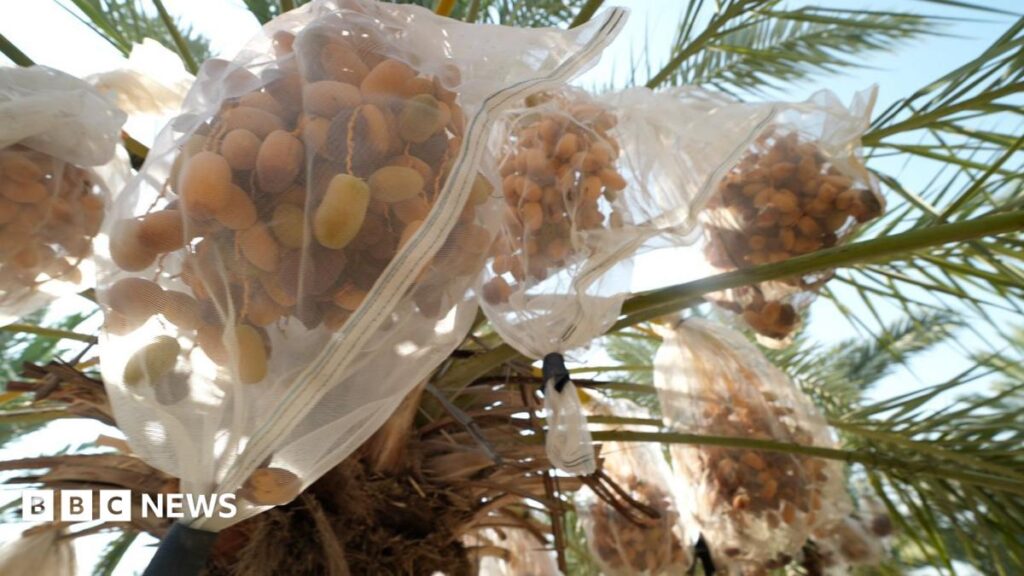
Date palms have been cultivated in the Jordan Valley for centuries, and the West Bank’s date industry accounts for about 30 % of Israel’s total date production. The fruit is a staple in both Palestinian and Israeli diets and a key export to Gulf markets, where demand spikes during Ramadan.
Many of the most productive orchards sit on land designated as settlement territory, where Israeli settlers own the farms but employ a largely Palestinian workforce. For the workers, a single harvest can provide a year’s worth of income, funding schooling, medical care, and community projects.
The sector also supports ancillary businesses—packaging, logistics, and export agencies—that are often jointly owned by Israelis and Palestinians. Disruption to the supply chain therefore reverberates beyond the fields, affecting a network of small‑scale entrepreneurs across the region.
According to the Palestinian Ministry of Agriculture, date exports generated roughly $85 million in 2025, with the United Kingdom representing a growing niche market for premium organic dates. The new sanctions threaten to cut off that channel, potentially leaving farmers without a reliable outlet for their produce.
Immediate Impact on Farmers and Settlers
Within weeks of the announcement, date growers in settlements such as Ma’ale Adumim reported a slowdown in shipments to the UK, as customs officers began requesting detailed provenance documents. Some Israeli exporters have already rerouted their cargoes through alternative European ports to avoid delays.
Palestinian laborers, who earn an average of $7 per hour during the harvest, are facing the prospect of reduced wages if the UK market dries up. Unions representing farmworkers have called for the UK government to provide a grace period or an exemption for jointly‑owned farms that employ Palestinian staff.
Israeli settlement councils argue that the sanctions will force them to sell to lower‑price buyers in neighboring Jordan, potentially undermining the premium branding that has been cultivated over the past decade. They fear that a price drop could trigger a cascade of layoffs, affecting both settlers and their Palestinian employees.
Humanitarian NGOs in the West Bank warn that the loss of a key export market could push vulnerable families into food insecurity, especially as the region grapples with water scarcity and limited access to agricultural inputs. They are urging donor agencies to fund emergency assistance for affected workers.
Why It Matters Beyond the Holy Land: A Lens for Africa and the Diaspora
The UK’s move is part of a broader trend of using trade policy to address geopolitical conflicts, a tactic increasingly visible in Africa where sanctions are employed against regimes in Sudan, Ethiopia, and the Democratic Republic of Congo. African investors watch these precedents closely, as they shape the risk calculus for doing business in contested territories.
Several African countries—most notably Sudan, Chad, and Kenya—have recently normalised diplomatic ties with Israel, hoping to attract technology and agricultural investment. The UK sanctions could complicate those partnerships, prompting African ministries of trade to reassess the provenance of Israeli‑origin inputs in their own supply chains.
For the African diaspora in Europe, the ban fuels activism on campus and in community organisations that have long championed Palestinian rights. Student groups in the UK, many led by students of African descent, are using the sanctions as a rallying point to demand similar measures against companies operating in other conflict zones, such as the Niger Delta oil fields.
On the commercial front, European firms that source dates for luxury food brands—some of which are owned by African entrepreneurs—must now navigate additional compliance steps. This could delay product launches and increase costs, prompting some to look for alternative sources in North Africa, where date production is also robust.
What’s Next: Diplomatic, Economic, and Grassroots Responses
The Israeli government has signalled that it may pursue a legal challenge at the World Trade Organization, arguing that the UK ban violates WTO rules on non‑discriminatory trade. A protracted dispute could keep the market in limbo for months, further destabilising farm incomes.
Palestinian authorities are seeking to diversify export routes, exploring direct shipments to Gulf states via Jordanian ports. If successful, this could mitigate the impact of the UK ban, though it would require new certification processes and investment in cold‑chain logistics.
Civil society on both sides of the fence is organising joint workshops to map the supply chain and identify points where cooperation can continue despite political pressure. These efforts aim to protect the livelihoods of Palestinian workers while maintaining the economic viability of the date sector.
In the longer term, the sanctions may prompt a re‑evaluation of how settlement‑linked agriculture is integrated into the global market. Analysts suggest that if more Western nations adopt similar policies, the cumulative effect could force a restructuring of the West Bank’s agribusiness model, potentially opening space for Palestinian‑owned farms to capture a larger share of premium export markets.
Quick Answers
What does the UK sanction on Israeli settlement goods cover?
It bans the import of any product that can be proven to originate from Israeli settlements in the occupied West Bank, including dates, olives, and certain manufactured items.
How will the sanctions affect West Bank date farmers?
The ban threatens to cut off a key export market, reducing income for both Israeli settlement owners and the Palestinian workers who harvest and process the dates.
Why should African investors care about the UK sanctions on Israeli settlement goods?
The policy sets a precedent for using trade measures to address conflicts, influencing how African nations and diaspora businesses assess risk when dealing with products linked to contested territories.
Source: www.bbc.co.uk




💬 Comments 0