US Confirms Weapons in Earth Orbit 2026, Sparking Fears of a New Space Arms Race
Background: From Cold War Satellites to Weaponised Orbits
The militarisation of space began in earnest during the Cold War, when the United States and the Soviet Union launched reconnaissance satellites to keep tabs on each other's missile deployments. Over the decades, those early cameras gave way to a sophisticated constellation of navigation, communications and early‑warning assets that now underpin everything from banking to aviation.
In the past ten years, the emergence of the US Space Force, China’s growing anti‑satellite (ASAT) capabilities and private‑sector launch services have transformed low‑Earth orbit (LEO) into a contested domain. Nations are no longer content with merely protecting their satellites; they are now developing systems that can disable, destroy or even weaponise them, prompting a new strategic calculus among global powers.
Against this backdrop, the US Department of Defense’s recent admission that it has placed kinetic and non‑kinetic weapons on operational satellites marks the first official acknowledgement of a policy that has long been hinted at in classified briefings and think‑tank reports.
The US Confirmation: What the Announcement Actually Said
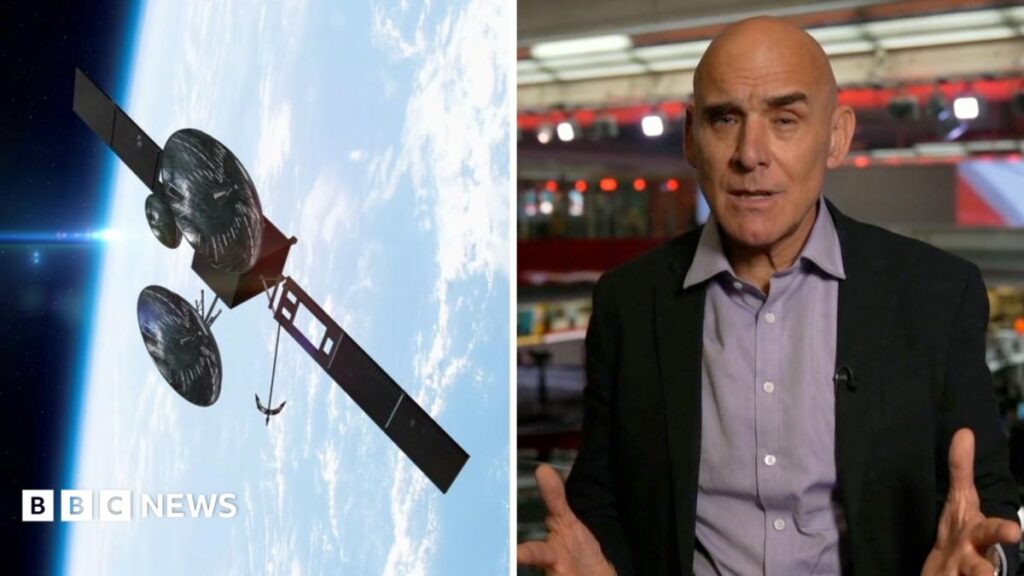
In a briefing held on 12 September 2026, senior officials from the Pentagon’s Space Command confirmed that a fleet of “defensive payloads” has been integrated onto several orbiting platforms. The payloads include directed‑energy modules capable of disabling hostile satellites, as well as small kinetic interceptors designed to grapple or de‑orbit threatening objects.
The officials stressed that the weapons are intended solely for “protective” purposes – to shield US and allied space assets from potential attacks by adversaries such as China or Russia. They also noted that the technology is still in a testing phase and that any deployment would follow a strict chain of command, mirroring the protocols used for conventional missile defence.
While the US narrative frames the move as a deterrent, analysts from the Secure World Foundation warned that the mere existence of such tools could lower the threshold for conflict in space, making accidental engagements more likely.
Why It Matters Globally: Risks, Economics and International Law
The presence of weapons in orbit raises the spectre of a cascade effect: if one nation uses a kinetic interceptor, the resulting debris could trigger a chain reaction of collisions, a scenario known as the Kessler Syndrome. Such an event would jeopardise the entire satellite ecosystem, crippling services that billions rely on for navigation, weather forecasting and broadband connectivity.
Economically, the stakes are enormous. The global satellite industry is projected to generate over $500 billion in revenue by 2030, with a sizable share of that coming from African markets that depend on satellite‑based internet and tele‑medicine. A space‑based conflict could disrupt supply chains, increase insurance premiums for launch operators, and force commercial players to invest heavily in debris‑removal technologies.
Legally, the United Nations’ Outer Space Treaty of 1967 prohibits the placement of weapons of mass destruction in orbit but remains vague on conventional arms. The US confirmation is likely to reignite calls for a new, binding treaty that clarifies what constitutes an “offensive” weapon in space, a debate that has stalled for years despite repeated UN Committee on the Peaceful Uses of Outer Space (COPUOS) meetings.
African Stakes: How the Space Arms Race Touches the Continent
African nations are already heavily reliant on satellite services for everything from mobile banking to disaster monitoring. Nigeria’s NigComSat‑1R, Kenya’s Marsabit‑1, and South Africa’s SumbandilaSat‑2 illustrate a growing domestic capability to launch and operate satellites for national development. An escalation in space militarisation could threaten these platforms, either through direct targeting or collateral damage from debris.
At the same time, the race is opening new commercial opportunities. Companies like SpaceX and Arianespace are increasingly offering rideshare launches that African governments can use to cheaply insert their own payloads. If the US and China continue to pour resources into defensive space tech, the cost of launch services could rise, squeezing out smaller African players unless they secure strategic partnerships or regional launch sites.
Furthermore, the African diaspora in the tech sector is watching the developments closely. Start‑ups in Nairobi, Lagos and Accra are building ground‑segment software, satellite‑based IoT solutions and Earth‑observation analytics. A destabilised orbital environment would force these innovators to redesign systems for higher resilience, potentially spurring a wave of home‑grown anti‑debris technologies that could position Africa as a leader in sustainable space operations.
What Comes Next: Diplomacy, Deterrence and the Search for a Stable Orbit
In the short term, the US is expected to roll out its defensive payloads on a phased schedule, beginning with the most critical navigation satellites used by NATO allies. Parallel to this, China is likely to accelerate its own anti‑satellite tests, a pattern observed after the US announced its own capabilities in 2024.
Diplomatically, several African Union (AU) members have called for an emergency session of COPUOS to discuss “peaceful use of outer space” and to draft a continent‑wide position paper. If the AU can present a unified stance, it may influence larger powers to adopt stricter norms, especially given the continent’s growing share of the global satellite market.
For the long term, experts argue that the only viable solution is a combination of technical safeguards—such as on‑orbit servicing robots that can repair or de‑orbit defunct satellites—and a robust, enforceable international treaty. Until such mechanisms are in place, the risk of an accidental or intentional clash remains high, and the ripple effects will be felt far beyond the United States and its traditional rivals.
Quick Answers
What weapons has the US placed in Earth orbit?
The US confirmed it has installed directed‑energy modules and small kinetic interceptors on operational satellites for defensive purposes.
How could a space arms race affect African satellite services?
Increased militarisation raises the risk of debris and intentional attacks, which could disrupt navigation, broadband and Earth‑observation services that many African economies rely on.
Is there an international treaty that bans weapons in space?
The 1967 Outer Space Treaty bans weapons of mass destruction in orbit but does not clearly prohibit conventional weapons, leaving a legal gap that many nations now want to close.
Source: www.bbc.co.uk




💬 Comments 0