US immigration officials defend ICE agents who shot Oscar Belgal in car with child, 2026
Background: ICE’s growing use of force in immigration stops
In recent years, U.S. Immigration and Customs Enforcement (ICE) has faced mounting criticism for the frequency and intensity of its enforcement actions. While the agency’s mandate is to enforce immigration laws, a series of high‑profile incidents involving firearms and lethal force have sparked debate about the appropriate level of force in civil immigration contexts. Critics argue that ICE’s tactics increasingly resemble those of criminal policing rather than immigration administration, a trend that has been documented by watchdog groups such as the ACLU and Human Rights Watch.
The controversy intensified after a 2024 federal court ruling found that ICE’s use of armed agents in routine raids violated the Fourth Amendment in several cases. Nevertheless, ICE has continued to deploy armed officers, especially in “high‑risk” operations that involve suspected criminal activity or undocumented migrants believed to be fleeing across borders. This backdrop frames the October 2026 shooting of Oscar Belgal, a 28‑year‑old man detained after an encounter that also involved a child in the same vehicle.
The Incident: Oscar Belgal shot while detained with a child
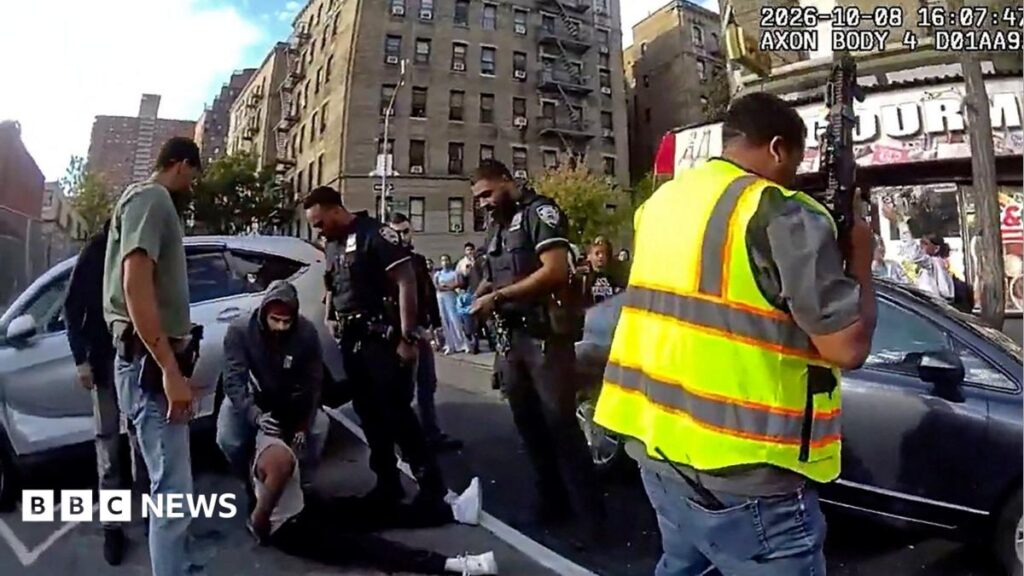
On October 4, 2026, ICE agents intercepted a vehicle in the Bronx that contained Oscar Belgal and a six‑year‑old girl, identified by authorities as his niece. According to the agency’s after‑action report, agents claimed the driver failed to comply with commands and reached for an object that was later determined to be a cellphone. In the ensuing moments, an agent discharged his weapon, striking Belgal in the torso. The child was unharmed, and Belgal survived the wound after emergency surgery.
ICE officials later announced that Belgal was transferred to a detention center outside New York City, where he remains under medical supervision. The agency’s spokesperson, Deputy Assistant Secretary for Enforcement James Whitaker, defended the shooting as “a necessary use of force in a rapidly deteriorating situation,” emphasizing that agents had followed protocol and that the child’s safety was the priority.
Official Defense: ICE argues the shooting was justified
Whitaker’s statement, released on October 6, cited the agency’s internal guidelines, which permit lethal force when an officer believes there is an imminent threat to life. He noted that “the suspect’s sudden movement toward the agent’s firearm created a credible danger, leaving the officer with no viable alternative.” The agency also pointed to body‑camera footage that, according to ICE, shows Belgal reaching for the phone after being ordered to stay still.
Human‑rights advocates, however, have challenged the narrative. The New York Civil Liberties Union filed a motion demanding the release of the full video, arguing that the agency’s selective excerpts may conceal mitigating factors, such as the possibility that Belgal’s hand was not actually grasping a weapon. The ACLU’s immigration division called the incident “another example of an over‑militarized approach that endangers vulnerable families.”
Why It Matters for African Migrants and the Diaspora
Although Belgal is of Dominican descent, the case reverberates across the African immigrant community in the United States, especially among Nigerians, Ghanaians, and Somalis who frequently travel in extended family groups. Many African migrants rely on informal networks that involve shared rides and family‑linked transport, a practice that can put multiple relatives in the same vehicle during an ICE stop. The presence of a child in the same car as Belgal highlights a scenario that many African families fear: the potential for a single enforcement action to jeopardize an entire household.
Diaspora organizations such as the Nigerian American Community Development Coalition (NACDC) have issued statements warning that the incident could deter undocumented African migrants from seeking legal pathways, pushing them further into the shadows. According to a recent survey by the African Development Institute, 42 % of undocumented Africans in the U.S. say they are now more likely to avoid public spaces where ICE presence is reported, a trend that could affect labor markets that depend on African workers in sectors like healthcare, technology, and construction.
Legal and Policy Fallout: Courts and Congress weigh in
The shooting has already prompted a flurry of legal motions. A federal judge in Manhattan scheduled a hearing for November 2026 to review the admissibility of the body‑camera footage and to assess whether ICE’s use‑of‑force policy complies with the Supreme Court’s 2022 decision in *Carpenter v. United States*, which tightened standards for warrantless searches. Legal scholars predict that the case could become a testbed for broader challenges to ICE’s authority to use firearms in civil immigration contexts.
On Capitol Hill, Representative Rosa DeLauro (D‑CT) introduced a bipartisan amendment to the 2027 immigration appropriations bill that would require ICE to submit quarterly reports on all incidents involving lethal force. The amendment cites the Belgal shooting as a catalyst for greater transparency. While Republican leaders have dismissed the measure as “politically motivated,” the amendment has gained traction among lawmakers representing districts with large immigrant populations, including several in New York and New Jersey.
What Comes Next: Potential reforms and community responses
If courts find ICE’s actions unlawful, the agency could be forced to revise its training modules and possibly limit the deployment of armed agents in routine immigration stops. Some policy experts, like immigration law professor Miriam R. Kearney of Georgetown University, argue that the incident underscores the need for a “clear demarcation between criminal enforcement and civil immigration duties,” recommending a shift toward unarmed civil‑process agents for most apprehensions.
Meanwhile, community groups are mobilizing. In Brooklyn’s Crown Heights neighborhood, a coalition of African and Latino churches organized a “Stand for Safety” rally on October 12, drawing over 2,000 participants demanding accountability and an end to armed raids. The rally’s organizers plan to file a class‑action lawsuit on behalf of Belgal and others who have faced similar forceful encounters. Whether these grassroots actions will translate into legislative change remains uncertain, but they signal a growing willingness among immigrant communities to confront ICE’s tactics head‑on.
Quick Answers
Why did ICE agents shoot Oscar Belgal in 2026?
ICE says the agents fired because they believed Belgal was reaching for a weapon, creating an imminent threat to officer safety.
How does the shooting affect African immigrants in the United States?
The incident heightens fear among African migrants who travel with family members, potentially driving them away from public spaces and formal employment.
What legal actions are being taken after the shooting?
A federal judge will review ICE’s use‑of‑force policy, and Congress is considering an amendment for greater transparency on lethal‑force incidents.
Source: www.bbc.co.uk




💬 Comments 0