US Strikes Iranian Rocket Launchers on Larak Island, First Attack Since July 2026
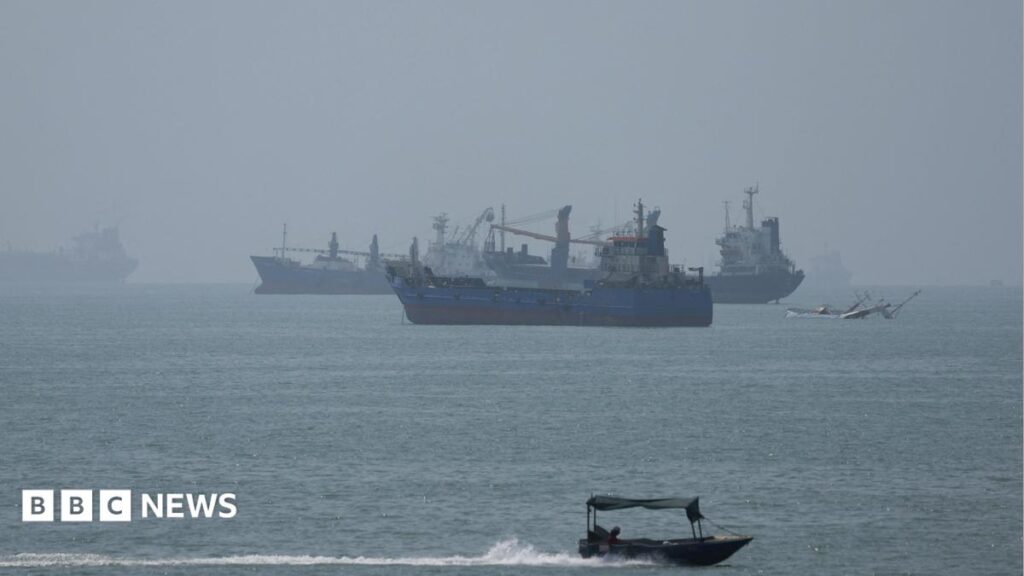
Background: US‑Iran tensions and the strategic value of the Strait of Hormuz
The United States and Iran have been locked in a shadow war for more than two decades, punctuated by occasional direct strikes on Iranian facilities in Iraq, Syria and, more recently, the Persian Gulf. After the August 2023 drone attack on a U.S. destroyer, Washington adopted a policy of “strategic ambiguity,” warning Tehran that any further escalation would be met with proportional force. This stance hardened after the July 2026 missile launch from Iranian‑controlled islands that the U.S. described as a rehearsal for a larger anti‑ship campaign.
Larak Island, part of the strategically vital Hormuz archipelago, sits just 40 kilometres from the narrowest point of the Strait of Hormuz – a waterway through which roughly 20 % of global oil supplies flow. Control of the island’s radar and missile batteries gives a state the ability to threaten commercial shipping, a fact that has made it a focal point for both Iranian defensive doctrine and U.S. containment efforts.
The strike: what happened on Larak Island
In the early hours of 28 August 2026, U.S. Navy aircraft launched a precision strike against two surface‑to‑air missile launchers that Iran had positioned on Larak Island. The operation, carried out by F‑35s and supported by naval gunfire, targeted the launchers’ command modules and the associated radar dome. According to the Pentagon, the strike achieved “mission‑kill” status, disabling the batteries without causing collateral damage to the island’s infrastructure.
Iranian state media, however, reported that the attack killed several civilians who were reportedly working on a nearby construction project. The Iranian foreign ministry condemned the action as a violation of international law and warned of “swift and decisive retaliation.” While independent verification of civilian casualties remains pending, the claim adds a humanitarian dimension to an already volatile military encounter.
Why it matters for African economies and the diaspora
The immediate fallout of the Larak strike reverberates far beyond the Gulf. Africa is a net exporter of crude oil, and many of the continent’s leading producers – Nigeria, Angola, Libya and the Republic of Congo – rely on the Strait of Hormuz to ship their product to Asian refineries. Any perceived threat to the waterway can trigger spikes in freight rates and insurance premiums, directly inflating the cost of African oil on the global market.
For the African diaspora, especially those invested in energy‑related stocks or working in shipping logistics, the heightened risk translates into market volatility. In the week following the strike, the West African crude benchmark (WACM) rose by 2.3 %, while maritime insurers announced a temporary surcharge of $150 per day for vessels transiting the Strait. These price shocks can erode profit margins for African exporters already grappling with currency depreciation and domestic fiscal pressures.
Reactions across the continent and among African diaspora groups
Nigeria’s Ministry of Foreign Affairs issued a measured statement, urging “restraint from all parties” and emphasizing the need for uninterrupted oil flow through the Strait. The statement, released in Abuja, highlighted that any disruption would hurt not only Nigeria’s revenue but also the broader African economies that depend on oil earnings to fund development projects.
In South Africa, the African National Congress’s diaspora wing organized a virtual town‑hall on 30 August, where community leaders expressed concern that U.S. actions could draw African nations into a larger geopolitical tug‑of‑war. A spokesperson for the South African Chamber of Shipping warned that “increased militarisation of a key maritime chokepoint raises insurance costs for our container fleets, which already operate on thin margins.”
What’s next: possible escalation and diplomatic pathways
Analysts at the International Crisis Group say the Larak strike is likely to be the first of a series of calibrated U.S. operations aimed at degrading Iran’s anti‑ship capability. They argue that Washington will continue to target mobile launchers while avoiding civilian infrastructure to limit international backlash. However, Iranian officials have hinted at a “retaliatory response” that could involve asymmetric attacks on commercial vessels, a scenario that would directly endanger African tankers and container ships.
Diplomatically, the United Nations has called for an emergency meeting of the Security Council to discuss “freedom of navigation” in the Gulf. African Union envoys are expected to push for a resolution that condemns any use of force that threatens civilian shipping, while simultaneously urging the United States and Iran to engage in back‑channel talks. For African exporters, the priority will be to secure alternative routing options – such as the Cape of Good Hope – even though that adds weeks to delivery times and raises fuel costs.
Quick Answers
Did the US strike on Larak Island cause civilian deaths?
Iranian officials claim civilians were killed, but independent verification is still pending.
How could the Larak Island attack affect African oil exports?
Any threat to the Strait of Hormuz can raise freight and insurance costs, making African crude more expensive to ship.
What are African governments saying about the US‑Iran tension?
Countries like Nigeria have urged restraint, warning that disruptions would hurt African economies dependent on oil revenues.
Source: www.bbc.co.uk


💬 Comments 0