Why Did Wike Explain Why Amaechi Had No Chance At The ADC Primary? The Political Battle Behind Atiku’s Victory
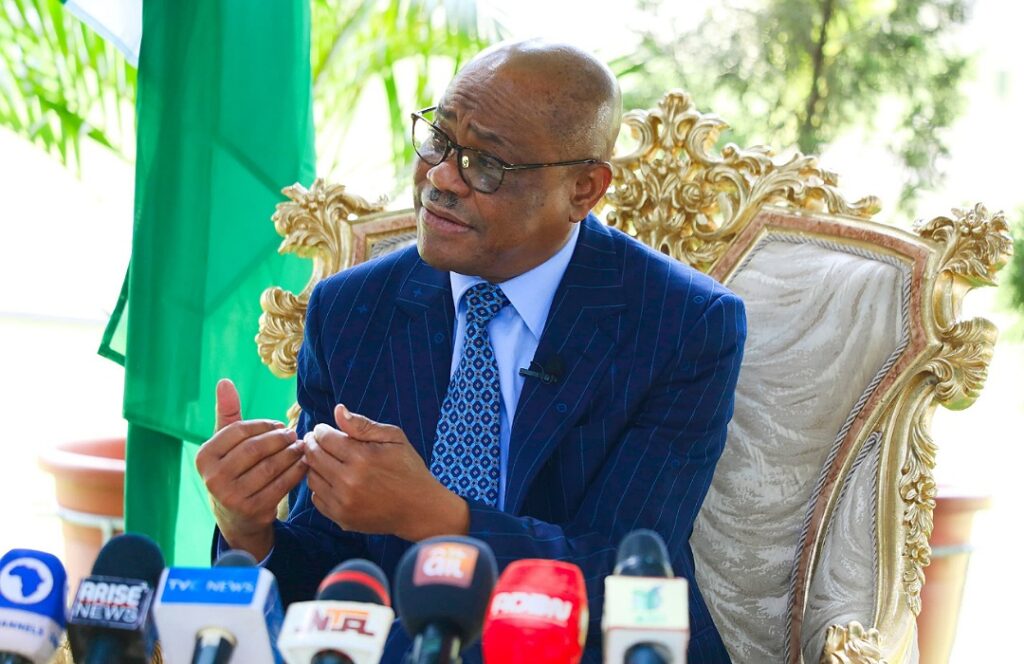
ADC Primary: Wike Explains Why Amaechi Had No Chance At The ADC Primary
The result had not even been announced yet, but Nyesom Wike says he already knew how the story would end.
According to the Federal Capital Territory Minister, the moment he looked at the leadership structure of the African Democratic Congress (ADC), Rotimi Amaechi’s presidential ambition was effectively finished before it truly began. Not because Amaechi lacked political experience. Not because he lacked supporters. But because, in Wike’s view, the game had already been arranged.
“That set-up was Atiku’s set-up 100 per cent,” Wike declared during his monthly media chat in Abuja, offering one of the bluntest political assessments Nigerians have heard since the ADC primary drama exploded.
This is not just another political disagreement between old rivals. It is a story about power, loyalty, political calculation, and the question hanging over Nigeria’s opposition politics ahead of 2027.
In this article, we break down why Wike believes Amaechi never had a realistic path to victory, what happened inside the ADC primary, and why this debate matters far beyond the personal rivalry between some of Nigeria’s most influential political figures.
The conversation around why Wike explains why Amaechi had no chance at the ADC Primary cannot be understood without looking at the relationships behind the headlines.
For years, Wike and Amaechi were among the most powerful political figures in Rivers State. Wike even served as Chief of Staff during Amaechi’s administration. They were political allies long before they became fierce rivals.
That history is exactly why Wike’s comments attracted attention.
Speaking in Abuja on Monday, the FCT minister said he immediately spotted trouble when Amaechi entered the ADC presidential race. According to him, the party’s leadership arrangement made it obvious where influence would sit and who would ultimately benefit.
Wike argued that the emergence of former Senate President David Mark as chairman of the ADC was the clearest signal that former Vice President Atiku Abubakar would have the upper hand in the contest.
His argument was straightforward. Politicians who have worked together for decades understand each other’s methods, alliances, and political instincts. From Wike’s perspective, the structure itself told the story.
The minister even suggested that if Amaechi had asked for advice before joining the race, he would have warned him against participating altogether.
Those remarks landed just days after Amaechi publicly rejected the outcome of the primary, describing the exercise as “concocted” and questioning whether members were allowed to vote freely.
Suddenly, what looked like an ordinary party primary became a much bigger conversation about trust, transparency, and political strategy.
Here is where things get especially interesting.
Wike did not merely say Amaechi lost. He argued that the entire political environment pointed toward one outcome from the beginning.
During the media chat, Wike recalled seeing David Mark’s position within the ADC leadership and immediately concluding that Atiku was likely to emerge as the party’s preferred candidate.
“You cannot set a trap for me. We know ourselves as politicians,” Wike said while questioning whether such a structure could realistically produce what he described as a transparent and fair process.
The heart of Wike’s argument is that Amaechi entered a race where the political machinery was already tilted toward Atiku.
He also suggested that Amaechi misjudged the national mood.
According to Wike, growing criticism of President Bola Tinubu’s administration created an atmosphere that encouraged several politicians to see opportunities where none actually existed. In his telling, some political actors used dissatisfaction with the government to attract influential figures into their camp and strengthen their credibility.
That criticism was particularly pointed because Wike referred to Amaechi as “my brother,” making it clear that his assessment was not coming from a stranger observing from afar.
Meanwhile, Amaechi’s own complaints after the primary appear to mirror some of the concerns Wike says he predicted.
Before the official declaration of results, Amaechi took to X to challenge the credibility of the exercise. He claimed many members were prevented from voting and argued that the process fell below the standards the party had promised.
Despite those objections, the ADC proceeded with the announcement.
Atiku emerged victorious with 1,846,370 votes. Amaechi secured 504,117 votes, while businessman Mohammed Hayatu-Deen finished third with 177,120 votes.
The numbers were decisive.
Still, the controversy did not disappear after the result was announced. Instead, attention shifted to whether the process itself was fair and whether the opposition coalition could remain united ahead of the 2027 election.
What nobody is saying loudly enough is that this story is bigger than Atiku, Amaechi, or even Wike.
This is really a story about trust inside political coalitions.
Every election cycle, opposition groups come together promising unity. The challenge comes when multiple heavyweight politicians want the same ticket. That is when old friendships, personal ambitions, and political calculations collide.
The question buried underneath this entire controversy is whether opposition parties can convince Nigerians that their internal processes are different from the political systems they often criticise.
Look closely and you will notice something else.
Wike’s criticism was not mainly about the vote count. It was about the structure that produced the vote count. That distinction matters.
Across Africa and beyond, political observers increasingly focus not only on who wins internal party contests but on whether party members believe the process was fair before voting even begins.
If enough people think the outcome was predetermined, confidence can disappear regardless of the final numbers.
That is the larger issue hovering over this ADC dispute. The debate is no longer just about who won. It is about whether everyone believed they ever had an equal chance.
For now, Atiku remains the ADC’s presidential candidate for the 2027 election.
The party has moved quickly to contain tensions. Reports indicate that Atiku has already held separate meetings with both Amaechi and Mohammed Hayatu-Deen in an effort to reconcile disappointed supporters and strengthen party unity.
Amaechi, however, has not hidden his dissatisfaction with the process.
The immediate battle may be over, but the political conversation around legitimacy and transparency is clearly still alive.
As things stand, the ADC faces a balancing act. It must convince supporters that the primary was credible while also keeping influential figures inside the same political tent.
My view? Wike’s comments are politically loaded, but they raise questions that deserve serious attention. Whether people agree with him or not, any party hoping to challenge for power in 2027 cannot afford lingering doubts about how its own candidates are chosen.
FREQUENTLY ASKED QUESTIONS
Who is Rotimi Amaechi and why is he important in Nigerian politics?
Rotimi Amaechi is a former Governor of Rivers State and a former Minister of Transportation. He has been one of Nigeria’s most influential political figures for more than a decade. His experience and national profile made him a major contender in the ADC presidential primary.
Why did Wike say Amaechi had no chance in the ADC primary?
Wike explains why Amaechi had no chance at the ADC Primary by arguing that the party’s leadership structure already favoured Atiku Abubakar. According to Wike, the emergence of David Mark as chairman signalled where political influence would be concentrated. He said he saw the outcome coming long before voting ended.
What was Amaechi’s complaint about the ADC primary?
Amaechi described the primary as “concocted” and claimed many party members were prevented from voting. He argued that the process failed to meet the standards of transparency and fairness that party members expected. Those complaints came before the official results were declared.
Was the ADC primary actually rigged?
There is no official finding that the primary was rigged. However, critics such as Amaechi questioned the credibility of the process, while Wike claimed the structure itself favoured a particular outcome. The debate remains largely political rather than legal at this stage.
What happens next after Wike explains why Amaechi had no chance at the ADC Primary?
The focus now shifts to party unity ahead of the 2027 election. Atiku has already met separately with Amaechi and Mohammed Hayatu-Deen to calm tensions. Whether those reconciliation efforts succeed could play a major role in the ADC’s future political strength.
Politics is full of surprises, but experienced politicians often say the biggest clues appear long before the final result.
The real question now is not whether Atiku won. It is whether enough people believe the road that got him there was fair. Because in politics, trust can be just as valuable as votes.


💬 Comments 0