Why Russia’s Wagner Mercenaries Are Shielding Niger’s Junta More Than Fighting Jihadists in 2026
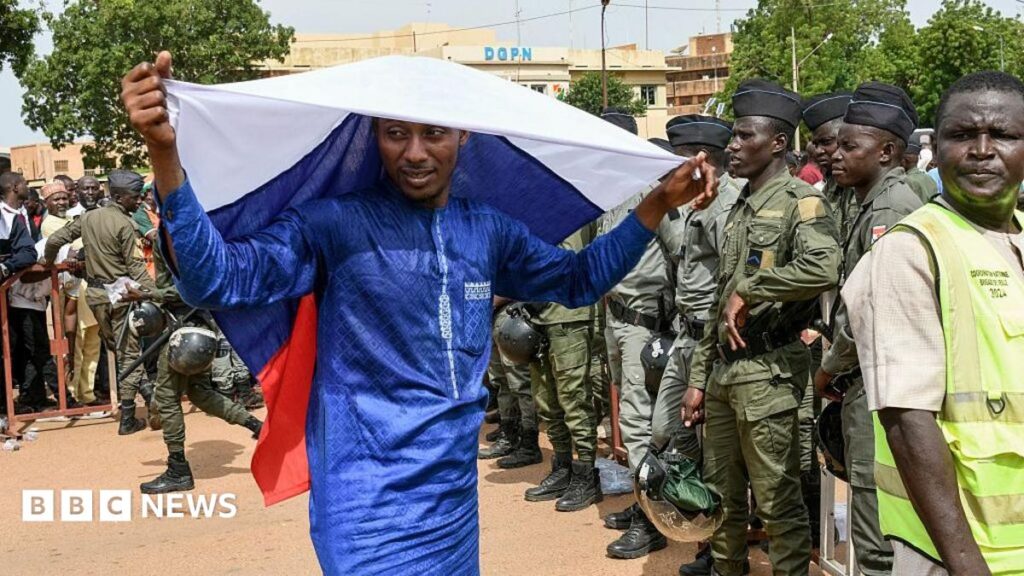
Background: Russia’s expanding footprint in West Africa
Since 2022, Moscow has been courting a string of West African states eager for alternatives to French and American security assistance. The Kremlin’s outreach has focused on offering weapons, training, and private‑military contractors, most notably the Wagner Group, to fill gaps left by dwindling Western presence.
Niger, a key transit hub for uranium exports and a frontline in the Sahel’s fight against al‑Shabaab and Islamic State affiliates, signed a security cooperation pact with Russia in early 2024. The agreement promised “strategic assistance” against jihadist insurgencies, a promise that was quickly turned into a deployment of Wagner operatives on the ground.
The move mirrored similar deals in Mali, Burkina Faso and the Central African Republic, where Russian mercenaries have taken on roles ranging from combat support to guarding government officials. Analysts note that these contracts often come with political strings, giving Moscow leverage over fragile regimes.
The Niger contract: what the Russian mercenaries are doing
Wagner teams arrived in Niamey in March 2024 and were initially tasked with joint patrols in the Tillabéri and Diffa regions, where jihadist attacks had surged. Their presence coincided with a modest decline in large‑scale assaults, a result that the Nigerien military hailed as a “turning point.”
However, by mid‑2025 reports from local journalists and the United Nations indicated that a sizable portion of Wagner personnel were reallocated to protect senior junta members and key infrastructure in the capital. Sources say they now guard the presidential palace, military headquarters, and even the main uranium mining sites that fund the regime.
The shift in focus has been described by security experts as a “protect‑the‑friend” strategy. According to a briefing by the International Crisis Group, the Wagner operatives have become more valuable to Niger’s leadership as a political shield than as a counter‑insurgency force.
Jihadist fight vs. political protection: shifting priorities
The dual mandate has created tension within Niger’s armed forces. Younger officers, who view the jihadist threat as existential, complain that resources are being diverted to guard the junta rather than to pursue insurgents in the desert. A senior lieutenant, speaking on condition of anonymity, told Al Jazeera that “we have patrols that sit idle while our comrades die on the front lines.”
At the same time, the junta’s reliance on Wagner for personal security has emboldened it to resist pressure from ECOWAS, the regional bloc that imposed sanctions after the 2023 coup. By showcasing Russian backing, the military government signals that it can withstand external diplomatic isolation, a narrative that resonates with other West African regimes wary of Western conditionality.
Critics argue that this trade‑off undermines the original purpose of the Russian contract. If Wagner’s primary contribution is to prop up a military government, the long‑term effectiveness of their counter‑terrorism training becomes questionable, especially as jihadist groups adapt to the new security calculus.
Implications for African security and geopolitics
The Niger case illustrates a broader pattern: Russian private forces are increasingly being used as political guarantors rather than pure combat units. This blurs the line between security assistance and regime support, complicating the calculus for African states that must balance sovereignty, stability, and international legitimacy.
For neighboring countries, the presence of Wagner in Niger raises alarm bells. Burkina Faso’s transitional council warned that “foreign mercenaries protecting one junta could become a catalyst for destabilisation across the Sahel.” Moreover, the United Nations peacekeeping mission in the region has expressed concern that mercenary‑backed regimes may hinder coordinated multinational operations against jihadists.
Economically, the partnership affects Niger’s primary export – uranium. Russian‑owned mining firms have reportedly secured favorable contracts in exchange for security guarantees, a development that could reshape global supply chains and give Moscow a foothold in the nuclear market. African investors and diaspora communities monitoring commodity flows are watching these shifts closely.
What comes next: regional reactions and future scenarios
ECOWAS faces a diplomatic dilemma. While the bloc continues to push for a return to civilian rule, imposing harsher sanctions could push Niger deeper into the Russian orbit. A senior ECOWAS diplomat told Reuters that “we must calibrate pressure so we do not hand the junta a stronger patron.”
In Lagos, Nigerian diaspora groups have started lobbying both the U.S. and EU to fund indigenous security initiatives that do not rely on foreign mercenaries. Their argument is that a home‑grown solution would preserve regional autonomy and reduce the risk of external powers exploiting internal conflicts.
Looking ahead, three scenarios are plausible: (1) Niger gradually phases out Wagner in favour of a mixed security model that includes African Union forces; (2) the junta entrenches its reliance on Russian protection, prompting a deeper split with the West; or (3) a negotiated settlement with ECOWAS leads to a phased withdrawal of foreign mercenaries in exchange for political concessions. Each outcome will shape the Sahel’s stability for years to come.
Quick Answers
Who are the Russian forces operating in Niger?
The security contractors are primarily members of the Wagner Group, a private‑military company linked to the Russian Ministry of Defence.
What is the main criticism of Wagner’s role in Niger?
Observers say Wagner is spending more time protecting the junta’s leaders and key infrastructure than actively fighting jihadist insurgents.
How could Russia’s involvement affect ECOWAS sanctions on Niger?
If Niger leans further on Russian security guarantees, ECOWAS may find its sanctions less effective and could consider diplomatic engagement instead of isolation.
Source: www.bbc.co.uk



💬 Comments 0