Yemen’s Houthis seize strategic Red Sea port of Mokha, threatening Bab al-Mandab Strait
Background: the Red Sea’s geopolitical tinderbox
The Red Sea has long been a flashpoint where local conflicts intersect with global trade. Stretching from the Suez Canal to the Gulf of Aden, its narrow Bab al-Mandab Strait funnels roughly one‑third of the world’s seaborne oil and a similar share of container traffic. For the past decade, Yemen’s civil war has turned the coastline into a battlefield, with the Iran‑backed Houthi movement repeatedly targeting commercial vessels to pressure the Saudi‑UAE‑backed government in Sana’a.
Mokha, historically famous for its coffee, sits on the north‑west Yemeni shore just a few kilometres from the Bab al‑Mandab entrance. Until now, it had remained under government control, serving as a modest port for fishing boats and limited cargo. Its capture would give the Houthis a forward base within striking distance of the strait’s main shipping lanes, a development that analysts say could reshape risk calculations for carriers worldwide.
The capture of Mokha: how it unfolded
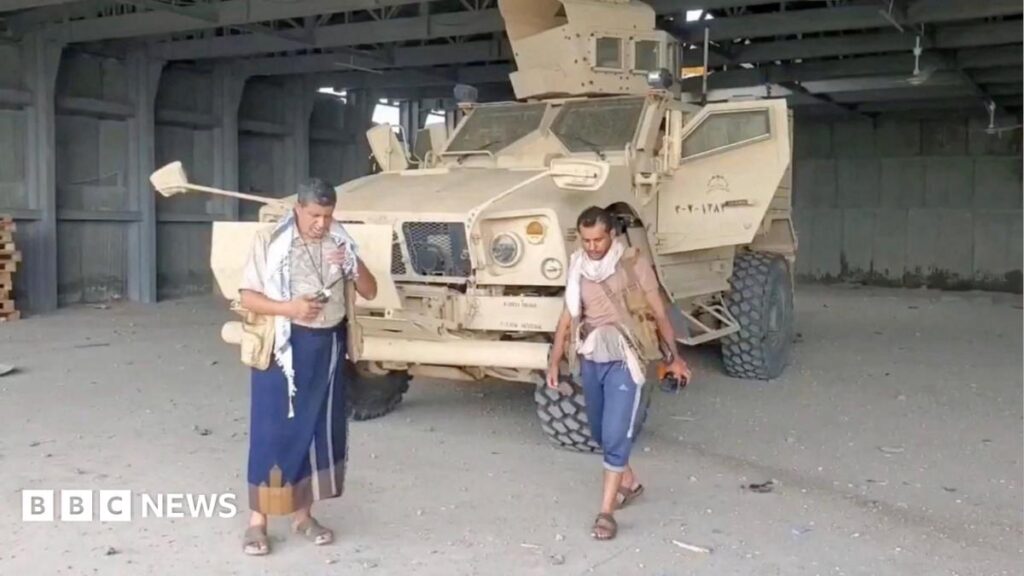
On September 10, 2026, Houthi forces launched a coordinated assault on Mokha, reportedly using a mix of artillery, drones and ground troops. Within hours, they had overrun the small garrison left by the internationally recognised government, according to a statement released by the Houthis that claimed “liberation of a key Yemeni city.”
Local eyewitnesses told Reuters that the fighting was brief but intense, with several government‑affiliated patrol boats sunk in the harbor. By the following morning, Houthi flags flew over the port’s customs office, and the group announced that it now controlled “the gateway to the Bab al‑Mandab.” The swift victory was praised in Tehran‑aligned media as a “strategic breakthrough.”
Regional and African implications: why the port matters to the continent
African economies that rely on Red Sea routes are likely to feel the first tremors. Ethiopia, Kenya and Tanzania ship the bulk of their imports – from fuel to machinery – through ports that sit downstream of Bab al‑Mandab. A Houthi‑controlled Mokha could enable more frequent missile or drone launches aimed at commercial vessels, prompting insurers to raise premiums for ships passing the strait by up to 30 %, as reported by marine‑insurance broker Willis Towers Watson.
Higher shipping costs translate into higher prices for African consumers and could strain fragile balance‑of‑payments positions. South Africa’s major grain exporters, for example, already face tight margins; any rerouting around the Cape of Good Hope would add weeks to transit times and cost millions in fuel. Moreover, the Gulf of Aden has become a hotspot for piracy, and a destabilised Bab al‑Mandab could push pirate groups to exploit the chaos, further endangering African‑flagged vessels.
The diaspora angle is also significant. Thousands of Yemeni migrants work in East African ports such as Mombasa and Djibouti, sending remittances that support families across the Horn of Africa. Disruption of trade routes could reduce employment opportunities for these workers, tightening the flow of cash that underpins many informal economies in Kenya and Ethiopia.
International reactions: diplomatic fire‑hoses and military posturing
The United Nations quickly issued a statement urging “all parties to respect the safety of civilian shipping” and called for an immediate de‑escalation, according to a UN press release on September 11. The United States, which maintains a naval presence in the region, warned that any attack on U.S.‑flagged vessels would trigger a “proportionate response,” a line echoed by the UK’s Ministry of Defence in a briefing to Parliament.
Saudi Arabia, which backs the Yemeni government, condemned the seizure as “a blatant violation of international law” and pledged to increase air patrols over the Red Sea. Meanwhile, Iran’s foreign ministry hailed the operation as “a legitimate act of resistance against imperialist blockades,” reinforcing the perception that the capture is part of a broader Tehran‑Houthi alignment. Analysts say the move could push the United Arab Emirates to reconsider its naval deployments near the strait, potentially reshaping the security architecture that protects African trade routes.
What comes next: scenarios for the Red Sea and African trade
Experts outline three likely trajectories. The first is a diplomatic thaw, where regional powers negotiate a limited cease‑fire that restores a neutral status for Mokha and re‑opens the strait under UN monitoring. The second sees an escalation, with the Houthis using Mokha as a launchpad for more frequent attacks, prompting a coalition of Saudi, Emirati and Western navies to enforce a maritime exclusion zone—a step that could further disrupt African shipping and force a temporary shift to the Cape route.
A third, more speculative scenario involves a proxy conflict spilling over into neighboring Sudan or Eritrea, countries already grappling with internal unrest. If fighting spreads, the Red Sea could become a contested maritime theater, compelling African states to seek alternative corridors such as the Suez‑linked “New Suez Canal” projects or even overland rail links through Ethiopia’s Addis Ababa–Djibouti corridor. In the short term, African exporters are likely to hedge by securing higher‑priced insurance and exploring diversified logistics, while policymakers in Nairobi, Addis Ababa and Pretoria will press the UN Security Council for a swift resolution.
Quick Answers
What is the strategic importance of Mokha for the Bab al-Mandab Strait?
Mokha sits just north of the Bab al-Mandab entrance, giving whoever controls it a forward base to monitor and potentially disrupt the narrow shipping lane that carries about one‑third of global oil shipments.
How could the Houthi seizure of Mokha affect African shipping costs?
Higher risk of attacks is expected to push marine insurers to raise premiums by up to 30 %, and rerouting ships around the Cape of Good Hope could add weeks to voyages, increasing freight rates for African imports and exports.
What are the possible next steps after the capture of Mokha?
Analysts see three paths: a diplomatic de‑escalation with UN monitoring, a military escalation leading to a coalition‑enforced exclusion zone, or a broader regional proxy conflict that forces African traders to seek alternative routes.
Source: www.bbc.co.uk



💬 Comments 0