Zambian opposition leader Mundubile charged with treason after UN‑building hideout, raising 2026 election stakes
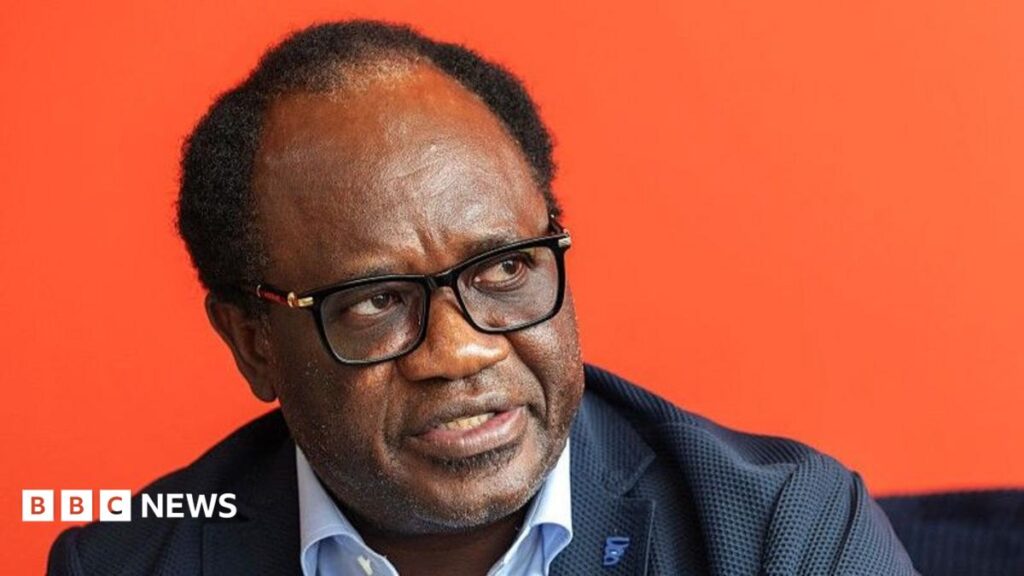
Political backdrop: Zambia’s fragile democratic balance
Since the 2021 victory of President Hakainde Hichilema’s United Party for National Development (UPND), Zambia has been praised for a smoother transition of power compared with many of its neighbours. However, the new administration has struggled to deliver on promises of job creation, especially in the copper‑dependent economy, and opposition parties have seized on rising inflation and utility price hikes to mobilise discontent.
The main opposition coalition, the United Democratic Alliance (UDA), has co‑opted former President Edgar Lungu’s base and positioned itself as the only credible check on the ruling party. Its leader, Reverend John Mundubile, a charismatic pastor‑turned‑politician, has become a lightning rod for criticism of Hichilema’s reforms, particularly the proposed mining royalties overhaul that threatens entrenched interests.
Zambia’s constitution permits treason charges only for acts that directly threaten the state’s existence, such as armed insurrection. Historically, the law has been invoked sparingly, most notably during the 1990s when the government targeted separatist movements in the north. Mundubile’s indictment therefore marks an unprecedented escalation in the use of security legislation against a civilian opposition figure.
The treason charge and the UN‑building sanctuary
On August 28, 2026, Zambian police announced that Reverend Mundubile had been formally charged with treason after a week‑long standoff inside the United Nations Office in Lusaka. The UN building had become an impromptu refuge after the opposition leader’s home was raided, prompting him to seek diplomatic protection. Sources at the UN said the agency was not a party to the legal dispute but offered temporary shelter under the Vienna Convention on Diplomatic Relations.
According to the state prosecutor, the charge stems from a series of speeches in which Mundubile allegedly called for the “overthrow of the current government” and urged citizens to block state institutions. Human Rights Watch, however, described the accusations as “vague and politically motivated,” noting that no weapons or violent plans were ever presented as evidence.
The court’s decision to allow the case to proceed, despite the lack of concrete proof of an armed plot, has sparked a wave of protests across Lusaka, Kitwe and Ndola. Demonstrators chant slogans demanding “justice, not treason” and accuse the authorities of weaponising the legal system to silence dissent ahead of the 2026 general election.
Regional ripple effects: a warning sign for Southern Africa
Zambia has long been regarded as the “model of stability” in the Southern African Development Community (SADC), a reputation that underpins regional trade in copper, cobalt and agricultural commodities. The treason case threatens to erode investor confidence, especially as mining firms monitor political risk before committing to new projects worth billions of dollars.
The episode also mirrors a broader trend across the continent, where governments in Kenya, Tanzania and Ethiopia have increasingly invoked anti‑terrorism or treason statutes to curb opposition. Analysts at the African Centre for the Study of Democracy argue that such tactics undermine the African Union’s Charter on Democracy, which calls for “free, fair and competitive elections.”
South African and Nigerian media outlets have highlighted the case as a test of whether Zambia’s recent democratic gains can survive internal power struggles. If the opposition is effectively removed from the political arena, SADC may face its first major democratic backslide since the 1990s, prompting calls for a regional response from the African Commission on Human and Peoples’ Rights.
Diaspora mobilisation and civil‑society response
Zambia’s diaspora, estimated at over 500,000 people spread across the United Kingdom, United States and South Africa, has quickly taken the issue to social media. Hashtags like #FreeMundubile and #ZambiaDeservesBetter trended on Twitter within hours of the indictment, and diaspora groups organized virtual town‑hall meetings to discuss potential sanctions and lobbying strategies.
Local NGOs, including the Zambian Centre for Democratic Governance, have filed an amicus brief urging the High Court to dismiss the treason charge on the grounds of political abuse. The brief cites the 2019 African Charter on Human and Peoples’ Rights, which guarantees freedom of expression and the right to peaceful assembly, both of which they claim have been violated.
Meanwhile, the United Nations Office in Lusaka issued a statement reaffirming its commitment to the safety of all persons on its premises but stopped short of labeling Mundubile a political prisoner. The ambiguous stance has drawn criticism from the International Federation for Human Rights, which warned that “the precedent set here could embolden other regimes to weaponise diplomatic spaces against opposition voices.”
What lies ahead: legal battles, elections and the future of Zambian democracy
The treason case is scheduled for a preliminary hearing in early September, with a full trial expected to stretch into early 2027. Legal experts predict that even if Mundubile is eventually acquitted, the drawn‑out process will effectively sideline him during the crucial campaign period for the 2026 elections, which are set for August 2026 according to the electoral calendar.
International donors, including the World Bank and the European Union, have signalled that any perceived erosion of democratic space could affect development assistance tied to governance benchmarks. The Zambian Ministry of Finance, however, maintains that macro‑economic programmes will continue uninterrupted, underscoring the administration’s confidence that the political fallout will be manageable.
Ultimately, the case could become a litmus test for Zambia’s institutional resilience. If the judiciary upholds the principle of due process and dismisses the charge, it may reinforce the country’s democratic credentials. Conversely, a conviction could accelerate a slide toward authoritarianism, prompting regional bodies and diaspora communities to push for sanctions, diplomatic pressure, or even a call for new elections under a caretaker government.
Quick Answers
What specific law is Reverend John Mundubile charged under in Zambia?
He is charged under Zambia’s Treason Act of 1965, which criminalises attempts to overthrow the government or endanger the nation’s security.
How might the treason case affect Zambia’s 2026 general election?
The legal proceedings could remove Mundubile from active campaigning, weakening the opposition’s ability to challenge the ruling UPND and potentially skewing the election in the incumbent’s favour.
What role is the UN playing in Mundubile’s case?
The UN provided temporary shelter when Mundubile sought refuge in its Lusaka office, but it has not taken an official stance on the treason charges, citing diplomatic protocol.
Source: www.bbc.co.uk


💬 Comments 0