12 dead as wildfires ravage northern Algeria in 2026 heatwave, sparking regional climate alarm
A scorching summer sets the stage
The Mediterranean belt of North Africa has been baking under an unprecedented heatwave this summer, with temperatures in Algeria’s Kabylie region regularly topping 45 °C. Meteorological data from the Algerian National Office of Meteorology shows that the average high for July 2026 was 3.2 °C above the 30‑year norm, a deviation that scientists link to accelerating climate change.
Heat alone does not ignite wildfires, but it dries out vegetation, turning forests and scrub into tinder. The World Meteorological Organization warned in early June that the combination of prolonged heat and low rainfall across the Maghreb could create “fire‑friendly conditions” that would outpace local firefighting capacities.
The situation mirrors a pattern seen across the Sahel and the Horn of Africa, where record‑breaking temperatures have already fueled massive crop failures and displacement. In Algeria, the same climate stress is now manifesting in a deadly blaze that has quickly become a regional flashpoint.
The fires erupt and the death toll climbs
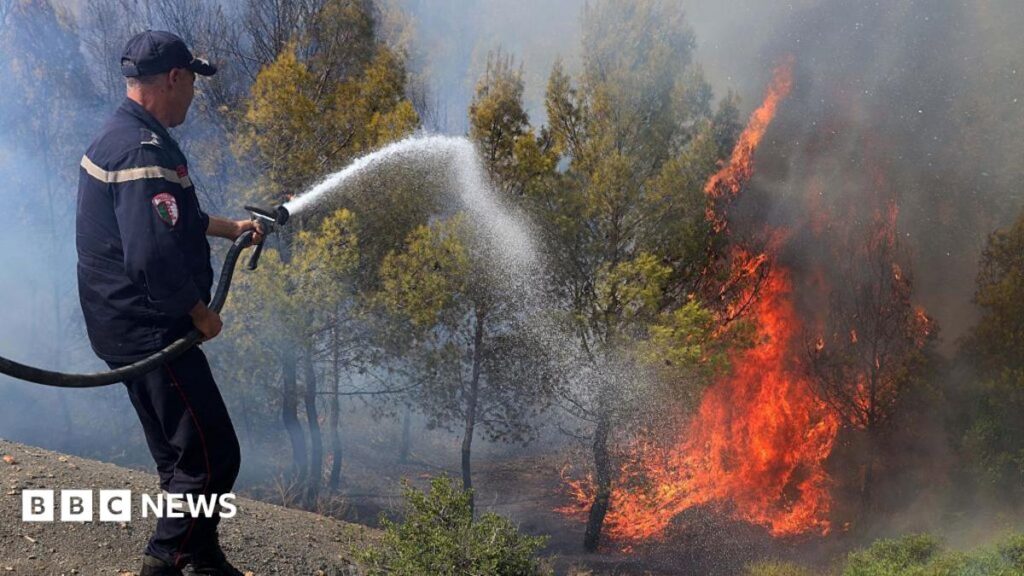
On 24 August, a series of lightning strikes ignited dry brush in the mountainous districts of Tizi Ouzou and Béjaïa. Within hours, the flames merged into a single front that raced downhill, engulfing villages and cutting off road access. Local officials confirmed that at least 12 people were killed, with dozens more injured and many more missing.
Firefighters from the Algerian Civil Protection Service, assisted by aerial units from the Algerian Air Force, struggled to contain the inferno amid strong winds that pushed the fire eastward. By 26 August, the blaze had scorched an estimated 1,200 hectares of forest and agricultural land, according to the Ministry of Agriculture.
Humanitarian groups, including the Algerian Red Crescent, reported that more than 5,000 residents were displaced into temporary shelters in nearby towns. The rapid spread of the fire exposed gaps in early‑warning systems and highlighted the limited resources allocated to rural fire management.
Local economies and livelihoods on fire
The affected region is a key producer of olives, figs, and citrus fruits that supply both domestic markets and export chains to Europe. Preliminary assessments by the National Institute of Agronomic Research suggest that up to 30 % of the season’s harvest could be lost, a blow that may raise food prices in Algeria’s urban centers and strain household budgets.
Tourism, another vital source of income in the Kabylie mountains, has also taken a hit. The area’s scenic hiking trails and cultural festivals attract visitors from France, Canada, and the growing Algerian diaspora. Travel agencies report a 40 % drop in bookings for August‑September trips following the disaster, a trend that could ripple into the national tourism GDP.
Remittance flows from the diaspora, which typically cushion economic shocks, may see a short‑term dip as families focus on immediate reconstruction needs. However, diaspora NGOs have already begun mobilising funds on crowdfunding platforms, illustrating a new model of transnational solidarity that bypasses state channels.
A regional climate alarm and the African response
The Algerian wildfires have reverberated beyond its borders, prompting neighboring Tunisia and Morocco to issue their own fire‑danger alerts. Climate experts say the event underscores the urgency of the African Union’s “Green Climate Fund for the Sahel” initiative, which aims to channel $2 billion into fire‑prevention infrastructure across the continent by 2028.
In a statement on 27 August, the African Development Bank highlighted that Africa’s forest cover is declining at a faster rate than any other continent, increasing vulnerability to both wildfires and desertification. The bank is now considering a dedicated “Fire Resilience Facility” that would finance satellite‑based early‑warning systems and community fire brigades in high‑risk zones.
For the Algerian diaspora, the crisis has sparked a wave of advocacy on social media, with hashtags like #AlgeriaFireAid trending in French‑speaking North African communities. This digital mobilisation is pressuring both the Algerian government and European aid agencies to allocate emergency assistance that is transparent and directly reaches affected families.
What comes next: rebuilding, policy, and prevention
President Abdelmadjid Tebboune announced a three‑phase recovery plan on 28 August, pledging 3 billion dinars for reforestation, reconstruction of homes, and compensation for lost agricultural output. The plan also calls for the establishment of a national fire‑risk mapping agency, modeled after France’s “Plan Vigicrues,” to improve real‑time monitoring.
International partners, including the European Union’s Civil Protection Mechanism, have offered technical assistance and firefighting equipment. Yet observers caution that without sustained investment in rural infrastructure—such as water reservoirs and road upgrades—future fire seasons could overwhelm emergency responses.
Long‑term, the episode may accelerate Algeria’s participation in the UN’s “Loss and Damage” negotiations, where vulnerable nations seek compensation for climate‑induced disasters. If successful, the funding could provide a template for other African states grappling with similar wildfire threats, turning a tragedy into a catalyst for climate justice.
Quick Answers
How many people died in the 2026 northern Algeria wildfires?
At least 12 people were confirmed dead as the fires swept through the Kabylie region.
What economic sectors in Algeria were hit hardest by the fires?
Agriculture—especially olives, figs, and citrus—and tourism suffered major losses, with potential harvest reductions of up to 30 % and a sharp drop in visitor bookings.
What steps is the Algerian government taking to prevent future wildfires?
President Tebboune announced a 3 billion‑dinar recovery plan that includes reforestation, a national fire‑risk mapping agency, and investment in rural water and road infrastructure.
Source: www.bbc.co.uk


💬 Comments 0