Paris riots 2026: 1,800 arrests as pension reform protests spark unrest and diaspora concerns
Background: France's pension overhaul and the tinderbox of discontent
In early October 2026 the French government unveiled a sweeping pension reform that would raise the retirement age from 62 to 67 and replace a complex points system with a single, earnings‑based scheme. The plan, championed by President Emmanuel Macron, was framed as a fiscal necessity to shore up the country’s social security finances, which have been strained by an aging population and stagnant growth.
The proposal immediately triggered a wave of opposition from trade unions, left‑wing parties and a broad cross‑section of workers who feared longer years in the labor market would erode hard‑won benefits. Street demonstrations erupted across the country, echoing the massive strikes of 1995 and 2006 that once paralyzed French transport and public services.
What set the 2026 protests apart was the timing. Inflation had surged to its highest level in a decade, squeezing household budgets, especially among low‑income families and immigrant communities. For many, the pension bill was the latest in a series of policies that seemed to prioritize fiscal consolidation over social equity.
The flashpoint: From peaceful marches to violent riots in Paris
On October 15, a planned march in central Paris attracted an estimated 200,000 participants. While the majority remained peaceful, a fringe group—identified by police as far‑right agitators—clashed with law enforcement near the Place de la République, igniting a cascade of confrontations.
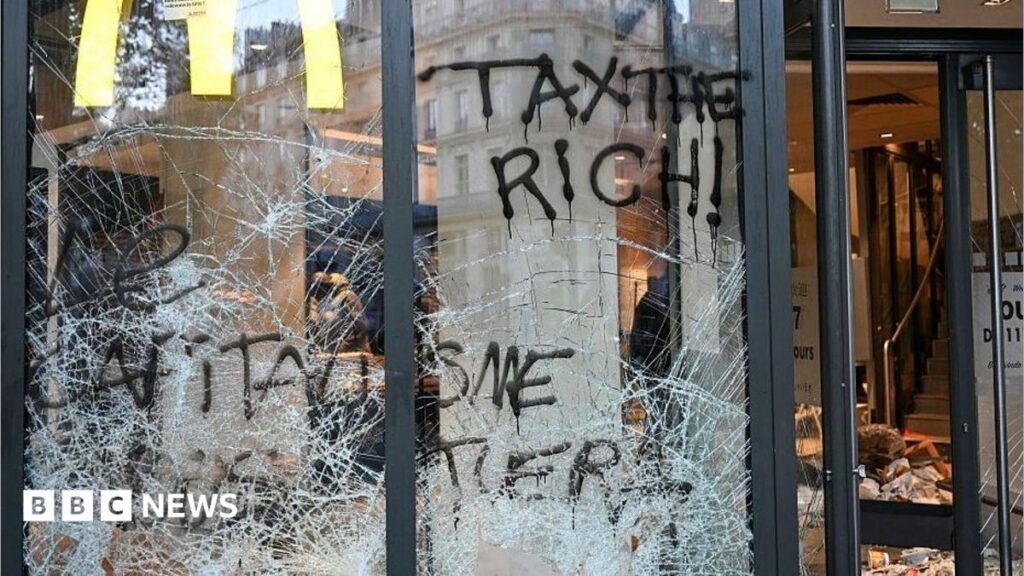
Within hours, the situation escalated. Demonstrators set fire to several parked cars, shattered shop windows along the Rue de Rivoli, and looted a handful of convenience stores. Police responded with tear gas and water cannons, leading to a chaotic night that saw the streets of the capital littered with burnt wrecks and broken glass.
By the end of the weekend, French authorities reported roughly 1,800 arrests nationwide, with Paris accounting for more than half of those detained. The crackdown was the largest police operation since the 2018 "Yellow Vest" protests, according to official figures released by the Interior Ministry.
Why the unrest matters for African communities in France and beyond
A sizable proportion of the demonstrators were of African descent, many of them second‑generation immigrants from West and North Africa who work in the service, construction and transport sectors—jobs most vulnerable to the new retirement thresholds. According to a report by the French Institute of Demographic Studies, people of African origin make up roughly 12% of the French workforce in the affected industries.
For families that rely on remittances, longer working years could reduce disposable income and limit the money they send home to relatives in Nigeria, Senegal, Côte d’Ivoire and other countries. The World Bank estimates that African diaspora remittances to the continent total over $90 billion annually, a figure that could shrink if wage growth stalls under the pension reforms.
The unrest also revived longstanding grievances about discrimination and police brutality. Several community leaders, speaking to local media, warned that the heavy‑handed police response risked deepening mistrust between African youth and state institutions, echoing the tensions that sparked the 2005 riots in the suburbs of Paris.
A broader European pattern: Pension protests and the rise of street violence
France is not alone in facing backlash over pension changes. In the past year, Italy, Spain and the United Kingdom have all grappled with large‑scale demonstrations as governments attempt to reform retirement systems to meet EU fiscal rules. Analysts at the European Policy Centre note that the convergence of demographic pressure and post‑pandemic debt has made pension reform a “contested arena across the continent.”
What is distinctive about the French episode, however, is the speed with which peaceful protests turned into looting and arson. Security experts suggest that the presence of organized far‑right groups, combined with the high density of protestors in central urban zones, creates a volatile mix that can tip demonstrations into riots within hours.
The pattern raises questions about the future of public order in European capitals. If governments continue to push unpopular fiscal measures without robust dialogue, the risk of recurring flashpoints—especially in cities with diverse, economically vulnerable populations—may increase.
What comes next: Government response, legal fallout and the diaspora’s next move
President Macron has vowed to maintain the reform timetable, arguing that delaying the legislation would jeopardize the country’s fiscal credibility. In a televised address on October 18, he announced a “temporary” suspension of police raids in neighborhoods with high immigrant concentrations, aiming to calm tensions while the legal process proceeds.
Legal scholars caution that the wave of arrests could lead to a protracted court backlog. France’s penal code allows for up to two years of pre‑trial detention for serious offences such as arson, meaning many of the 1,800 detainees may face lengthy legal battles. Human‑rights groups, including Amnesty International, have already called for independent monitoring of police conduct during the riots.
For African diaspora organisations, the focus now shifts to advocacy and support. Several NGOs have launched emergency funds to assist arrested individuals and their families, while community radio stations in Paris are broadcasting information on legal aid in French, Arabic and several African languages. The episode may also galvanize political participation among younger African‑French voters, who see the protests as a litmus test for inclusion in French civic life.
Quick Answers
How many people were arrested during the Paris riots in October 2026?
Around 1,800 people were detained across France, with Paris accounting for more than half of those arrests.
Why are African diaspora communities particularly affected by France's pension reform?
Many African‑origin workers are employed in sectors hit hardest by the higher retirement age, and reduced earnings could lower remittances sent to families in Africa.
What does the French government plan to do after the riots?
President Macron said the pension reform will continue as scheduled, but he announced a temporary pause on police raids in immigrant‑dense neighborhoods to ease tensions.
Source: www.bbc.co.uk




💬 Comments 0