14 Killed in Myanmar Monastery Airstrike 2026: Implications for Regional Stability and Humanitarian Aid
Background: Myanmar’s escalating civil war
Myanmar’s internal conflict, which reignited after the military coup in February 2021, has entered its fifth year of widespread violence. The junta’s armed forces, known as the Tatmadaw, have been battling a coalition of ethnic armed groups and newly formed People’s Defence Forces (PDFs) that claim to protect civilians from state repression. International observers, including the United Nations, have repeatedly warned that the junta’s tactics have shifted toward indiscriminate bombing of civilian areas, a pattern that intensified after the junta’s failed attempts to suppress nationwide protests in 2022 and 2023.
Humanitarian access has deteriorated sharply, with aid agencies reporting that more than 1.2 million people have been displaced since 2021. The United Nations Office for the Coordination of Humanitarian Affairs (OCHA) estimates that 70 percent of the country’s population now lives in areas with limited or no access to basic services. In this volatile environment, religious sites have traditionally offered a rare sanctuary for civilians seeking safety, making any attack on such locations especially alarming.
The monastery strike: what happened on August 22, 2026
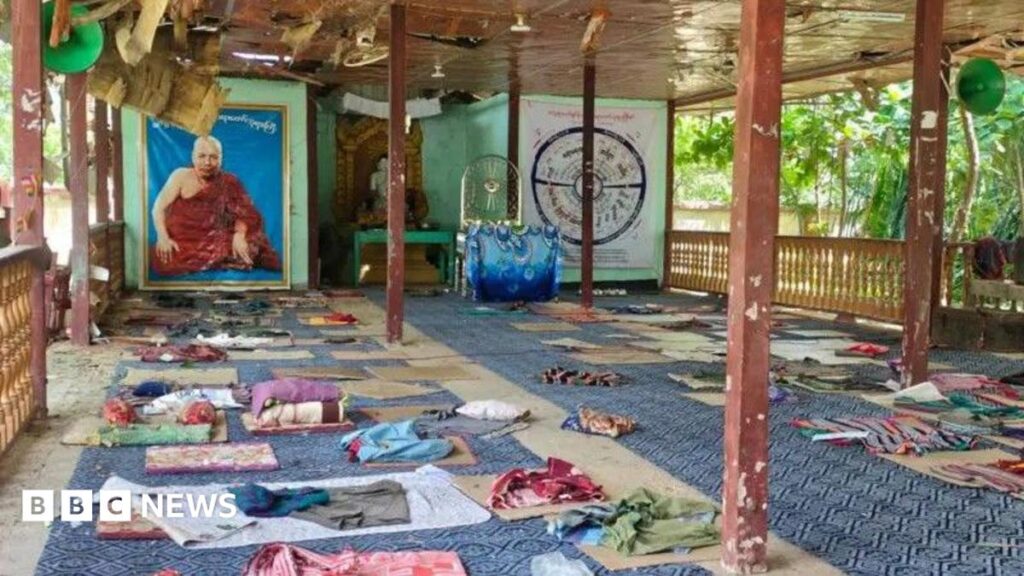
On the evening of August 22, a Buddhist monastery in the Sagaing region – a stronghold of anti‑junta resistance – was hit by two air‑strikes within a span of 15 minutes, according to a rescue worker who arrived on the scene. The monastery was hosting a meditation retreat that had drawn dozens of civilians, including women, children and elderly participants. The first strike caused the building’s roof to collapse, while a second wave of shells hit the rubble, killing at least fourteen people and injuring many more.
Local witnesses reported that the aircraft involved were identified as military jets based on the distinctive sound of their engines and the markings on the fuselage. The junta has not issued an official statement, but a spokesperson for the Myanmar Ministry of Defence later claimed the area was a “known insurgent base.” Human rights groups, such as Amnesty International, have labeled the attack a possible war crime, noting that the monastery was clearly marked with a white flag and that civilians were gathered there for a non‑combat purpose.
Why the strike matters beyond Myanmar’s borders
The targeting of a religious sanctuary signals a dangerous escalation in the junta’s willingness to ignore international humanitarian law. Such actions risk pulling neighboring countries into the conflict, especially as refugees continue to flee across the borders of Thailand, India and Bangladesh. Regional bodies like the Association of Southeast Asian Nations (ASEAN) have already faced criticism for their muted response, and the strike may force a reassessment of ASEAN’s “non‑interference” policy.
For the global community, the incident underscores the limits of existing sanctions and diplomatic pressure on the junta. The United States and the European Union have imposed targeted asset freezes and travel bans on senior military leaders, yet the junta continues to procure weapons through illicit networks in Southeast Asia and beyond. The monastery attack could catalyse a new wave of multilateral action, potentially including a United Nations Security Council resolution that explicitly references the protection of civilian religious sites.
Impact on humanitarian operations and African NGOs
The strike has immediate repercussions for humanitarian actors on the ground, many of whom are from African countries or work in partnership with African NGOs. Organizations such as Kenya’s Red Cross Society and Nigeria’s Médecins Sans Frontières (MSF) branch in Myanmar have been forced to suspend field missions in the Sagaing region due to heightened security risks. According to a statement from the African Union’s Humanitarian Affairs Department, the incident “raises serious concerns about the safety of African staff deployed in conflict zones and may deter future contributions from the continent.”
African diaspora networks in Myanmar, though small, have been vocal on social media, demanding that their governments press for stronger protection measures. In Nairobi, a coalition of diaspora groups organized a virtual rally that called on the African Union to adopt a resolution condemning attacks on civilian religious sites. The incident also threatens funding pipelines; donor agencies in Africa that allocate portions of their budgets to Southeast Asian crises may reconsider allocations if the security situation does not improve.
What comes next: diplomatic, legal and humanitarian pathways
In the short term, the United Nations is expected to convene an emergency meeting of the Human Rights Council to discuss the monastery attack and to explore the possibility of an independent investigation. Human rights lawyers from South Africa’s International Criminal Tribunal have already signaled interest in filing a formal complaint with the International Court of Justice, citing the 1949 Geneva Conventions. Such legal steps could add pressure on the junta, though enforcement remains a challenge without cooperation from the military regime.
On the diplomatic front, the United Kingdom, the United States and the European Union are likely to coordinate a new round of sanctions aimed at the junta’s air‑force logistics chain. Meanwhile, ASEAN members may be compelled to move beyond rhetoric, perhaps by authorising a joint monitoring mission along the Myanmar‑Thailand border to protect fleeing civilians. For aid agencies, the priority will be to negotiate humanitarian corridors that respect the sanctity of religious sites, a demand that could be bolstered by the African Union’s forthcoming resolution on the protection of humanitarian workers.
Quick Answers
How many people were killed in the Myanmar monastery airstrike?
At least fourteen civilians were confirmed dead after two air‑strikes hit the monastery on August 22, 2026.
What impact does the strike have on African NGOs working in Myanmar?
The attack forced several African‑linked NGOs to suspend operations in the Sagaing region, raising safety concerns for African staff and potentially affecting future funding from African donor agencies.
What international actions are being considered after the monastery attack?
The UN is set to hold an emergency Human Rights Council meeting, and human rights lawyers from South Africa are exploring a case at the International Court of Justice, while Western nations may tighten sanctions on Myanmar’s military.
Source: www.bbc.co.uk




💬 Comments 0