2026 AI existential risk debate: Engineers at OpenAI, Google, Nigerian AI firms push back
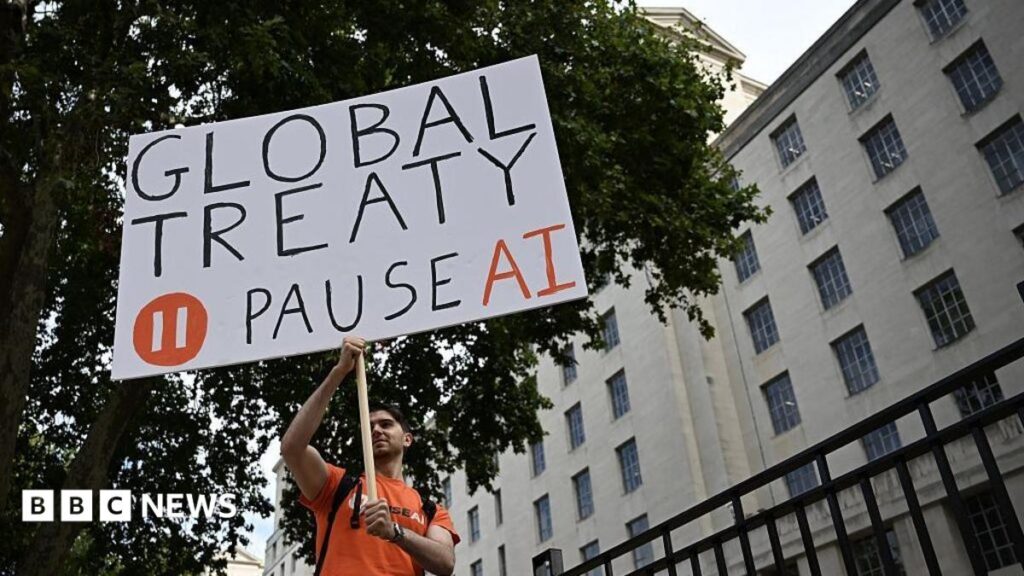
The debate is moving from boardrooms to chat rooms
In the past year, a wave of internal messages, Slack threads and private emails have surfaced showing that a sizable minority of engineers at leading AI labs are openly questioning the most alarmist forecasts about artificial intelligence. While public figures such as Elon Musk and former OpenAI chief scientist have warned that AI could become an existential threat, many of the people writing code for large language models say the scenario is far from inevitable.
These conversations are not limited to Silicon Valley. Researchers at DeepMind, Anthropic and even newer entrants like Stability AI have posted on internal forums that they view the “kill‑everything” narrative as a distraction from more immediate concerns—bias, data privacy and the environmental cost of training massive models. The tone is often pragmatic: "We need to focus on safety bugs that we can actually test today, not hypothetical superintelligence".
Why some engineers remain skeptical of doomsday warnings
A common thread among the skeptics is the belief that current AI systems, even the most sophisticated ones, lack agency. According to a survey leaked from a major AI lab, 62% of respondents said they did not see any pathway for a model to autonomously develop goals that conflict with human interests without explicit design choices.
Another factor is the historical pattern of hype cycles. Many of the same engineers who warned about “AI winter” in the early 2010s now see the current panic as another over‑exaggeration. They point to the fact that every major breakthrough—vision transformers, reinforcement‑learning‑from‑human‑feedback—has been accompanied by a flurry of speculative media coverage that rarely matches the technical reality.
Policy implications: balancing caution with innovation
Governments worldwide are racing to draft AI regulations, often citing existential‑risk arguments as justification for broad restrictions. In the United States, the White House’s “AI Bill of Rights” mentions “preventing catastrophic outcomes” as a core principle. Critics argue that if policymakers take the most extreme warnings at face value, they could impose limits that stifle beneficial applications, especially in low‑resource settings.
The dissenting voices inside AI firms are urging regulators to differentiate between short‑term safety issues—like model hallucinations or misuse in disinformation campaigns—and speculative long‑term threats. They suggest a tiered approach: stringent oversight for high‑risk deployments (e.g., autonomous weapons) while allowing more flexibility for research that can drive economic growth in emerging markets.
What the debate means for Africa’s growing AI ecosystem
Africa’s AI sector is at a pivotal stage. Start‑ups in Nairobi, Lagos and Cape Town are leveraging large language models to build tools for local languages, health diagnostics and agricultural advice. If global policy leans heavily toward pre‑emptive bans based on apocalyptic fears, African innovators could lose access to the compute resources and open‑source models they need to scale.
Conversely, the skepticism voiced by engineers at the world’s biggest labs may open a window for African policymakers to argue for a more nuanced regulatory framework. By highlighting that the immediate challenges are data scarcity, talent pipelines and infrastructure, African governments can position themselves as partners in responsible AI development rather than victims of blanket restrictions.
Looking ahead: governance, public perception and the next frontier
The next few months will likely see a clash between two narratives: one that pushes for aggressive, precaution‑first legislation, and another that calls for evidence‑based, incremental safeguards. Industry groups such as the Partnership on AI have already proposed a “risk‑matrix” that grades AI systems on concrete metrics—robustness, interpretability and societal impact—rather than on speculative future scenarios.
Public opinion is also shifting. A recent poll in the UK showed that 48% of respondents consider AI a “major threat” to humanity, while 37% view it as a “tool for progress”. In Africa, a survey by the African Development Bank found that 55% of tech‑savvy youths see AI as a catalyst for job creation, but only 22% are aware of existential‑risk debates. Bridging that knowledge gap will be crucial for any future governance model that aims to be both inclusive and effective.
Quick Answers
Are AI researchers at major labs really saying AI won't kill anyone?
Many engineers express doubt about existential‑risk claims, arguing that current models lack agency and that safety work should focus on present‑day issues.
How could global AI regulation affect African startups?
Overly strict rules based on worst‑case scenarios could limit access to large models and cloud compute, slowing the growth of African AI products.
What alternative approach is being suggested for AI safety?
Experts propose a tiered, risk‑matrix system that targets concrete harms—like bias or misuse—while allowing research to continue under monitored conditions.
Source: www.bbc.co.uk




💬 Comments 0