South Africa joins 20 nations calling for a global AI oversight body in 2026
Why the call for an AI watchdog is gaining momentum
Artificial intelligence has moved from research labs to everyday products at an unprecedented speed, prompting governments to confront risks that were once theoretical. From deep‑fakes that can destabilise elections to autonomous systems that could cause accidents, the potential for harm is now paired with massive economic opportunity. This tension has pushed policymakers to look beyond national regulations and consider a coordinated, cross‑border solution.
The idea of a global AI oversight body is not new, but the urgency has sharpened after several high‑profile incidents in the past two years. A 2025 ransomware attack that exploited a generative‑AI model to craft convincing phishing emails, and a 2026 fatal crash involving an AI‑driven truck in Europe, both sparked calls for a unified set of safety standards. According to a joint communiqué released by the 20 proposing nations, the lack of a common enforcement mechanism is "a systemic vulnerability that no single country can address alone".
Who is behind the proposal and what they hope to achieve
The coalition includes a mix of technology powerhouses and smaller economies: Germany, Canada, Japan, Brazil, South Africa and Kenya are among the signatories. Their statements stress that the new body would not replace national laws but would set baseline standards for transparency, risk assessment and accountability that all member states would be obliged to adopt.
Funding for the institution is expected to come from a tiered contribution model, where richer economies pay a larger share. Sources say the draft also envisions a “fast‑track” arbitration panel to resolve disputes between private firms and governments, a feature designed to speed up compliance without lengthy court battles.
Critics from the private sector have warned that overly prescriptive rules could stifle innovation. A spokesperson for a European AI startup quoted in TechCrunch argued that “global standards risk becoming a one‑size‑fits‑all playbook that ignores the nuances of local markets.” The proposal’s architects acknowledge this concern and say the body will incorporate a “regional advisory council” to tailor guidelines to different economic contexts.
What the draft framework would look like in practice
The provisional charter outlines four core pillars: safety testing before deployment, mandatory audit trails for high‑risk models, a public registry of AI systems, and a sanctions regime for non‑compliance. The safety testing protocol draws on existing ISO standards but adds a requirement for independent third‑party verification, a step that could create a new market for AI audit firms.
Transparency is another focus. Companies would need to disclose the data sources, training methods and intended use‑cases for systems that exceed a predefined risk threshold. The registry, accessible to citizens and regulators alike, would act as a “digital passport” for AI, allowing anyone to verify whether a tool has been cleared by the oversight body.
Enforcement mechanisms include fines up to 5% of a violator’s global turnover, similar to the EU’s GDPR penalties, and the possibility of a temporary ban on the offending technology. The charter also proposes a “whistleblower protection clause” to encourage insiders to report unsafe practices without fear of retaliation.
African stakes: why South Africa’s involvement matters for the continent
South Africa’s participation signals a growing recognition that AI governance cannot be a purely Western agenda. The country has been positioning itself as a digital hub for the continent, with initiatives like the African Centre for AI Excellence and a national AI strategy launched in 2023. By joining the coalition, South Africa hopes to embed African perspectives—particularly around data sovereignty and equitable access—into the global rulebook.
For many African economies, the biggest challenge is not just regulating AI but ensuring that local innovators can compete on a level playing field. According to a report by the African Development Bank, AI could add $180 billion to Africa’s GDP by 2030, but only if home‑grown startups are not forced out by costly compliance regimes. South Africa’s voice in the drafting process could push for proportional compliance costs and capacity‑building grants for emerging markets.
The proposal also opens doors for regional collaboration. Kenya, already a signatory, is working with South Africa on a joint “AI Trust Fund” that would subsidise safety testing for startups across the continent. If the global body adopts a flexible, tiered compliance model, it could become a catalyst for a pan‑African AI ecosystem rather than a barrier.
What comes next: political hurdles and the timeline ahead
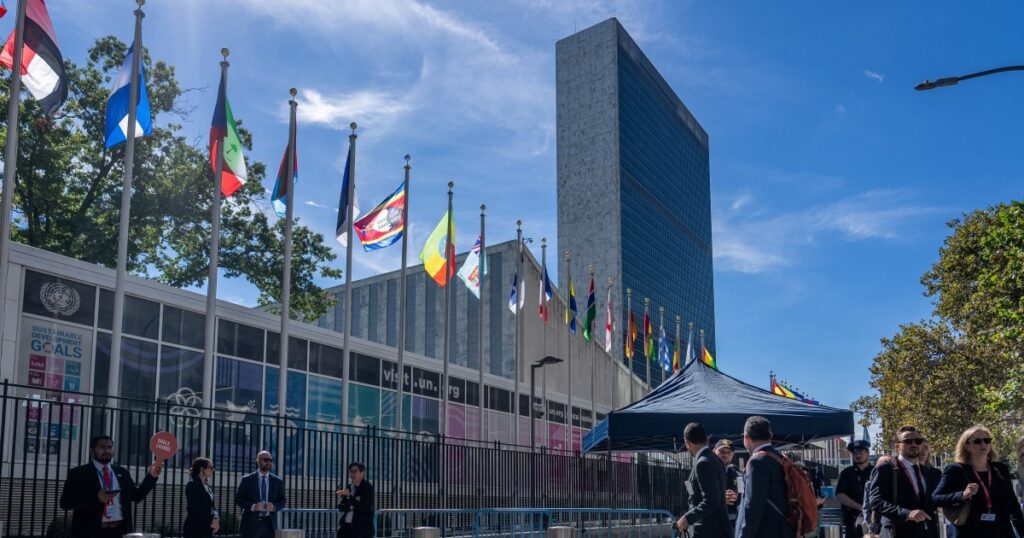
The draft charter will be presented at the upcoming UN General Assembly special session on digital governance in November 2026. There, member states will debate the legal footing of the body—whether it will be a treaty, a convention or a soft‑law framework. Historically, similar multilateral attempts, such as the International Telecommunications Union’s early internet governance reforms, have taken years to ratify.
Geopolitical tensions could slow progress. The United States and China have not joined the initial coalition and are reportedly developing their own bilateral AI safety accords. Analysts at the Brookings Institution warn that a fragmented landscape could lead to “regulatory arbitrage,” where companies shift operations to jurisdictions with looser rules.
Nevertheless, the momentum generated by the 20‑country coalition is hard to ignore. If the body is established by 2028, as some diplomats predict, it will set the stage for the first truly global AI compliance market. For African firms, early alignment with the standards could become a competitive advantage, unlocking access to European and North American markets that increasingly demand proof of compliance.
Quick Answers
What is the proposed global AI oversight body?
It is a multinational institution aimed at setting baseline safety, transparency and accountability standards for high‑risk artificial intelligence systems worldwide.
Which African country is part of the 20‑nation AI governance proposal?
South Africa signed the joint communiqué and will help shape the body’s regional advisory council.
When is the AI oversight body expected to be operational?
Diplomats say the framework could be finalized by late 2026 with the institution becoming active as early as 2028.
Source: www.aljazeera.com




💬 Comments 0