2026 US Survey Shows 45% of Adults Uncertain About Vaccines – Why It Risks Public Health
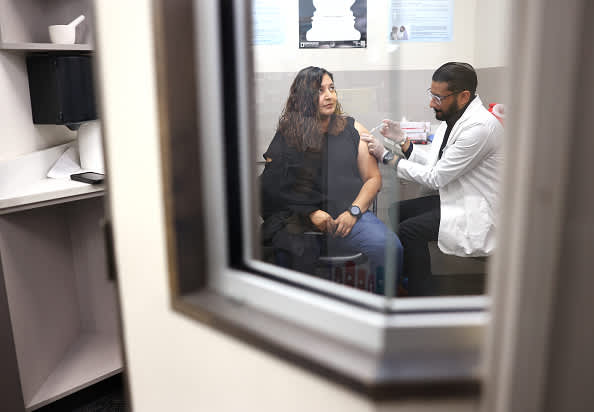
A shifting landscape of vaccine confidence in the United States
Recent polling by the Pew Research Center reveals that while a solid majority of Americans still support vaccination, the share of the population that sits in a gray zone of uncertainty has risen sharply over the past three years. In 2023, only about 30% of respondents described themselves as "unsure" about vaccines; by early 2026 that figure had climbed to roughly 45%, according to the latest data.
The rise in uncertainty is not limited to any single demographic. Younger adults, suburban voters, and even some high‑income earners are showing higher levels of doubt, often citing mixed messages from media outlets, concerns about rapid vaccine development, and a perceived lack of transparency from health authorities.
Who makes up the uncertain middle and why they matter
The "uncertain middle" consists largely of people who are not actively anti‑vaccine but who lack confidence in the safety or necessity of newer immunisations, such as the updated COVID‑19 boosters or the recently approved universal flu vaccine. A CDC focus group report notes that this group tends to be swayed by personal anecdotes and social‑media narratives rather than scientific data.
From a public‑health perspective, this segment is the most volatile. Unlike staunch opponents who are unlikely to change, the uncertain majority can be nudged toward acceptance—or rejection—by policy moves, community outreach, or even a single high‑profile incident. Their voting behavior on health‑related measures also makes them a key demographic for lawmakers.
Why the middle ground threatens disease control efforts
Epidemiologists warn that a sizable pool of hesitant adults can erode herd immunity thresholds, especially for diseases with high transmission rates. The World Health Organization estimates that a 5‑point drop in vaccination coverage can translate into tens of thousands of additional cases in a year, a calculation that holds true for the United States as well as for lower‑income nations.
The uncertainty also fuels a feedback loop: as vaccination rates slip, outbreaks become more visible, which in turn fuels fear and skepticism. This dynamic was evident during the 2024 resurgence of measles in several Midwestern states, where a modest decline in MMR uptake preceded a spike in cases that required emergency school closures.
Parallel trends in Africa and among the diaspora
Across the continent, similar patterns of ambivalence are emerging. A 2025 Afrobarometer survey highlighted that 38% of respondents in Nigeria and Kenya were "unsure" about newer vaccines, a figure that mirrors the U.S. middle ground. Health ministries in these countries are grappling with the same challenge of converting uncertainty into confidence, especially as they roll out malaria and Ebola vaccines.
The African diaspora in the United States adds another layer of complexity. Community leaders in cities like Houston and Atlanta report that cultural ties and transnational information flows can both amplify and mitigate uncertainty. According to the African American Public Health Alliance, targeted outreach that respects cultural narratives has succeeded in raising confidence among diaspora groups by up to 12 percentage points.
Policy levers and communication strategies that could shift the balance
Experts argue that the most effective way to move people out of the uncertain zone is through transparent, locally resonant messaging. A recent study by Harvard School of Public Health found that messages delivered by trusted community figures—faith leaders, teachers, and local physicians—outperformed generic government ads by a factor of 1.8 in boosting vaccine intent.
On the policy front, some states are experimenting with incentive programs that combine small financial rewards with easy access points, such as pharmacy‑based pop‑up clinics. Early data from Ohio’s "Vax‑Boost" initiative suggest a modest uptick in booster uptake among previously undecided adults, though critics caution that incentives alone may not address deeper trust deficits.
What the future holds for vaccine confidence worldwide
If the uncertain middle continues to expand, public‑health planners may need to redesign outbreak‑response frameworks to account for slower herd‑immunity build‑up. This could mean more frequent surveillance testing, targeted quarantine measures, and a greater reliance on digital health passports that verify vaccination status in real time.
Conversely, the growing awareness of this issue is prompting a new wave of research into behavioural nudges, data‑driven outreach, and cross‑regional collaborations. The upcoming Global Vaccine Confidence Summit in Nairobi, slated for late 2026, aims to bring together policymakers from the U.S., Africa, Europe, and Asia to share best practices and forge a coordinated response to the shared challenge of vaccine uncertainty.
Quick Answers
What percentage of Americans are uncertain about vaccines as of 2026?
About 45% of U.S. adults describe themselves as uncertain about vaccines, according to a Pew Research Center survey released in 2026.
How does vaccine uncertainty affect public‑health outcomes?
Even a small drop in vaccination rates can lower herd immunity, leading to more outbreaks and higher case numbers, as warned by the WHO and U.S. epidemiologists.
Are similar levels of vaccine uncertainty seen in African countries?
Yes, recent Afrobarometer data show that roughly 38% of respondents in Nigeria and Kenya are unsure about newer vaccines, mirroring the U.S. trend.
Source: www.cnbc.com


💬 Comments 0