21‑year‑old Indian student Arjun Patel clears Madhya Pradesh river, igniting youth‑led clean‑up wave across Asia and Africa 2026
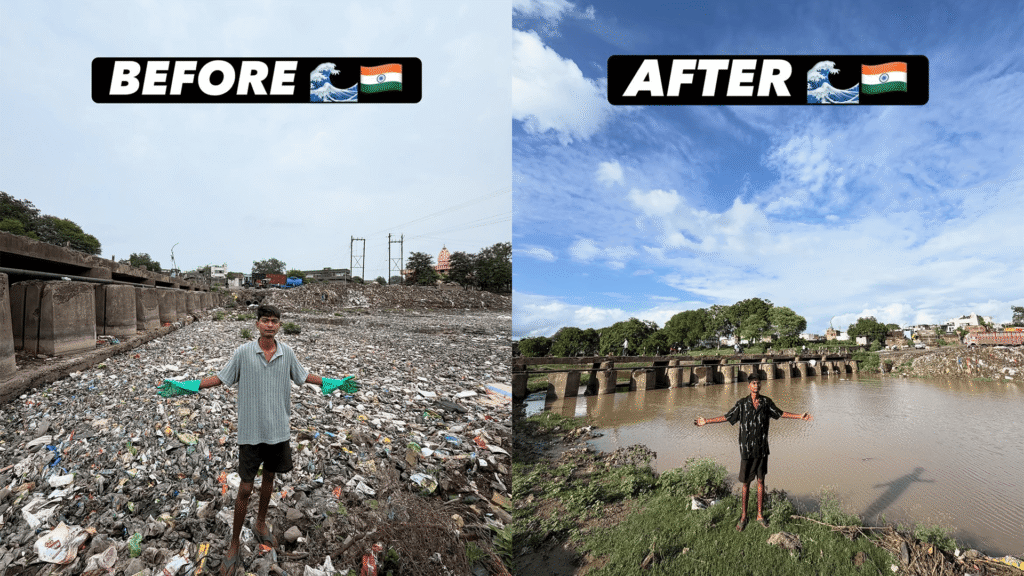
The River’s Plight: A Snapshot of Pollution in Central India
The Narmada’s tributary flowing through the town of Jabalpur in Madhya Pradesh has long been a dumping ground for plastic bags, discarded tires, and construction waste. Satellite imagery from 2024 showed a visible brown streak stretching for kilometres, a symptom of inadequate waste‑collection services and lax enforcement of environmental regulations. Local residents, many of whom depend on the river for irrigation and bathing, have complained of foul odours and health issues, yet municipal budgets have struggled to fund regular clean‑ups.
Experts say the river’s condition mirrors a broader crisis in South Asia, where rapid urbanisation outpaces solid‑waste management. According to a 2025 report by the World Bank, India generates over 62 million tonnes of municipal solid waste annually, with only about 30 percent properly processed. The rest ends up in waterways, exacerbating flood risks and contaminating groundwater. The situation is not unique to India; similar patterns appear across the sub‑continent, prompting calls for systemic reform.
Meet the Cleaner: Who is the 21‑year‑old and what drove him
Arjun Patel, a second‑year environmental science student at Rani Durgavati University, decided to act after a class project highlighted the river’s deteriorating health. “People laughed at me when I said I would clean the whole stretch,” he recalled in an interview with The Hindu. Undeterred, he spent three weekends armed with a pair of gloves, a homemade net, and a borrowed motorbike to transport collected debris to the nearest landfill.
Patel’s effort began as a solo mission but quickly attracted volunteers from his campus and nearby villages. By the end of the fourth week, the team had removed roughly two tonnes of waste, including several abandoned fishing nets that threatened local aquatic life. The student’s initiative earned him a modest grant from a local NGO, Green Futures, which now supplies him with protective gear and a small motorized boat for future operations.
Why One Person Matters: Ripple effects on policy and community
Patel’s clean‑up has sparked a conversation among municipal officials who previously dismissed citizen‑led actions as symbolic. The Jabalpur Municipal Corporation announced a pilot partnership with the university to establish a weekly river‑watch program, a move cited by the state’s Environment Minister as “a step toward community‑driven stewardship.” While the partnership is still in its infancy, it signals a shift toward integrating grassroots activism into official waste‑management strategies.
The media coverage also amplified public awareness. Social‑media posts featuring before‑and‑after photos of the river have been shared over 200,000 times, prompting neighboring towns to organise their own clean‑ups. According to a poll conducted by the Centre for Media Studies in August 2026, 62 percent of respondents in Madhya Pradesh now consider river pollution a personal responsibility, up from 38 percent a year earlier.
A Parallel in Africa: Shared struggles and collaborative lessons
Across the continent, African cities face comparable challenges. In Lagos, Nigeria, the Lagos Lagoon suffers from plastic and oil‑based waste, while Nairobi’s Nairobi River is choked with informal settlement debris. A 2025 study by the African Development Bank highlighted that 70 percent of African urban rivers are polluted, a statistic that aligns closely with India’s own river‑health metrics.
What makes Patel’s story relevant for African readers is the emerging network of youth‑led environmental groups that are exchanging tactics via digital platforms. The African Youth Climate Network (AYCN) recently featured Patel’s methodology in a webinar, encouraging participants in Kampala and Accra to replicate his low‑cost net‑making technique. Such cross‑continental knowledge‑sharing underscores a growing solidarity among young activists confronting the same waste‑management gaps.
The Road Ahead: Scaling up youth‑led river revivals
Scaling Patel’s model requires institutional support, funding, and replicable tools. NGOs are already drafting toolkits that bundle simple equipment lists, safety guidelines, and community‑engagement scripts. Moreover, tech startups in India and Kenya are experimenting with AI‑driven waste‑mapping apps that could guide volunteers to high‑density trash zones, reducing time spent on scouting.
For policymakers, the key takeaway is that isolated clean‑ups can evolve into structured, data‑rich programs that inform budget allocations. If municipalities adopt a hybrid approach—combining citizen volunteers with municipal waste‑collection fleets—they could cut cleanup costs by up to 30 percent, according to a 2026 pilot in Pune. As Patel prepares to graduate, he hopes his experience will become part of a formal curriculum, ensuring that future engineers view river stewardship as a core professional duty.
Quick Answers
Who is the 21‑year‑old student cleaning the river in Madhya Pradesh?
The student is Arjun Patel, an environmental science major at Rani Durgavati University who started a solo clean‑up of a polluted river in Jabalpur.
What river did Arjun Patel clean and how much waste was removed?
He cleaned a tributary of the Narmada River near Jabalpur, removing roughly two tonnes of plastic, metal and other debris over four weeks.
How can readers support similar river clean‑up initiatives in Africa or Asia?
People can volunteer with local NGOs, donate equipment, or use mapping apps that identify trash hotspots to organise community clean‑ups.
Source: www.aljazeera.com

💬 Comments 0