64‑year‑old Nepali woman Chandika Shrestha rescued after 10 days buried in mud during 2026 Kathmandu floods
Monsoon fury and a fragile infrastructure
Late July 2026 marked the peak of Nepal’s monsoon season, when relentless rain battered the Kathmandu valley and its surrounding hills. The National Disaster Risk Reduction Authority recorded over 350 mm of rainfall in a 48‑hour window, a figure that eclipsed the historical average by nearly 60 percent.
Rapid runoff combined with poorly maintained drainage networks to trigger flash floods and landslides across several districts. In the capital’s outskirts, entire neighborhoods were swept under meters of mud, leaving families trapped in homes that were never built to withstand such forces.
Experts from the International Centre for Integrated Mountain Development (ICIMOD) warned that climate‑change‑driven intensification of monsoons has turned what used to be a seasonal inconvenience into a life‑threatening emergency for millions of Nepalis.
Chandika Shrestha’s ten‑day ordeal
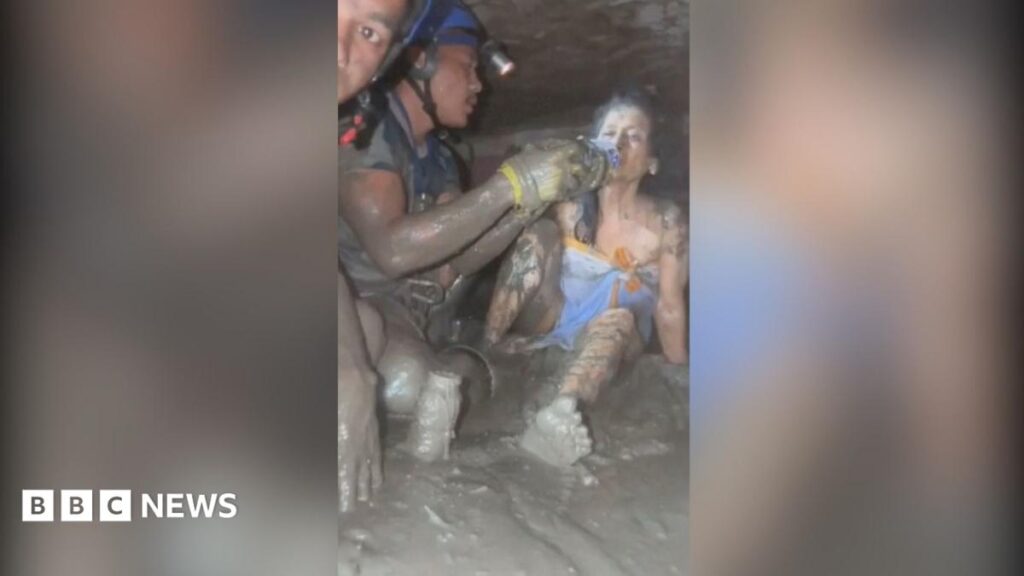
Chandika Shrestha, 64, lived in a modest two‑room house in the Bhaktapur suburb of Duwakot. When the hillside gave way on July 28, her home was partially collapsed and buried under a thick layer of mud and debris. Neighbours initially assumed the structure was beyond rescue, but a local volunteer group reported hearing faint shouts from within the rubble.
Rescue teams from the Nepalese Army, supported by the United Nations Office for the Coordination of Humanitarian Affairs (UNOCHA), launched a painstaking operation that involved hand‑digging, rope‑ladders, and eventually a helicopter airlift. After more than ten days without food or clean water, Shrestha was extracted alive on August 8 and rushed to Patan Hospital for treatment.
Medical staff said she suffered severe dehydration, minor fractures, and hypothermia, but her survival is considered a “miracle” given the length of exposure. She is now recovering under close observation, and her family has expressed deep gratitude to the rescuers.
Why the rescue matters beyond a human‑interest story
Shrestha’s survival spotlights critical gaps in Nepal’s disaster‑response architecture. While the army’s rapid deployment saved lives, the initial delay in locating her underscores the need for more granular early‑warning systems and community‑level search protocols.
The incident also raises questions about urban planning in rapidly expanding hill towns. Many homes, like Shrestha’s, are built without proper slope analysis or reinforced foundations, making them vulnerable to landslides that are becoming more frequent as rainfall intensifies.
International donors have taken note. The World Bank’s South Asia Climate Resilience Program, which earmarks $250 million for flood mitigation in Nepal, is expected to accelerate pilot projects that use drones for rapid damage assessment—technology that could have shortened the time it took to locate Shrestha.
A broader pattern: floods that bind Nepal and Africa
The tragedy mirrors a wave of extreme‑weather disasters across the Global South. In March 2026, Mozambique’s northern provinces were hit by cyclonic floods that left thousands stranded under mud, while Kenya’s Rift Valley experienced landslides that claimed over 200 lives.
These parallel crises have sparked a growing dialogue among African and South Asian climate‑adaptation networks. The African Development Bank’s Climate Change Fund, for example, recently partnered with Nepal’s Ministry of Forests and Environment to exchange best practices on community‑based early‑warning systems.
For the African diaspora in Nepal, the event has prompted renewed calls for cross‑continental solidarity. Kenyan NGOs operating in Kathmandu have offered to share their flood‑mapping tools, while Nepali engineers are collaborating with Ghanaian researchers on low‑cost slope‑stabilisation techniques that could benefit both regions.
What comes next: policy, technology and community resilience
In the wake of the rescue, Nepal’s government announced a three‑phase plan to overhaul hill‑area housing codes, integrate satellite‑based rainfall monitoring, and fund community‑driven evacuation drills. The plan aims to reduce the time between disaster onset and rescue response from days to hours.
Technology firms are also stepping in. A Kathmandu‑based startup, SkyRescue, has secured seed funding to deploy AI‑powered drones that can scan collapsed structures and pinpoint survivors in real time. If successful, the system could be scaled to other flood‑prone regions, including parts of West Africa.
For ordinary citizens like Shrestha’s neighbours, the most immediate change will be the establishment of neighborhood “rescue squads” trained in basic search‑and‑rescue techniques. Such grassroots initiatives are expected to complement formal emergency services and provide a quicker, culturally attuned response when the next monsoon hits.
Quick Answers
How long was Chandika Shrestha buried before she was rescued?
She spent more than ten days trapped under mud and debris before being airlifted to a hospital.
What caused the mud‑burial incident in Nepal?
Intense monsoon rains triggered flash floods and landslides that collapsed her home and covered it with mud.
Will Nepal change its building rules after the 2026 floods?
Yes, the government has announced new housing codes and early‑warning measures aimed at preventing similar disasters.
Source: www.bbc.co.uk




💬 Comments 0