Syrian army weapons depot explosion near Aleppo injures four, raises arms‑trade worries
Background: Syria’s munitions network and the Aleppo depot
Since the outbreak of the civil war in 2011, the Syrian government has relied on a sprawling network of ammunition stores to keep its armed forces supplied. The depot south of Aleppo, officially known as the Al‑Quds Ammunition Facility, is one of the largest in the north‑west, storing everything from small‑calibre rounds to rocket‑propelled grenades for the Syrian Arab Army.
Aleppo’s strategic position near the Turkish border has made it a logistical hub for both the regime and various rebel factions. Over the years, the area has seen repeated raids, sabotage attempts, and occasional accidental detonations, reflecting the volatility of storing vast quantities of ordnance in a war‑torn region.
The Syrian Ministry of Defense has rarely disclosed details about the exact inventory of the Al‑Quds site, but satellite imagery reviewed by independent analysts in 2023 suggested the presence of over 10,000 tonnes of munitions, enough to equip several divisions for months.
What happened on September 21, 2026
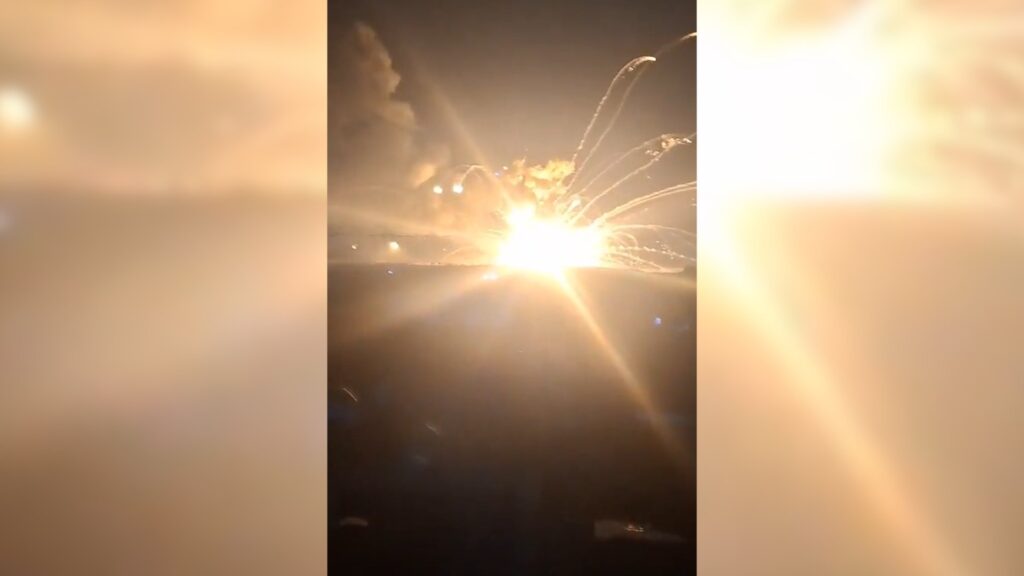
Early on Saturday morning, residents of the nearby town of Kafr Nabl reported a series of thunderous blasts that rattled windows for several kilometers. The Syrian state news agency SANA confirmed that an explosion ripped through the Al‑Quds depot, causing a fire that engulfed multiple storage bays.
At least four civilians were injured, according to local medical sources, with two of them taken to Aleppo University Hospital for treatment of burns and shrapnel wounds. The Syrian army quickly cordoned off the area and deployed engineering units to contain the blaze, but the intensity of the blast created a cloud of smoke that lingered for hours.
Preliminary assessments by the Syrian military suggest the blast may have been triggered by a mishandling of volatile propellant during routine loading operations, although opposition groups have hinted at a possible sabotage effort. No official claim of responsibility has emerged as of press time.
Why the explosion matters beyond Syria’s borders
Large‑scale munitions depots are often linked to informal arms‑smuggling routes that stretch from the Levant into North Africa and the Sahel. Analysts at the Stockholm International Peace Research Institute (SIPRI) have warned that surplus Syrian weapons frequently find their way to conflict zones in Libya, the Central African Republic, and even to militant groups operating in the Sahel, feeding a global cycle of instability.
The loss of tens of thousands of rounds could temporarily tighten the supply of Syrian‑origin weapons that have been flowing through illicit networks. For governments in West Africa that are already battling armed groups equipped with Syrian‑made AK‑47s and RPGs, a sudden dip in availability may alter the calculus of ongoing skirmishes.
Moreover, the explosion highlights the fragility of the Syrian state's logistical backbone. A weakened arsenal may force the regime to lean more heavily on external suppliers—particularly Russia and Iran—potentially reshaping the balance of power among foreign backers and their own interests in Africa, where both Moscow and Tehran have been expanding influence through security contracts and arms deals.
African connections: arms flows, diaspora concerns, and market impacts
For African nations that import weapons through the Middle East, the Aleppo blast is a reminder of how quickly supply chains can be disrupted. Nigeria’s defence procurement officials have cited the need for diversified sources after a 2024 report revealed that a portion of their small‑arms stockpile originated from Syrian surplus shipments routed via Turkey.
The Syrian diaspora in Europe and North America, many of whom maintain family ties in Africa, expressed alarm on social media that the explosion could trigger a crackdown on informal smuggling networks, potentially endangering relatives who rely on the black‑market flow of inexpensive ammunition for self‑defence in remote regions of the continent.
Financial markets that track defence exports also took note. The Bloomberg Defence Index slipped 0.3% on the day, reflecting investor worries that a disruption in Syrian output could affect contracts for third‑party manufacturers in the United Arab Emirates and Jordan, firms that have recently secured deals to supply arms to several African states.
Reactions and what could happen next
Syria’s president, Bashar al‑Assad, called the incident “an unfortunate accident” in a televised statement and pledged a swift investigation. The Russian defence ministry, a key ally, offered technical assistance, signalling Moscow’s continued role in stabilising Syrian logistics.
Human‑rights groups, including Amnesty International, urged the Syrian authorities to allow independent investigators to assess the site, warning that unexploded ordnance could pose a long‑term danger to civilians and to any illicit traders seeking to scavenge usable munitions.
Looking ahead, experts predict a two‑fold scenario: a short‑term shortage of Syrian‑origin weapons that may push rebel groups and African militias to seek alternatives, and a longer‑term push by regional powers to tighten control over arms corridors. If the Syrian government tightens security around its remaining depots, illicit flows could be forced to route through more opaque channels, potentially increasing the cost and risk for buyers across Africa.
Quick Answers
How many people were injured in the Aleppo weapons depot explosion?
At least four people were reported injured, with two receiving treatment for burns and shrapnel wounds.
Could the explosion affect arms supplies to African conflict zones?
Yes, the loss of Syrian munitions may temporarily reduce the flow of surplus weapons that have been reaching African militias through illicit networks.
What is the likely cause of the blast according to Syrian officials?
Syrian officials say the explosion appears to have resulted from a mishandling of propellant during routine loading, though opposition groups suggest possible sabotage.
Source: www.aljazeera.com




💬 Comments 0