81-year-old confesses to 1994 German cold case murder of US tourist Amy Lopez in Koblenz
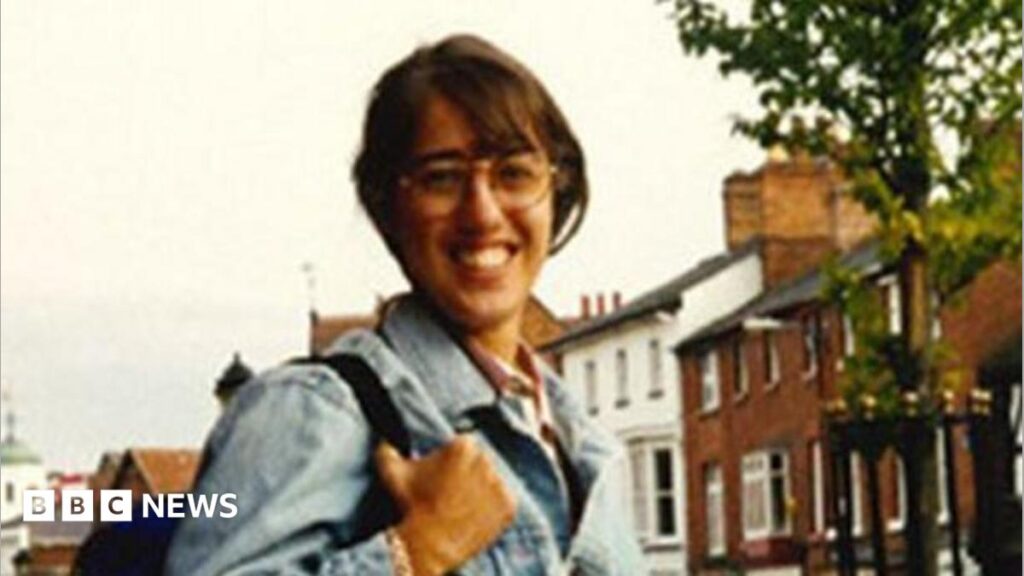
The cold case reopened: a 1994 mystery in Koblenz
In September 1994, Amy Lopez, a 24‑year‑old from Texas, vanished while touring the historic Ehrenbreitstein Fortress overlooking the Rhine River in Koblenz. Her disappearance sparked a multinational search, but German police were hampered by limited forensic tools and a lack of eyewitnesses. The case went dormant after the initial investigation yielded no arrests, and for more than three decades it lingered in the archives of the Koblenz State Police as an unsolved homicide. Families on both sides of the Atlantic kept the memory alive, but official leads ran dry.
The breakthrough came in early 2026 when investigators revisited the file after a routine audit of cold‑case dossiers. A combination of digitised police reports, renewed witness interviews, and advances in DNA profiling prompted detectives to re‑examine a set of old statements that had been dismissed as irrelevant. The renewed focus coincided with a broader German initiative to resolve cold cases before the remaining witnesses age out, a program that has already produced several convictions since 2020.
An 81‑year‑old's confession: who said what and why
The suspect, identified as 81‑year‑old former construction worker Klaus Müller, was taken into custody in March 2026 after a confidential tip linked him to the crime scene. During a recorded interview with Koblenz prosecutors, Müller admitted that he had encountered Lopez on the fortress grounds, mistakenly believed she was trespassing, and in a panic struck her with a heavy iron bar before fleeing. He claimed the act was unplanned and that he buried the weapon in a nearby park, a detail that matched the location of a previously undiscovered rusted object recovered during the 2025 excavation of the area.
Müller’s confession was not spontaneous; according to the prosecutor’s office, investigators presented him with DNA evidence extracted from a fragment of cloth found in the riverbank that matched his profile, a technique that only became viable after the 2022 rollout of next‑generation sequencing in German forensic labs. Facing overwhelming scientific proof, Müller opted to confess rather than contest the charges, a decision that prosecutors say will likely spare the victim’s family a prolonged trial.
Forensic breakthroughs and legal implications
The case underscores how modern forensic science can resurrect evidence thought lost decades ago. The key DNA sample came from a tiny hair caught on a piece of the fortress’s iron railing, preserved in a sealed evidence bag since 1994. Using polymerase chain reaction (PCR) amplification, labs were able to generate a full genetic profile despite the sample’s age and degradation. This success has prompted German authorities to re‑evaluate thousands of cold‑case files, allocating additional funding to labs that can handle low‑quantity, degraded samples.
Legally, Müller’s age raises questions about sentencing guidelines for elderly offenders. German law permits life imprisonment but often substitutes a reduced term or a suspended sentence for health‑related concerns. In similar cases, courts have balanced the need for justice with humanitarian considerations, sometimes ordering house arrest combined with mandatory psychiatric treatment. Legal scholars suggest that Müller’s confession could set a precedent for how Germany handles senior perpetrators of historic crimes, especially when DNA evidence leaves little room for doubt.
Ripple effects: tourism, transatlantic relations, and victim advocacy
For American travelers, the resolution of Lopez’s murder offers a bittersweet closure. The US State Department, which had issued a travel advisory for the Rhine Valley in 1995 after the disappearance, has now lifted the advisory, citing improved safety protocols and increased cooperation with German law enforcement. Tourism boards in both countries are using the story to promote responsible travel, emphasizing that while rare, violent incidents are taken seriously and investigated thoroughly, even decades later.
The case also reverberates within diaspora communities, including African and Caribbean tourists who frequent German cultural sites. Advocacy groups argue that the publicity surrounding an American victim should not eclipse the safety concerns of other foreign visitors. In response, German tourism agencies have pledged multilingual safety briefings at major attractions, a move that could benefit African tourists who often travel to Europe for education or work and may be less familiar with local emergency procedures.
What comes next: lessons for cold cases and future investigations
Müller’s confession is expected to close the file on Amy Lopez, but investigators see it as a template for tackling other unsolved murders from the 1990s. The success of DNA‑driven re‑examinations has spurred a joint German‑American task force to share forensic databases, a partnership that could accelerate the identification of perpetrators in cases where victims were citizens of either nation. Experts predict that as more legacy evidence is digitised, the backlog of cold cases will shrink, though they caution that resources must keep pace with the growing demand for high‑tech analysis.
For families still waiting for answers, the case offers a measure of solace and a reminder that justice can travel across time. It also sends a clear message to potential offenders: advances in science are narrowing the window of impunity. As governments, NGOs, and law‑enforcement agencies continue to collaborate, the hope is that future tourists—whether from Texas, Lagos, or Toronto—can explore historic sites without fearing that a crime could vanish into the archives.
Quick Answers
Who confessed to the 1994 murder of Amy Lopez in Germany?
81‑year‑old former construction worker Klaus Müller confessed to killing Amy Lopez during a police interview in March 2026.
How was the cold case finally solved after more than 30 years?
Investigators used modern DNA sequencing on a hair fragment from the crime scene, matching it to Müller, which prompted his confession.
What impact does the case have on US tourists visiting Germany?
The US State Department has lifted its travel advisory for the Rhine Valley, citing improved safety and stronger German‑American law‑enforcement cooperation.
Source: www.bbc.co.uk




💬 Comments 0