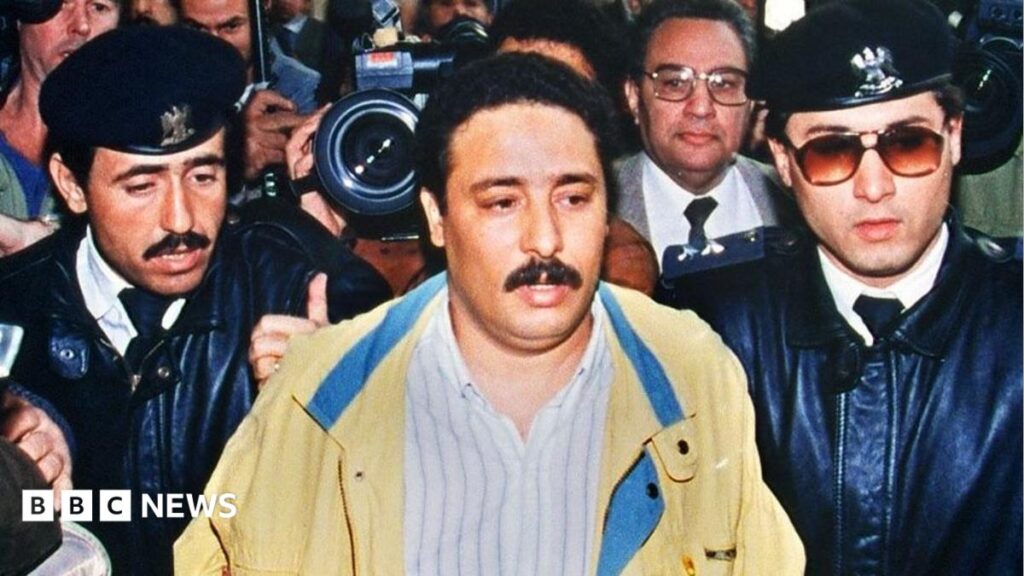
Al Amin Khalifah Fhimah, cleared in 2001 Lockerbie bombing trial, dies at 70 in 2026
Background: The Lockerbie bombing and Libya’s legal battle
On December 21, 1988, Pan Am Flight 103 exploded over the Scottish town of Lockerbie, killing 270 people. The attack triggered a decades‑long diplomatic and legal tug‑of‑war between Western governments and the regime of Muammar Gaddafi, who denied any involvement.
In 1999, a Scottish court tried two Libyan nationals—Abdelbaset al‑Mahmoud Ali and Al Amin Khalifah Fhimah—under a special arrangement that allowed the trial to be held in the Netherlands but governed by Scottish law. The verdict, delivered in January 2001, acquitted Fhimah while finding al‑Mahmoud Ali guilty.
Fhimah’s acquittal was based on forensic evidence that failed to place his luggage on the aircraft, and on the absence of a direct link between him and the bomb‑making network. The decision was welcomed by Libya’s legal team but remained a sore point for many of the victims’ families, especially in the United Kingdom and the United States.
Why his death matters now, beyond the headlines
The passing of Fhimah, announced by Libyan Airlines on Facebook, revives public interest in a case that still shapes Libya’s foreign policy. Even though the trial ended more than two decades ago, the Lockerbie episode continues to influence how Western nations assess security cooperation with North African states.
For the United Kingdom, the case is a reminder of the challenges in securing justice when state actors are involved. Recent parliamentary debates have cited Lockerbie when discussing the limits of diplomatic immunity and the need for stronger evidence‑sharing mechanisms across continents.
In Libya, the death of a man who survived a high‑profile trial may be seen as a symbolic closure for a generation that lived under Gaddafi’s authoritarian rule. The nation is still navigating its post‑revolution identity, and the Lockerbie saga is part of the broader narrative of how it seeks to rebuild trust with the international community.
African and diaspora angles: Libya’s aviation, legal reforms, and community memory
Libyan Airlines, the state carrier that posted the condolence message, has been working to restore its fleet after years of sanctions and war‑time damage. The airline’s acknowledgment of Fhimah’s death signals a rare moment where a corporate entity engages with a politically sensitive legacy, possibly to demonstrate a more transparent corporate culture to African and European partners.
Legal scholars across the continent note that the Lockerbie trial set a precedent for holding African nationals accountable in foreign courts, a point of contention for many African diaspora advocacy groups. The trial’s mixed outcome—acquittal for one, conviction for another—has fueled debates on whether international tribunals can ever be truly impartial when political pressure looms large.
For Libyan diaspora communities in the United Kingdom, Canada, and the United States, the news rekindles memories of the 1990s protests and fundraising drives that supported the victims’ families. Many expatriates recall how the case galvanized a trans‑Atlantic solidarity network, a model that later informed campaigns for other African causes such as the Darfur investigations.
Reactions: From victims’ families to Libyan officials
Families of the Lockerbie victims have offered measured responses. In a recent interview, a British mother of a child who perished expressed that “justice was never fully served,” but she also said that the focus now should be on remembering the victims rather than revisiting old legal battles.
Libyan officials, who have been trying to shed the image of a rogue state, issued a brief statement through the Ministry of Foreign Affairs, describing Fhimah as “a citizen who endured an unjust legal process and later contributed to rebuilding our nation.” The phrasing mirrors the government’s broader effort to rewrite its narrative from pariah to responsible partner in global security.
Human‑rights NGOs, such as Amnesty International, noted that the case still highlights the need for transparent investigations when state actors are implicated. They urged both Western and African governments to invest in forensic capacity that could prevent similar ambiguities in future terrorism cases.
What’s next: Legal, diplomatic and societal implications
Although Fhimah’s death does not reopen the legal file, it may prompt renewed calls for a comprehensive compensation package for Lockerbie victims. The United Nations Compensation Commission, which has already awarded billions to families, could face pressure to reassess its distribution formula in light of the lingering grievances.
On the diplomatic front, the United Kingdom and Libya have been negotiating a series of trade and security agreements since 2015. The renewed public attention could accelerate those talks, especially as both sides seek to demonstrate goodwill ahead of the 2027 NATO‑Mediterranean summit, where Libya hopes to showcase its progress on counter‑terrorism cooperation.
Culturally, the story may inspire a new wave of artistic projects. A Nigerian filmmaker, whose parents were among the flight’s passengers, announced plans for a documentary that will juxtapose the Lockerbie tragedy with contemporary African diaspora experiences of displacement and justice. Such projects could keep the conversation alive in African media spaces, ensuring the episode remains part of collective memory rather than a footnote.
Quick Answers
Who was Al Amin Khalifah Fhimah?
Al Amin Khalifah Fhimah is a Libyan national who was acquitted in the 2001 Scottish trial over the 1988 Lockerbie bombing.
How does Fhimah’s death affect the Lockerbie compensation claims?
His death does not reopen the case, but it may renew pressure on the UN Compensation Commission to review how victims’ families are compensated.
What impact does the story have on Libya’s relations with the West?
The renewed attention could accelerate ongoing trade and security talks, as both Libya and Western nations seek to move beyond the legacy of the Lockerbie dispute.
Source: www.bbc.co.uk




💬 Comments 0