Albania student protests 2026 demand better university conditions and jobs, sparking regional and diaspora implications
Background: Albania’s higher‑education challenges
Albania’s public universities have long struggled with under‑funding, aging infrastructure and low faculty salaries. The World Bank estimates that per‑student spending in Albanian higher‑education institutions is roughly 40% below the EU average, a gap that translates into overcrowded lecture halls and limited research opportunities. Graduates face a bleak labour market: a 2025 Statistics Institute report showed that close to 30% of university alumni were unemployed six months after graduation, while many of the employed took temporary or low‑skill jobs unrelated to their degrees.
These systemic issues have fed a persistent brain‑drain, with young Albanians increasingly seeking postgraduate studies or employment abroad, especially in Italy, Germany and the United Kingdom. The government’s pledge to align its education system with EU accession benchmarks has yielded only incremental reforms, leaving many students skeptical that promises will materialise into tangible improvements.
The spark: How the protests erupted
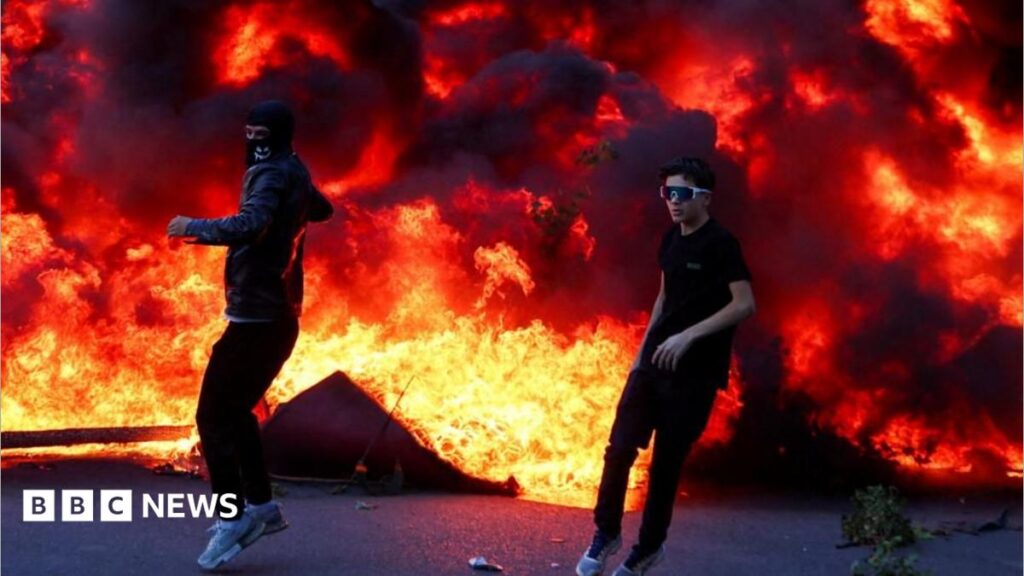
On October 13, 2026, thousands of students from the University of Tirana, Polytechnic University and several regional campuses gathered in the capital to demand higher wages for lecturers, modernised facilities and a transparent job‑placement scheme. The demonstration began peacefully, with chants echoing across Skanderbeg Square and live streams trending on regional social media platforms. By the following day, a faction of protesters, frustrated by what they called “empty rhetoric,” broke through police barricades and set fire to the Ministry of Education’s annex, igniting a blaze that damaged administrative offices and forced evacuation of nearby government buildings.
Police responded with tear‑gas and water cannons, and at least 25 demonstrators were detained, according to statements from the Albanian Interior Ministry. Student union leader Arben Kola told reporters that the escalation was not pre‑planned but a spontaneous reaction to weeks of ignored petitions. The incident has drawn condemnation from opposition parties, who accuse the ruling Socialists of failing to address youth unemployment, while the government insists it will restore order and open a dialogue within “legal frameworks.”
Why it matters for Europe and Africa
Albania sits on a critical migration corridor that links the Western Balkans to the broader European Union. Any destabilisation in the capital can ripple through border towns that serve as transit points for migrants from the Horn of Africa and the Sahel seeking to reach Italy or Greece. According to a recent report by the International Organization for Migration, 12% of irregular migrants passing through Albania in 2024 cited “unstable local conditions” as a factor influencing their route choices. A surge in civil unrest could therefore tighten security measures, potentially slowing the flow of African migrants and prompting them to reroute through more perilous pathways.
Beyond migration, the protests touch on scholarship and exchange programmes that involve African students. Albania’s Ministry of Education runs a bilateral scholarship scheme with several African nations, offering tuition‑free slots in fields such as engineering and public health. If the unrest leads to budget cuts or a suspension of these agreements, it could curtail educational opportunities for African youths who rely on such partnerships to gain international credentials, thereby affecting diaspora communities that view Albania as a stepping‑stone into the EU labour market.
A pattern of student unrest across the Global South
The Albanian demonstrations echo a wave of campus activism that has swept across the Global South over the past few years. In Nigeria, university strikes in 2023 over funding cuts culminated in a nationwide debate on the quality of tertiary education. Kenya experienced massive tuition‑fee protests in 2022, prompting the government to freeze fee hikes for a year. South Africa’s #FeesMustFall movement in 2021 similarly forced a review of scholarship allocations for disadvantaged students. In each case, the core grievances—under‑investment, poor graduate outcomes and limited state support—mirror those voiced by Albanian students, underscoring a shared generational frustration.
Digital mobilisation has been a common thread. Protesters in Albania used encrypted messaging apps and TikTok clips to coordinate flash mobs, a tactic also observed among Ghanaian and Ugandan students who leveraged Instagram Live to broadcast campus occupations. The convergence of economic stagnation, inflationary pressures and a perception that governments prioritise elite interests over youth futures has created fertile ground for cross‑border solidarity, even as the specific political contexts differ.
What could happen next? Scenarios and policy options
The Albanian government faces a delicate balancing act. One plausible route is to convene an emergency round‑table with student representatives, university rectors and the European Commission’s Balkan desk, aiming for a short‑term funding package that upgrades laboratory equipment and expands career‑service centres. Such a concession could defuse tensions and signal Albania’s commitment to EU‑aligned reforms, potentially accelerating its accession talks. However, critics warn that piecemeal cash injections without structural overhaul risk becoming a temporary Band‑Aid, leaving the underlying mismatch between graduate output and labour‑market demand unresolved.
Alternatively, the authorities could double down on security, imposing stricter curfews and expanding police presence on campuses. While this approach might restore order quickly, it could also alienate a generation already skeptical of state institutions, fueling a cycle of protest and repression. International donors and NGOs have hinted at supporting curriculum modernisation and entrepreneurship incubators, which could offer a longer‑term solution by linking academia directly to emerging sectors such as renewable energy and digital services. The direction Albania chooses will not only shape its domestic stability but also reverberate through migration patterns, regional cooperation and the educational prospects of African students counting on Albanian scholarships.
Quick Answers
What are the main demands of the Albanian student protesters?
They are calling for higher lecturer salaries, modernised university facilities, transparent job‑placement services and increased funding for research.
How could the protests affect migration flows from Africa to Europe?
Escalating unrest may tighten border controls in Albania, a key transit route, potentially slowing African migrants’ passage to Italy and Greece and prompting them to seek riskier alternatives.
When is the Albanian government expected to respond formally to the protests?
The interior ministry announced a meeting with student leaders for October 18, 2026, though analysts say substantive policy changes could take weeks to materialise.
Source: www.bbc.co.uk




💬 Comments 0