Cali’s Torres del Limonar Collapse After 5.5‑Magnitude Quake Leaves Brother Searching for Survivors, 2026
A tremor that rattled the Valle del Cauca
On the early morning of August 9, 2026, a magnitude‑5.5 earthquake struck the Valle del Cauca region of western Colombia, with its epicenter just a few kilometres north of Cali, the country’s third‑largest city. The tremor lasted under a minute but was strong enough to jolt high‑rise apartments, shatter windows, and trigger panic across neighborhoods that are normally accustomed to the occasional minor quake.
Seismologists from the Colombian Geological Service (SGC) later confirmed that the quake was the strongest to hit the area since the 1999 Armenia event, which measured 6.2 on the Richter scale. While the SGC warned that aftershocks could continue for weeks, the immediate concern shifted to the dozens of structures that showed visible damage, especially older concrete blocks built before modern seismic standards were enforced.
The quake’s impact was uneven. Wealthier districts with newer construction reported minor cracks, whereas older, densely packed neighborhoods – many of them informal settlements – suffered roof collapses, wall failures, and, in a handful of cases, entire buildings giving way. The most dramatic of these failures occurred at the Torres del Limonar residential complex in the San Antonio sector of Cali.
Torres del Limonar: a building’s tragic downfall
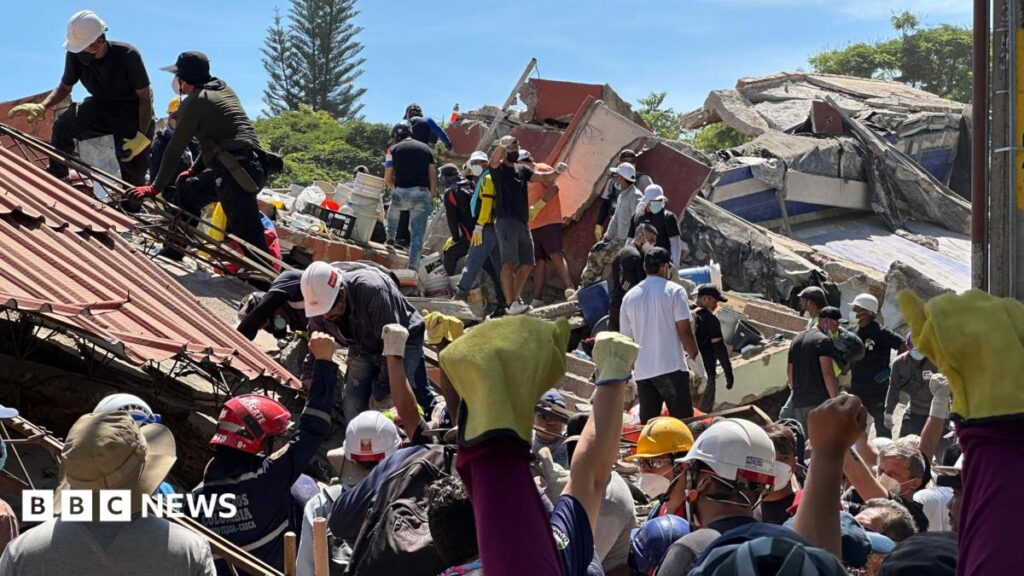
Torres del Limonar, a 12‑storey concrete tower built in the early 2000s, housed roughly 150 families, many of whom were low‑income workers commuting to the city’s industrial zones. When the seismic waves hit, the building’s central core buckled, causing the upper floors to collapse onto the lower ones. Rescue crews arrived within an hour, but the debris was a tangled mass of concrete, steel rebar, and personal belongings, complicating entry points.
By the end of the first day, emergency services had recovered eight bodies and rescued twelve survivors, most of whom were found in the lower apartments that remained partially intact. The search continued well into the night, with canine units, thermal imaging cameras, and a team of volunteers from the Red Cross combing through the rubble. The operation was hampered by intermittent power cuts and the need to shore up unstable sections to protect rescuers.
Among the volunteers was 27‑year‑old Carlos Méndez, whose older brother, Luis Méndez, was missing inside the building. Carlos spent hours on the perimeter, shouting Luis’s name, clutching a family photograph, and refusing to leave until he received confirmation that the search had reached the deepest levels. His anguish became a focal point for media coverage, symbolising the personal trauma that underlies the statistics.
Human stories and community solidarity
Carlos’s desperate calls echoed through the streets of San Antonio, drawing neighbors, street vendors, and even local musicians who set up impromptu acoustic sessions to keep morale high for the rescuers. Social media feeds flooded with the hashtag #CaliResiste, where residents posted updates, shared water stations, and organised temporary shelters for families who had lost everything.
Local NGOs, such as Fundación Casa Esperanza, mobilised quickly, providing food parcels, blankets, and legal assistance to those whose rental contracts were abruptly voided. The city’s mayor, Alejandro Ordóñez, declared a state of emergency for the district, allocating emergency funds and promising a rapid assessment of all high‑rise buildings that might be vulnerable to aftershocks.
For the Méndez family, the waiting game became a test of endurance. According to an interview with the family published by El País on August 10, Carlos said, “Every time I hear a creak I think it’s Luis moving, but then the silence returns.” Their story has resonated across Colombia, reminding the nation of the lingering psychological scars that follow natural disasters.
Why the collapse matters beyond Colombia: lessons for Africa and the diaspora
While the quake struck a region not traditionally known for high seismic activity, the failure of Torres del Limonar highlights a broader global challenge: the enforcement of building codes in rapidly urbanising contexts. Many African cities—Lagos, Nairobi, Accra—face similar pressures, with informal settlements expanding faster than municipal capacity to regulate construction safety.
Experts note that the Colombian experience could serve as a cautionary tale for African policymakers. Dr. Amina N'Diaye, a structural engineer at the University of Dakar, told Reuters that “the key takeaway is not the magnitude of the quake but the age and design of the building. In Africa, many structures were erected before modern seismic guidelines, and retrofitting is rarely funded.” She added that climate‑related shocks, such as intense rainfall leading to landslides, compound the risk of structural failure, making comprehensive safety audits essential.
The Colombian diaspora in Africa, though small, is growing, especially among entrepreneurs and health professionals in South Africa and Kenya. Community groups have already begun circulating safety checklists and offering translation services for Spanish‑speaking families displaced by the quake. Their involvement underscores how transnational networks can amplify emergency response, a model that African cities might replicate with their own diaspora links.
What comes next: reconstruction, policy shifts, and long‑term resilience
In the wake of the collapse, the Colombian government announced a three‑phase reconstruction plan. Phase one will focus on clearing debris and providing temporary housing; phase two involves structural assessments of all high‑rise buildings built before 2010; and phase three aims to subsidise retrofitting for low‑income owners. Funding is expected to combine national budget allocations, World Bank disaster‑risk loans, and private‑sector contributions.
Civil society groups are pressing for stricter enforcement of the 2015 Seismic Safety Ordinance, which mandates that new constructions incorporate base isolation and flexible framing. According to a statement from the Colombian Association of Engineers, “without systematic inspections, we risk repeating the tragedy of Torres del Limonar in other cities, from Medellín to Cartagena.”
For the Méndez family and thousands of others, the road to recovery will be long. Yet the outpouring of solidarity, both locally and from the Colombian diaspora in Europe, North America, and Africa, suggests a renewed collective commitment to rebuilding not just walls, but the social fabric that holds communities together.
Quick Answers
How many people were rescued from the Torres del Limonar collapse?
Rescue teams saved twelve survivors from the rubble, according to official reports released on August 10, 2026.
What magnitude was the earthquake that hit Cali in August 2026?
The quake measured 5.5 on the Richter scale, making it the strongest tremor in the Valle del Cauca region since 1999.
Will the Colombian government change building codes after the collapse?
Yes, officials have pledged a three‑phase plan that includes stricter inspections of pre‑2010 high‑rise structures and subsidies for retrofitting.
Source: www.bbc.co.uk




💬 Comments 0