Canada PM Mark Carney says military is planning US invasion scenarios in 2026
Background: A surprising admission from Ottawa
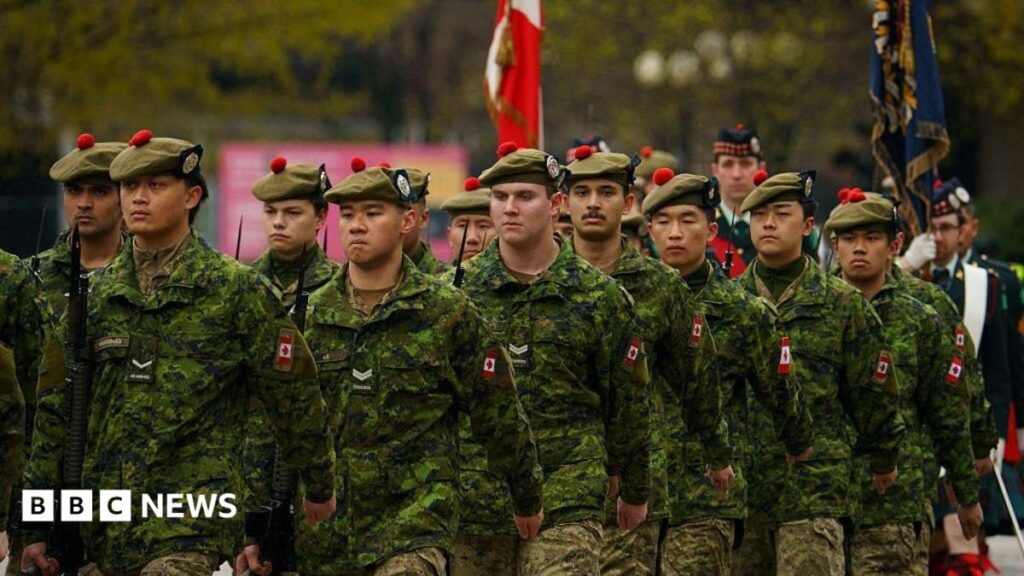
In early October 2026, Prime Minister Mark Carney broke with diplomatic convention by confirming that Canada’s armed forces are running contingency plans for a potential United States invasion. While the notion sounds like a Cold‑War relic, Carney framed it as a routine risk‑assessment exercise, noting that the military “must be prepared for any eventuality, however unlikely.” The comment was made during a press briefing on the Defence Department’s annual readiness review and quickly sparked headlines across North America.
Canada and the United States have shared the world’s longest undefended border for more than two centuries, and their security relationship is anchored in NATO, NORAD and countless bilateral agreements. Historically, joint exercises have focused on Arctic sovereignty, cyber defence and humanitarian missions, not on the prospect of one ally attacking the other. Carney’s statement therefore raised eyebrows among scholars who see it as a signal that Ottawa wants to reaffirm its strategic independence.
The announcement also coincided with a broader shift in Canadian defence policy. Over the past year, the government has increased its defence budget by 15 % and announced a new “Strategic Autonomy” doctrine aimed at reducing reliance on U.S. military infrastructure. Analysts suggest that the scenario planning is part of a larger effort to test the robustness of Canada’s own command‑and‑control systems, logistics chains, and civil‑military coordination mechanisms.
The unlikely scenario: Why the United States would be considered a threat
Experts stress that the probability of a U.S. invasion remains infinitesimal. The United States and Canada are bound by the 1911 Treaty of Washington, which obliges both parties to resolve disputes peacefully. Moreover, the two nations share integrated air‑defence and early‑warning networks under NORAD, making any hostile move logistically impossible without triggering a massive, coordinated response from the broader alliance.
Nevertheless, scenario planning does not require a realistic threat; it is a tool to expose vulnerabilities. In a 2024 Defence Department briefing, senior officer Lt.‑Gen. Sarah O’Neill explained that “simulating a hostile takeover by a neighbour forces us to look at supply‑line resilience, civilian‑government continuity, and cyber‑defence gaps that might otherwise be overlooked.” By treating the United States as a ‘red‑team’ adversary, planners can stress‑test the same systems that would be used against any major power, including China or Russia.
The move also reflects a subtle geopolitical recalibration. In recent months, the United States has signalled a more assertive stance on Arctic resources, prompting Canadian officials to question whether Ottawa’s interests would be fully protected under a U.S.‑centric security umbrella. While no official document links the two, the timing of Carney’s remark suggests that Ottawa is hedging against any future policy shift that could compromise Canadian sovereignty.
Why it matters for Canadians: Security, politics and public perception
Domestically, the announcement has sparked a debate about the balance between national security and diplomatic discretion. Opposition parties have accused Carney of needlessly inflaming public fears, while some defence advocates argue that transparency about contingency planning builds trust in the armed forces. Polls conducted by the Angus Reid Institute in late September show that 48 % of Canadians view the scenario as “unnecessary,” whereas 31 % believe it demonstrates prudent leadership.
The political fallout could extend to upcoming provincial elections, where parties are already leveraging the issue to discuss defence spending and regional autonomy. In Quebec, where sovereignty movements remain active, the idea of a foreign power planning an invasion—however improbable—has been used to argue for greater provincial control over militia forces. Meanwhile, in the Atlantic provinces, concerns about supply‑chain disruptions have prompted calls for localised emergency preparedness measures.
From a security perspective, the exercise may lead to concrete policy changes. The Department of National Defence has hinted at a review of its joint command structures with the United States, potentially resulting in new protocols for data sharing and joint operational planning. Such adjustments could improve Canada’s ability to respond to non‑military crises, like large‑scale cyber attacks or natural disasters, by clarifying who takes the lead in various scenarios.
African diaspora and trade: An angle often missed by Western wires
Canada hosts over 1.5 million people of African descent, making it one of the largest African diaspora communities in the Western world. For many, the government’s focus on defence readiness touches on everyday concerns: immigration policy, community safety, and economic opportunities. A heightened security posture can affect visa processing times, border checks, and even the perception of Canada as a welcoming destination for African students and professionals.
Trade ties between Canada and Africa are also at stake. In 2025, bilateral merchandise trade reached C$9 billion, driven by Canadian exports of mining equipment, aerospace components and renewable‑energy technology to countries such as Nigeria, Kenya and Ghana. Any shift in Canada’s defence budget or its relationship with the United States could ripple through these supply chains. For instance, if Canada seeks greater self‑reliance, it may increase domestic production of aerospace parts, creating new contracts for African firms that already supply raw materials like titanium and rare earths.
Furthermore, Canada’s role in African peacekeeping missions could be recalibrated. Ottawa contributes troops to United Nations operations in the Sahel and the Horn of Africa. A renewed emphasis on “strategic autonomy” may lead to a re‑allocation of resources toward northern Arctic patrols, potentially reducing the number of Canadian soldiers available for African deployments. Advocacy groups such as the African Canadian Association have warned that any reduction could undermine stability in regions where Canada’s presence has been a diplomatic bridge.
What’s next: From scenario drills to policy shifts
The Defence Department plans to release a red‑team report later this year, summarising findings from the US‑invasion simulation. While the full document will be classified, senior officials have promised a public briefing on the “key lessons learned” and how they will inform future procurement decisions. Observers expect recommendations on expanding Canada’s domestic shipbuilding capacity, upgrading cyber‑defence infrastructure, and diversifying logistics partners beyond the United States.
Parliamentary committees are likely to scrutinise the exercise in the next session. The Standing Committee on National Defence and Veterans Affairs has already scheduled a hearing on “Strategic Autonomy and Allied Interdependence,” where Carney and senior military leaders will be questioned about the rationale behind the scenario planning. Opposition members have pledged to demand a cost‑benefit analysis, arguing that resources devoted to unlikely threats could be redirected to pressing issues like Indigenous reconciliation and climate‑resilient infrastructure.
For Canadians of African heritage and businesses with African links, the coming months will be a litmus test of how Ottawa balances security imperatives with inclusivity and economic partnership. If the government can translate the exercise into tangible improvements—such as faster border processing for legitimate travelers and sustained investment in Africa‑focused trade initiatives—it may turn a headline‑grabbing admission into a catalyst for broader national resilience.
Quick Answers
Is the United States actually planning to invade Canada?
No, there is no evidence of a U.S. invasion plan; the scenario is a low‑probability contingency exercise by Canada’s military.
How could this defence planning affect African immigrants in Canada?
Increased security measures might lead to stricter border checks, but the government says any changes will aim to protect all residents, including the African diaspora.
Will Canada’s focus on ‘strategic autonomy’ impact its trade with Africa?
Potentially, as a shift toward domestic production could open new procurement contracts for African suppliers of raw materials and technology.
Source: www.bbc.co.uk




💬 Comments 0