Macron calls for calm and order after Paris riots – 2,300 arrests, impact on African diaspora
Background: France on edge after months of tension
The French capital has been rocked by a wave of unrest that began in early October, sparked by a controversial police operation in the northern suburb of Saint-Denis. Demonstrations quickly spread to central Paris, with clashes between protestors and law‑enforcement escalating into looting and property damage. By the time President Emmanuel Macron addressed the nation, more than 2,300 people had been detained, according to the interior ministry’s latest figures.
Underlying the immediate trigger are long‑standing grievances that have been building across France’s banlieues. Youth unemployment sits above 20 percent in many peripheral districts, and a disproportionate share of those without work are of African or North‑African descent. Inflation has pushed living costs higher, while recent reforms to the asylum system have tightened the path to legal residency for many migrants from the continent.
What happened: The night the city turned chaotic
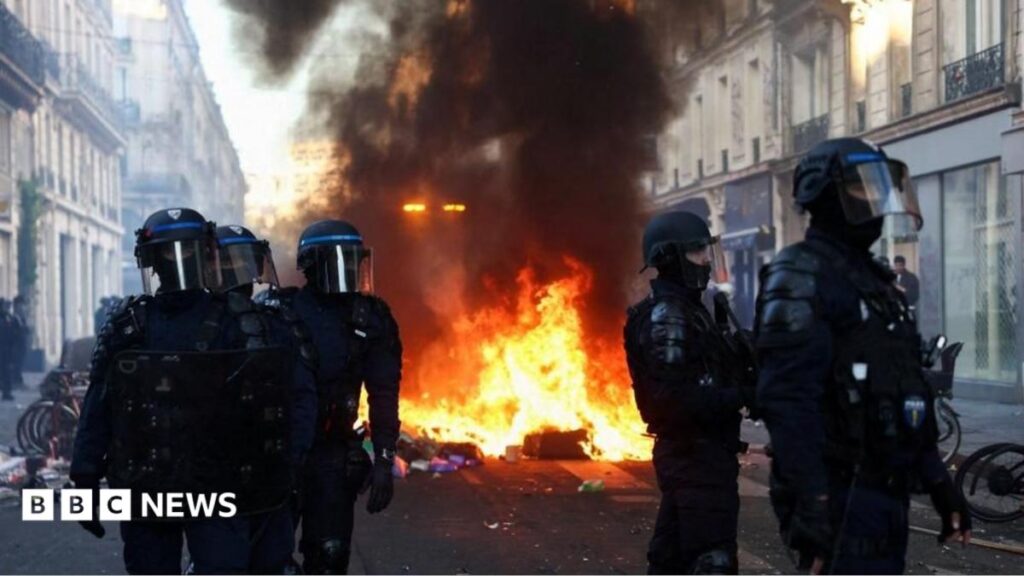
Around 9 p.m. on October 18, a police raid in Saint‑Denis to seize illegal firearms led to a confrontation that quickly spiraled. Protestors threw petrol‑filled bottles, set fire to shop fronts, and forced several metro stations to shut down. Within hours, the unrest spread eastward to the Marais and the historic center near the Louvre, where looters smashed windows of luxury boutiques and stole high‑value goods.
Police deployed thousands of officers, including the elite RAID units, and activated a city‑wide curfew that began at midnight. The French Interior Ministry reported that the curfew helped to reduce the number of new incidents, but not before dozens of injuries were recorded and several historic sites suffered minor damage.
Why it matters for the African diaspora and France‑Africa ties
France is home to an estimated 500,000 African nationals and a larger second‑generation community that lives across the suburbs where most of the riots erupted. Many of these residents run small businesses that were directly hit by looting, from street food stalls to fashion ateliers. The losses translate into a dip in remittance flows to families back home, a concern echoed by the African Development Bank which warned that a 5‑percent drop in remittances could affect the economies of Ghana, Senegal and Côte d’Ivoire.
Beyond economics, the unrest raises fears of a backlash against African‑origin residents. Human‑rights organisations, including Amnesty International, have warned that heightened police presence could lead to more arbitrary stops and searches, especially in neighborhoods with a high proportion of African migrants. Such a climate could strain the already delicate relationship between France and its African diaspora, a group that contributes significantly to the French cultural and creative sectors.
Broader pattern: Europe’s growing security‑vs‑civil‑rights dilemma
The Paris riots fit into a wider European trend where governments are tightening security measures in response to public disorder, while civil‑society groups demand greater accountability. In Germany, similar protests over police conduct erupted in Berlin last year, and in the United Kingdom, a series of street disturbances in London have prompted calls for a national policing review.
These episodes are often linked to broader economic pressures—rising energy prices, stagnant wages, and a surge in migrant populations that some politicians portray as a security threat. The French government’s recent decision to accelerate the deportation of undocumented migrants, many from West Africa, has been criticised by the African Union as “counter‑productive” and likely to fuel further alienation among diaspora communities.
What’s next: Policy responses and potential fallout
In his address, Macron pledged a “firm but measured” response, promising additional police resources while also announcing a commission to examine the socioeconomic roots of the unrest. The commission, chaired by former interior minister Gérald Darmanin, is expected to deliver recommendations by early 2027, with a particular focus on youth employment programmes in the banlieues.
For African entrepreneurs, the immediate priority is rebuilding lost inventory and restoring consumer confidence. Business associations such as the Conseil des Entreprises Franco‑Africaines have called for emergency micro‑loan schemes, citing the need for swift financial support to prevent a wave of bankruptcies that could ripple into African economies through reduced imports. Meanwhile, the French Ministry of Foreign Affairs has scheduled a diplomatic meeting with the African Union in Abidjan next month to discuss cooperation on security, migration and economic development, signalling that the unrest may shape France’s Africa policy for years to come.
Quick Answers
How many people were arrested during the Paris riots of October 2026?
More than 2,300 individuals were detained by French police, according to the interior ministry.
What impact could the riots have on remittances to African countries?
Disruptions to small businesses in France could cut remittance flows by up to 5 percent, affecting economies that rely on money sent home by the diaspora.
Will there be a curfew in Paris after the unrest?
A city‑wide curfew was imposed starting at midnight on October 18 and is expected to stay in place until authorities deem the situation stable.
Source: www.bbc.co.uk




💬 Comments 0