Chemistry Nobel 2026 awarded to French and Japanese scientists for solving life’s asymmetry
The Nobel prize and the mystery of molecular handedness
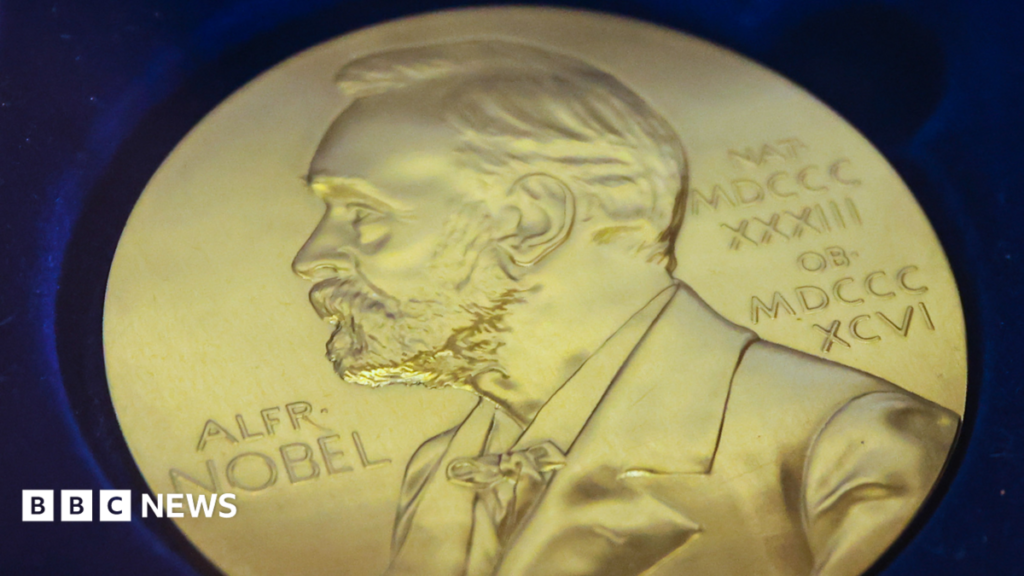
On 2 October 2026 the Royal Swedish Academy of Sciences announced that the 2026 Nobel Prize in Chemistry would go to a French and a Japanese researcher for finally cracking why biological molecules are overwhelmingly left‑handed or right‑handed – a phenomenon known as chirality.
Chirality is a property that makes a molecule’s mirror image non‑superimposable, much like left and right hands. In living organisms, amino acids are almost exclusively left‑handed while sugars are right‑handed, a bias that underpins everything from protein folding to DNA replication.
How the breakthrough was achieved
The laureates combined ultra‑fast laser spectroscopy with newly designed asymmetric catalysts that can steer a reaction to produce only one handedness of a molecule. Their experiments showed, for the first time, that a subtle energy difference in early pre‑biotic chemistry can be amplified by mineral surfaces to generate a uniform handedness.
The work built on decades of theoretical speculation and leveraged collaborations across Europe, Asia, and North America. By reproducing the conditions of early Earth in the lab, the team demonstrated a plausible pathway from a racemic mixture to the homochirality observed in modern biology.
Why the discovery matters for science and industry
Understanding the origin of chirality does more than satisfy curiosity; it provides a blueprint for creating enantiopure chemicals at scale. In pharmaceuticals, the wrong enantiomer can be inert or even harmful – a fact that has cost the industry billions in recalls and litigation.
The new catalytic methods promise to cut waste, lower energy consumption, and reduce the need for expensive chiral‑resolution steps. This could accelerate the development of next‑generation medicines, agro‑chemicals, and specialty polymers that rely on precise molecular geometry.
Implications for Africa’s health and manufacturing sectors
African countries are increasingly seeking to localise drug production to reduce dependence on imports. The Nobel‑winning chemistry offers a pathway to manufacture enantiopure active pharmaceutical ingredients (APIs) locally, which could lower costs for treatments of malaria, HIV, and emerging non‑communicable diseases.
Several African biotech hubs – such as the Nairobi Bio‑Innovation Centre and South Africa’s Cape Town Innovation District – have already begun exploring asymmetric catalysis. Access to the new catalyst designs could boost these initiatives, creating high‑skill jobs and fostering home‑grown research capacity.
Beyond health, the agriculture sector stands to benefit. Many crop‑protecting agents are chiral, and the ability to produce the biologically active form efficiently could improve yields while minimizing environmental residues, aligning with the continent’s sustainability goals.
What comes next – research, policy and investment
The laureates plan to open a joint research facility in Osaka and Paris that will focus on scaling the asymmetric processes for industrial use. Early partnerships with African universities have been mentioned in a statement by the French Ministry of Higher Education, signalling a willingness to share technology.
Policy makers across the continent are being urged to update chemical‑manufacturing regulations to accommodate these greener methods. If African governments can provide incentives for clean‑chemistry startups, the region could leapfrog traditional, waste‑intensive production models.
Finally, the discovery revives the debate on the origin of life, encouraging interdisciplinary projects that link chemistry, geology, and astrobiology – fields where African researchers are increasingly contributing, especially in desert mineral studies and deep‑sea hydrothermal vent exploration.
Quick Answers
What is meant by life's molecular asymmetry?
It refers to the uniform handedness of biological molecules – left‑handed amino acids and right‑handed sugars – that is essential for life’s chemistry.
Why does chirality matter for medicines?
Because only one enantiomer of many drugs is therapeutically active; the other can be ineffective or cause side effects, so producing pure enantiomers is critical.
How could the Nobel‑winning research help African countries?
It provides cheaper, greener ways to make enantiopure chemicals, enabling local production of essential medicines and safer agro‑chemicals, which can boost health outcomes and industrial growth.
Source: www.bbc.co.uk




💬 Comments 0