Cyril Ramaphosa Wins Court Battle Over 2020 Farm Dollar Theft, Thwarts Impeachment Threat
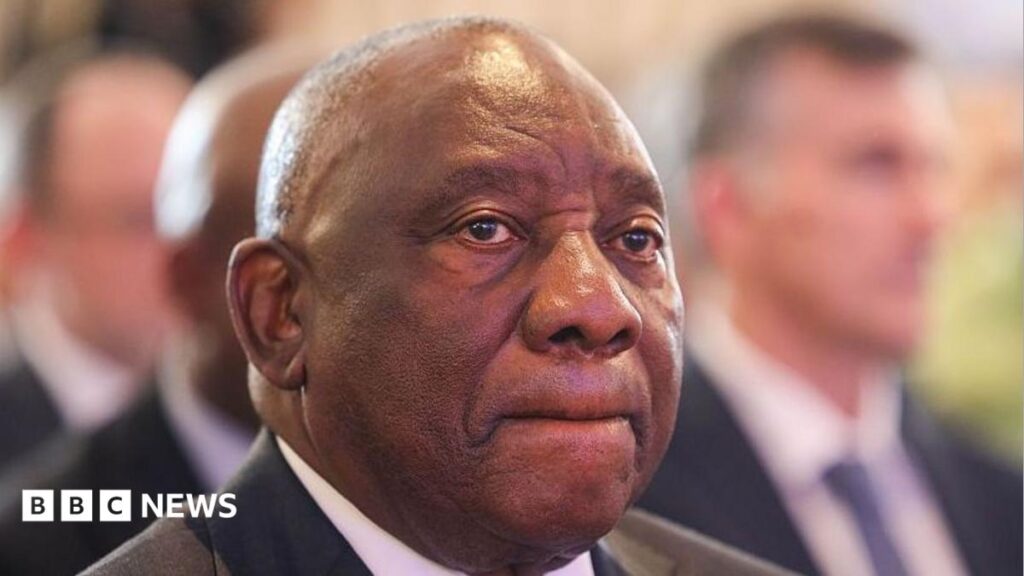
Background: The 2020 farm break‑in and the impeachment push
In July 2020, a robbery at President Cyril Ramaphosa’s private farm in Limpopo resulted in the theft of bundles of US dollars that were allegedly concealed inside a sofa. The incident resurfaced in late 2025 when opposition parties and civil‑society groups used it as the basis for an impeachment motion, alleging that the president had failed to disclose a foreign‑currency asset in his official register.
The opposition’s case hinged on the Prevention of Corruption Act, which requires public officials to declare any foreign‑currency holdings above a certain threshold. Critics argued that the hidden cash violated the law and that the president had deliberately concealed it to evade scrutiny. The motion was tabled in the National Assembly in early 2026, raising the spectre of a constitutional crisis.
Ramaphosa’s legal team countered that the cash was never his personal property but belonged to a third‑party business partner, and that the president had reported the farm’s assets in line with the regulations then in force. They also highlighted that the theft was a criminal act unrelated to any personal gain.
The court’s ruling: Why the judge dismissed the impeachment case
On 22 November 2026, the Constitutional Court ruled 5‑2 in favour of Ramaphosa, stating that the evidence presented did not meet the legal threshold required to prove a breach of the declaration‑of‑assets law. The majority opinion noted that the prosecution had failed to demonstrate a direct link between the stolen cash and the president’s personal wealth.
Justice Thuli Madonsela, writing for the majority, warned that using a criminal‑theft incident as a proxy for corruption could set a dangerous precedent, allowing any unreported loss to be weaponised in political battles. The dissenting judges, however, argued that the court should have sent the matter back to the Parliament’s Ethics Committee for a full investigation.
The ruling also clarified that the president’s failure to update the asset register after the robbery did not constitute an offence, provided that the loss was reported to the police and the relevant authorities in a timely manner.
Political stakes: How the decision reshapes ANC dynamics
The dismissal of the impeachment motion removes an immediate threat to Ramaphosa’s tenure, but the episode has exposed deep fissures within the African National Congress (ANC). Factional leaders who backed the motion see the ruling as a setback for their anti‑corruption agenda, while Ramaphosa’s allies argue that the verdict restores stability ahead of the 2029 general elections.
Analysts at the University of Cape Town’s Institute of African Politics note that the case has accelerated calls for internal reforms within the ANC, especially around asset‑declaration procedures and the role of the party’s internal ethics body. The party’s upcoming national conference in early 2027 is expected to feature heated debates on these reforms.
Meanwhile, opposition parties such as the Democratic Alliance (DA) and the Economic Freedom Fighters (EFF) have pledged to keep the issue alive, promising to re‑file a complaint with the Public Protector if new evidence emerges. Their stance reflects a broader strategy to capitalise on any perceived weakness in the ruling party’s anti‑corruption credentials.
Economic ripple effects: Investor confidence and diaspora sentiment
The impeachment scare had already nudged the JSE Top‑40 index down by roughly 2.3 % in early November, as investors weighed the risk of political instability. The court’s decision, however, steadied the market, with the index rebounding by 1.1 % within two days of the verdict.
South Africa’s bond yields also tightened slightly, signalling renewed confidence among foreign investors. The World Bank’s regional director, Paul O’Neill, remarked that “a clear legal outcome removes a major source of uncertainty for both local and international capital flows.”
For the South African diaspora, especially those in the United Kingdom and the United Arab Emirates, the ruling is a signal that the country’s institutions can still enforce the rule of law. Remittance flows, which peaked at $10.2 billion in 2025, are expected to remain robust, according to data from the South African Reserve Bank.
What’s next: Possible appeals, legislative reforms and the road to 2029
Opposition parties have signalled that they may appeal the decision to the Supreme Court of Appeal, arguing that the Constitutional Court erred in interpreting the asset‑declaration statute. Legal scholars caution that a successful appeal could reignite the impeachment debate and further strain the president’s political capital.
In Parliament, the Ethics Committee is slated to review the case file and recommend whether new legislation is needed to tighten asset‑declaration requirements for public officials. Proposals under discussion include mandatory real‑time reporting of any foreign‑currency transactions exceeding $5,000 and harsher penalties for non‑compliance.
Looking ahead to the 2029 elections, the Ramaphosa administration is likely to lean on the court’s verdict as evidence of a functioning democratic system. At the same time, the opposition will continue to use the farm‑theft saga as a rallying point for broader anti‑corruption campaigns, making the next few years a test of South Africa’s political resilience.
Quick Answers
What was the legal basis for dismissing the impeachment motion against Cyril Ramaphosa?
The Constitutional Court ruled that the evidence did not prove a breach of the asset‑declaration law and that the stolen cash could not be linked directly to the president’s personal wealth.
How did the court decision affect South Africa’s stock market?
The JSE Top‑40 recovered about 1.1 % after the ruling, reversing earlier losses caused by the impeachment threat.
Will there be any changes to asset‑declaration rules after this case?
Parliament’s Ethics Committee is expected to propose tighter reporting thresholds and stricter penalties, but no legislation has been passed yet.
Source: www.bbc.co.uk




💬 Comments 0