US stocks tumble 4% on AI fears, Nasdaq slides Nov 25 2026 – impact on African investors and tech startups
Background: a market already on edge
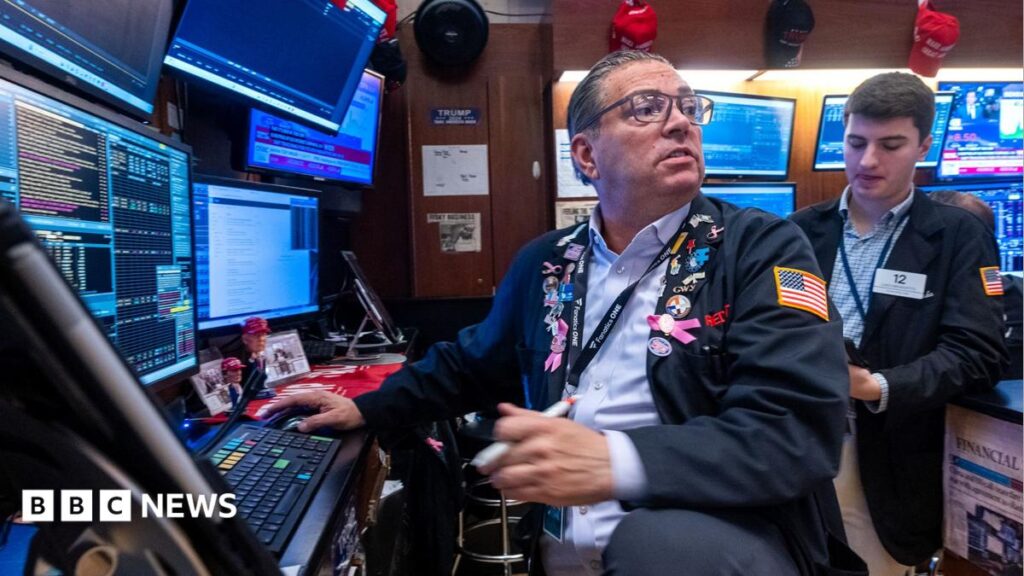
The three major US equity indexes opened lower on Tuesday, with the Nasdaq, which is heavily weighted toward technology firms, shedding almost 4 percent. The decline follows a week of mixed signals: solid earnings from a handful of blue‑chip companies, but growing unease about the pace of artificial‑intelligence (AI) adoption and looming regulatory scrutiny.
Investors have been watching the AI sector since the historic surge in late 2023, when companies like OpenAI, Nvidia and Microsoft announced record‑breaking revenue forecasts. That optimism fed a wave of speculative buying, pushing valuations to levels that many analysts now deem unsustainable. The current pull‑back marks the first time the Nasdaq has slipped by more than 3 percent in a single session since the 2022 crypto‑crash.
The trigger: AI hype meets regulatory reality
The immediate catalyst for the sell‑off was a series of statements from the US Federal Trade Commission (FTC) and the Securities and Exchange Commission (SEC) about upcoming AI‑related disclosures. According to a briefing released on Monday, the agencies plan to require public companies to detail how AI models influence financial reporting, risk management and consumer data handling. The prospect of costly compliance measures sparked a wave of profit‑taking among AI‑centric stocks.
In addition, a Bloomberg report cited internal sources at several venture‑backed AI firms, suggesting that a slowdown in funding rounds could be on the horizon. Venture capitalists, wary of a potential bubble burst, have reportedly tightened due‑diligence criteria, prompting founders to reassess growth forecasts. The confluence of regulatory pressure and funding uncertainty created a perfect storm for the Nasdaq’s high‑flying names.
Ripple effects for African markets and investors
African investors, both institutional and retail, have increasingly allocated capital to US tech ETFs as a hedge against local currency volatility. The sharp Nasdaq dip translates into immediate losses for pension funds in Kenya and Nigeria that hold exposure through global index funds. According to data from the African Development Bank, about 12 percent of the region’s cross‑border equity assets are tied to US technology indices.
Beyond direct portfolio hits, the sell‑off could dampen appetite for African tech startups seeking US‑based venture capital. Many African founders rely on US investors who benchmark their decisions against the performance of domestic tech giants. A weakened US tech market may lead to more cautious capital deployment, potentially slowing the growth of high‑growth sectors such as fintech, agritech and health‑tech across the continent.
What this means for African tech startups
Startups in Lagos, Nairobi and Cape Town have been riding a wave of optimism fueled by US AI breakthroughs. Companies like Flutterwave, Twiga Foods and Yoco have cited AI‑driven analytics as a core competitive advantage. However, the current market correction forces founders to reconsider their reliance on US‑centric AI tools, many of which are priced in dollars and subject to licensing constraints that could become tighter under new regulations.
A practical response emerging from the ecosystem is a renewed focus on home‑grown AI solutions. The African Institute for Mathematical Sciences (AIMS) announced a $30 million grant programme in November to accelerate indigenous AI research, aiming to reduce dependence on foreign platforms. If successful, this shift could create a more resilient tech stack for African businesses, insulating them from future US market turbulence.
Looking ahead: policy, market sentiment and the next wave
Analysts at Goldman Sachs predict that the Nasdaq could experience further volatility over the next 12 weeks as the FTC and SEC finalize their AI disclosure rules. They advise investors to diversify away from pure‑play AI equities toward broader technology baskets that include hardware, cloud infrastructure and cybersecurity, sectors that are less directly exposed to regulatory risk.
For African markets, the key takeaway is the need for greater local capital mobilisation. The African Capital Markets Institute (ACMI) has called for the creation of a continent‑wide AI fund that would pool resources from sovereign wealth funds, diaspora investors and regional development banks. Such a vehicle could provide a counter‑balance to US market swings and nurture a home‑grown AI ecosystem that aligns with African development priorities.
Quick Answers
Why did the Nasdaq drop almost 4% on November 25, 2026?
The decline was driven by fears that new US regulatory rules will force AI‑heavy companies to disclose model risks, combined with reports of a slowdown in AI venture funding.
How are African investors affected by the US tech sell‑off?
Pension funds and retail investors with exposure to US tech ETFs saw immediate losses, and the broader market weakness may make US investors more cautious about funding African startups.
What steps are African tech firms taking after the US AI market shake‑up?
Many are turning to locally developed AI tools and seeking regional funding, with initiatives like AIMS’ $30 million grant programme aiming to boost indigenous AI research.
Source: www.bbc.co.uk




💬 Comments 0