Death penalty after Christa Pike’s botched execution: US public opinion, African diaspora impact and future reforms in 2026
Background – a botched execution reignites the debate
On March 20, 2026, Tennessee attempted to execute Christa Pike, a woman convicted of a 1995 murder, using a lethal‑injection protocol that had been under legal scrutiny for years. The process stalled, the drugs failed to induce rapid unconsciousness, and Pike was left in apparent distress for several minutes before the execution was declared complete. The incident was captured on video and quickly spread across social media, prompting outrage from human‑rights groups and renewed calls to end capital punishment in the United States.
The botched execution did not happen in a vacuum. Over the past decade, several states have faced legal challenges over the sourcing of drugs, the secrecy of protocols, and the constitutionality of the method itself. Tennessee’s mishap added a visceral, visual element to a debate that had largely been fought in courtrooms and legislatures, forcing ordinary citizens to confront the reality of state‑sanctioned death.
What Americans think – the BBC street poll in Washington, D.C.
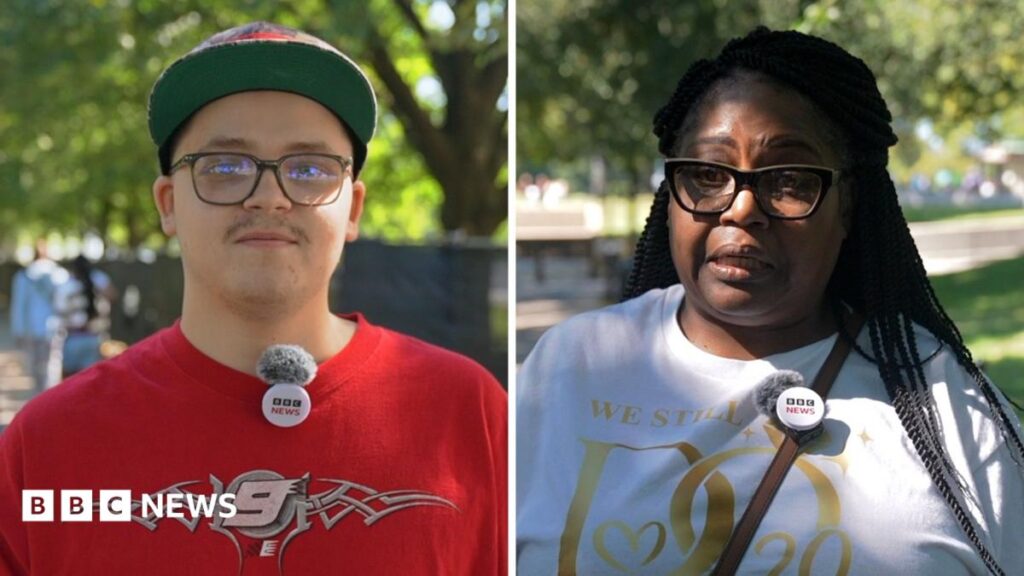
In the days following the incident, the BBC sent reporters to interview a cross‑section of Americans and international tourists gathered around the National Mall. Roughly 48 % of respondents said they opposed the death penalty outright, while 27 % supported it for the most heinous crimes. The remaining 25 % were undecided or said their view depended on the case details. Among the tourists, support was even lower, with only 15 % in favour of capital punishment.
The poll also revealed a generational split. Millennials and Gen‑Z participants were twice as likely to call for an abolition, citing concerns about wrongful convictions and the cruelty of the method. Baby Boomers, by contrast, tended to trust the criminal‑justice system and argued that the death penalty serves as a deterrent, despite academic studies that dispute that claim.
Why the death penalty still matters in the United States
Beyond moral arguments, the death penalty remains a political tool in many states. Governors in Texas, Oklahoma and Alabama, for example, have used executions to signal a “tough on crime” stance during primary elections, hoping to mobilise conservative voters. At the same time, prosecutors in jurisdictions with high homicide rates argue that capital punishment is a bargaining chip for plea deals, even though data from the Death Penalty Information Center shows a decline in the number of death sentences handed down since 2010.
Racial disparity continues to shape the conversation. African‑American defendants are disproportionately represented on death rows, a fact highlighted by the Equal Justice Initiative’s latest report, which found that Black individuals make up 42 % of those sentenced to death while comprising only 13 % of the U.S. population. The botched execution of Pike, a white woman, reminded many that execution errors affect all races, but it also amplified calls to examine the systemic biases that funnel minorities into the death‑penalty pipeline.
African diaspora angle – how US capital punishment reverberates across the continent
The United States is home to the largest African diaspora in the world, with Nigerians alone numbering over 500,000 according to the 2025 diaspora census. Several high‑profile cases—such as the 2023 conviction of Ghanaian national Kwame Mensah in Texas—have placed African citizens on American death rows. The botched execution of Pike has reignited anxiety among diaspora communities that the same procedural failures could affect them or their relatives.
Human‑rights NGOs based in Lagos, Nairobi and Accra have issued joint statements urging the U.S. to halt executions until a transparent, humane method is guaranteed. They argue that the United States, as a global champion of democracy, should align its practices with the African Charter on Human and Peoples’ Rights, which calls for the abolition of the death penalty. The controversy is also feeding into diplomatic dialogues: the African Union’s 2024 summit on criminal justice reform cited Pike’s case as a cautionary example of how capital punishment can damage a nation’s moral standing.
The global shift away from capital punishment and what it means for the US
In the past two decades, more than two‑thirds of the world’s nations have either abolished the death penalty or stopped using it in practice. Europe, Latin America and large parts of Asia have moved toward life‑imprisonment as the maximum sanction. Africa mirrors this trend; as of 2025, 31 of the continent’s 54 countries have fully abolished capital punishment, and another 12 retain it only for exceptional crimes like treason.
The United States now stands as one of the few industrialised democracies that still actively carries out executions. This divergence creates diplomatic friction, especially when American officials travel to African nations that have already abolished the death penalty. The botched execution has given abolitionist movements a fresh rallying point to press the U.S. for alignment with global human‑rights norms, potentially influencing future trade agreements that include human‑rights clauses.
What’s next – legislative battles, reform proposals and the power of public opinion
In the wake of Pike’s death, lawmakers in three states—Colorado, New Mexico and Virginia—have introduced bills to replace lethal injection with a single‑drug protocol or to suspend all executions pending a federal review. At the federal level, the Senate Judiciary Committee scheduled a hearing on “Execution Protocol Transparency” for November 2026, a direct response to the public outcry captured by the BBC poll.
Public opinion, however, remains fluid. Advocacy groups such as the Campaign to End the Death Penalty are leveraging the viral video of Pike’s execution to launch a digital petition that has already gathered over 1.2 million signatures. Meanwhile, conservative think tanks argue that the focus should be on improving drug procurement rather than abolition. The next few months will likely determine whether the botched execution becomes a catalyst for nationwide reform or a temporary flash in the media pan.
Quick Answers
What happened during Christa Pike's execution in Tennessee?
On March 20, 2026, Tennessee’s lethal‑injection attempt failed to quickly render Christa Pike unconscious, leaving her visibly distressed for several minutes before the execution was declared complete.
How many U.S. states still have the death penalty in 2026?
As of 2026, 27 states retain the death penalty, though only 18 have carried out an execution in the past five years.
Does the US death penalty affect African nationals living in America?
Yes; a handful of African citizens have been sentenced to death in the US, and diaspora groups fear procedural errors like Pike’s could jeopardise their legal safety and raise diplomatic concerns.
Source: www.bbc.co.uk




💬 Comments 0