Defence Minister Guido Crosetto warns Trump’s Ukraine aid cuts could prolong war, impact Africa
US aid to Ukraine and Trump’s emerging position
Since the Russian invasion began in February 2022, the United States has supplied Ukraine with billions of dollars in military equipment, training, and financial support. The assistance has been a cornerstone of NATO’s collective response and has helped Kyiv regain territory on several fronts.
In the run‑up to the 2024 US election, former President Donald Trump signalled a shift in policy, arguing that America should not be the world’s policeman and that aid to Ukraine should be scaled back. While Trump has not held office since 2021, his influence over the Republican base and his potential candidacy in 2028 have kept the debate alive in Washington.
Italian defence chief Guido Crosetto’s warning
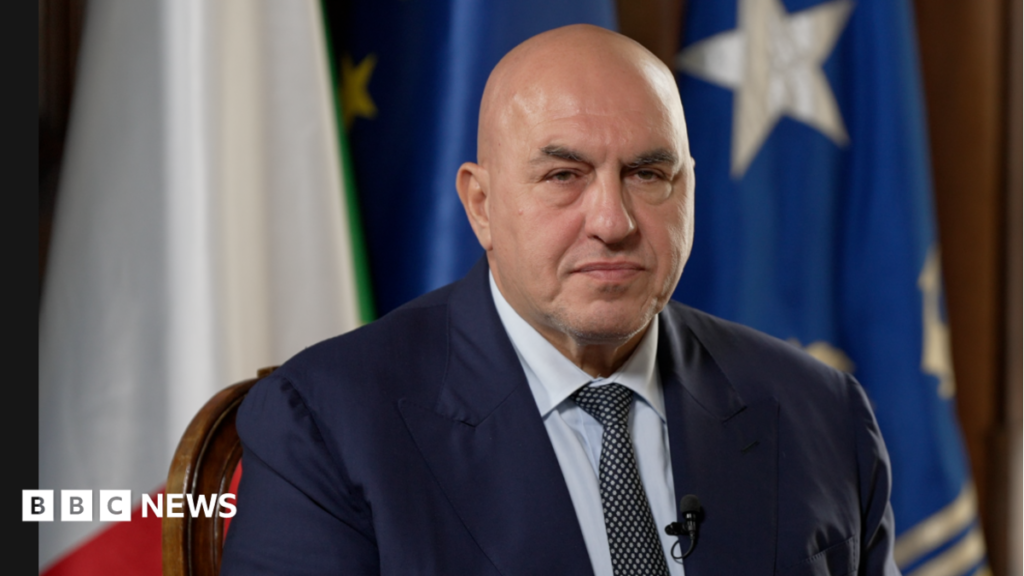
Speaking to the BBC on October 17, 2026, Italy’s defence minister Guido Crosetto said that Trump’s call for “limited” support would likely extend the conflict rather than bring it to a swift end. Crosetto stressed that a sudden reduction in weapons and intelligence could embolden Russian forces to regroup and launch new offensives.
Crosetto, a former right‑wing parliamentarian turned defence minister, framed the issue as a matter of European security. He reminded listeners that Italy’s own defence budget has already been stretched by commitments to NATO, and that any disruption in the trans‑Atlantic supply chain would force European capitals to shoulder a larger share of the burden.
Why the debate matters for the war and Europe
The flow of American artillery, air‑defence systems and ammunition has been a decisive factor in recent Ukrainian counter‑offensives. Analysts at the European Council on Foreign Relations note that a 30‑percent cut in US deliveries would force Kyiv to rely more heavily on older Soviet‑era hardware, slowing its ability to hold reclaimed ground.
Beyond the battlefield, the political signal sent by a major donor withdrawing support could undermine the cohesion of the NATO alliance. Countries such as Poland, the Baltic states and the Czech Republic have warned that a fragmented response would encourage Moscow to test the alliance’s resolve in other regions, including the Black Sea and the Balkans.
The African dimension: arms markets, Russian influence and diaspora concerns
Africa is already feeling the indirect consequences of the Ukraine war. Russian arms dealers have deepened ties with several African regimes, offering discounted weapons in exchange for mining concessions and political support. A prolonged conflict in Ukraine means Russia can keep diverting attention and resources to the continent without fear of a decisive Western pushback.
If the United States scales back its aid, European nations may look to fill the gap by increasing their own arms exports to African customers. Italy, France and the United Kingdom are among the top suppliers of military equipment to Africa, and a shift in procurement patterns could reshape regional security dynamics, especially in the Sahel where French forces are already stretched thin.
The African diaspora in Europe and the United States also watches the debate closely. Many Ukrainian‑origin migrants have settled in Italy, Poland and the UK, and they fear that reduced assistance could lead to a humanitarian crisis that spills over into migrant flows toward Europe’s southern borders.
Political fallout in Washington and Rome
Within the US, senior Pentagon officials have warned that any abrupt policy change would jeopardise years of joint planning with NATO partners. A senior aide to Secretary of Defense Lloyd Griffith reportedly told the Wall Street Journal that “the logistics of scaling back now would be chaotic and could cost lives on the ground.”
In Rome, Crosetto’s comments have sparked a debate in the Italian parliament. Opposition parties accuse the government of aligning too closely with US hawks, while centre‑right lawmakers argue that Italy must protect its own strategic interests by ensuring a stable Eastern Europe, which in turn keeps Russian meddling away from African partners.
What comes next? Scenarios for US policy and African security
If Trump’s rhetoric translates into legislative action, the most likely outcome is a phased reduction of non‑lethal aid, while lethal weapons continue to flow under separate authorisations. This compromise would still slow Ukraine’s ability to conduct large‑scale offensives, extending the war by months, if not years.
For Africa, the key variable will be how quickly European states can re‑orient their defence industries toward the continent. Early‑stage negotiations between Italy’s Ministry of Defence and several West African governments suggest a possible surge in Italian‑made drones and communications gear, a move that could both counter Russian influence and create new market opportunities for Italian firms.
Regardless of the path chosen, the debate underscores a broader trend: the war in Ukraine is no longer a purely European issue. Its ripple effects are reshaping arms markets, migration patterns and diplomatic calculations across Africa, the Middle East and the Americas.
Quick Answers
What did Italian Defence Minister Guido Crosetto say about Trump’s Ukraine policy?
Crosetto warned that Trump’s call to limit US aid to Ukraine could lengthen the war and force European allies to shoulder a larger burden.
How could reduced US support for Ukraine affect African security?
A prolonged conflict may allow Russia to deepen arms ties in Africa, while European countries could increase their own weapons exports to fill the gap, reshaping regional security balances.
Is Trump likely to cut US aid to Ukraine in 2026?
While Trump has not held office since 2021, his influence over the Republican base keeps the possibility of aid reductions on the political agenda, though any major cut would require congressional approval.
Source: www.bbc.co.uk




💬 Comments 0