Eight killed in series of shootings in western Turkey’s Izmir province, police say, November 2026
What happened: the attacks in western Turkey
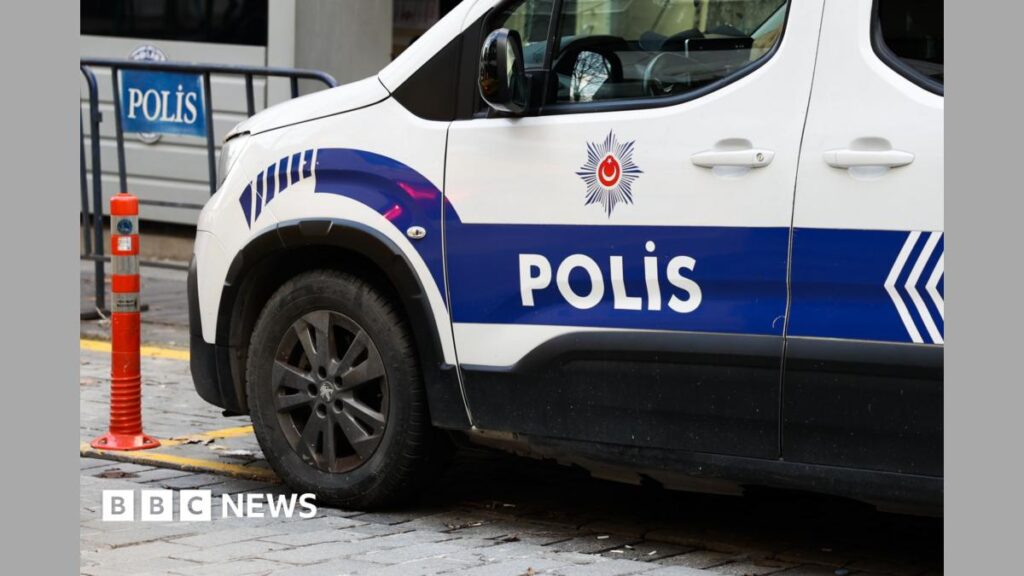
On the night of November 5, 2026, police in Turkey’s western Izmir province discovered the bodies of eight people in three separate vehicles that had been riddled with gunfire. Local media reported that the victims were found scattered across three locations, suggesting a coordinated series of attacks rather than a single incident. The victims ranged in age from early twenties to late fifties, and authorities have not yet released their identities or the exact motive behind the shootings.
Turkish police quickly cordoned off the crime scenes and launched a joint investigation involving the national anti‑terrorism unit and the regional gendarmerie. Early statements from the Istanbul Police Directorate indicated that the firearms used were semi‑automatic rifles, and forensic teams recovered shell casings that matched a type commonly smuggled into the country through the Black Sea corridor. No group has claimed responsibility as of the early hours of November 6.
Why the incident matters beyond the death toll
While the loss of eight lives is tragic in its own right, the attacks raise broader concerns about public safety in Turkey’s most populous western corridor. Izmir, a major commercial hub, has historically enjoyed a reputation for relative calm compared with the eastern provinces that have seen frequent clashes between the state and Kurdish militants. A spike in gun violence here could signal a shift in the geography of insecurity, potentially unsettling investors and tourists who view the Aegean coast as a safe destination.
The incident also arrives at a delicate political moment. Turkey is gearing up for local elections in several key municipalities later this year, and security lapses are likely to become a talking point for opposition parties. Analysts from the Istanbul Policy Center warned that any perception of a deteriorating law‑and‑order environment could amplify criticism of President Recep Tayyip Erdoğan’s government, especially after a series of high‑profile corruption probes that have already eroded public confidence.
African connections: tourists, students, and migrants in Turkey
Turkey has become an increasingly popular gateway for African travelers, students, and migrants over the past decade. According to the Turkish Ministry of Culture and Tourism, more than 250,000 African tourists visited the country in 2025, many of whom flock to Izmir’s coastal resorts and historic sites. The city also hosts a sizable community of African students—particularly from Nigeria, Ghana, and Sudan—who attend universities such as Dokuz Eylul University and Izmir University of Economics.
For these groups, the recent shootings raise safety questions that are rarely covered in Western wire reports. African diplomats in Ankara have previously urged Turkish authorities to improve protection for foreign nationals after isolated incidents in Istanbul’s Taksim district. If the attacks are linked to organized crime networks that also traffic migrants across the Aegean, African migrants could find themselves caught in a more hostile environment, potentially curbing the flow of labor that many Turkish industries rely on.
A pattern of violence and political tension in Turkey
The Izmir shootings are not an isolated flashpoint. In the past twelve months, Turkey has recorded a 17% rise in firearm‑related homicides, according to data released by the Turkish Statistical Institute. Experts attribute the surge to a combination of factors: the influx of illegal weapons from the Syrian conflict, the resurgence of organized crime syndicates operating in the Aegean port cities, and the politicisation of security forces that sometimes blur the line between counter‑terrorism and criminal investigations.
Moreover, the Turkish government’s crackdown on dissent—exemplified by recent arrests of journalists and opposition figures—has intensified public mistrust. Human rights NGOs, such as Amnesty International Turkey, argue that a heavy‑handed approach can push disenfranchised youths toward illicit activities, feeding a feedback loop of violence that spills over into civilian spaces like the streets of Izmir.
What could come next: security and diplomatic responses
In the immediate aftermath, the Turkish interior ministry announced a “nationwide alert” that will see increased patrols in major transport hubs and tourist hotspots across the Aegean region. The ministry also pledged to accelerate a pending weapons‑trace program that aims to dismantle smuggling routes from the Black Sea to western ports. These steps, while welcomed by local business chambers, may only be a short‑term band‑aid if the underlying supply chain of illegal arms remains unaddressed.
On the diplomatic front, several African embassies in Ankara have requested formal briefings on the investigation’s progress. If the probe uncovers links to trans‑national crime networks that also exploit migrant routes, Ankara could face pressure to tighten border controls—a move that would reverberate through the informal economies that many African migrants depend on. Observers note that a transparent investigation, coupled with targeted community outreach, could help preserve Turkey’s image as a safe hub for African students and tourists.
Quick Answers
How many people were killed in the western Turkey shootings?
Eight people were found dead in three separate vehicles in Izmir province.
What impact could the shootings have on African tourists in Turkey?
The attacks may raise safety concerns among African visitors and students, prompting diplomatic inquiries and possibly affecting tourism flows to the Aegean coast.
What is the Turkish government doing in response to the attacks?
Authorities have declared a nationwide alert, increased police patrols in the region, and vowed to speed up a weapons‑trace operation to curb illegal arms smuggling.
Source: www.bbc.co.uk



💬 Comments 0