Eleven killed in Israeli strikes on southern Lebanon targeting Hezbollah, August 2026
Background: A fragile cease‑fire teeters
Since the 2006 war, Israel and Hezbollah have lived under a tenuous cease‑fire that is punctuated by occasional skirmishes along the Blue Line. The border area in southern Lebanon remains a patchwork of UN‑monitored zones, Hezbollah‑run villages, and Israeli outposts, each side accusing the other of provocations that threaten to reignite full‑scale hostilities.
In recent months, Hezbollah has stepped up its anti‑Israeli rhetoric, claiming to have launched drones and artillery shells toward Israeli positions. Israel, for its part, has repeatedly warned that any attack on its soldiers will be met with a calibrated response aimed at degrading what it calls "terror infrastructure".
The strike that left eleven dead
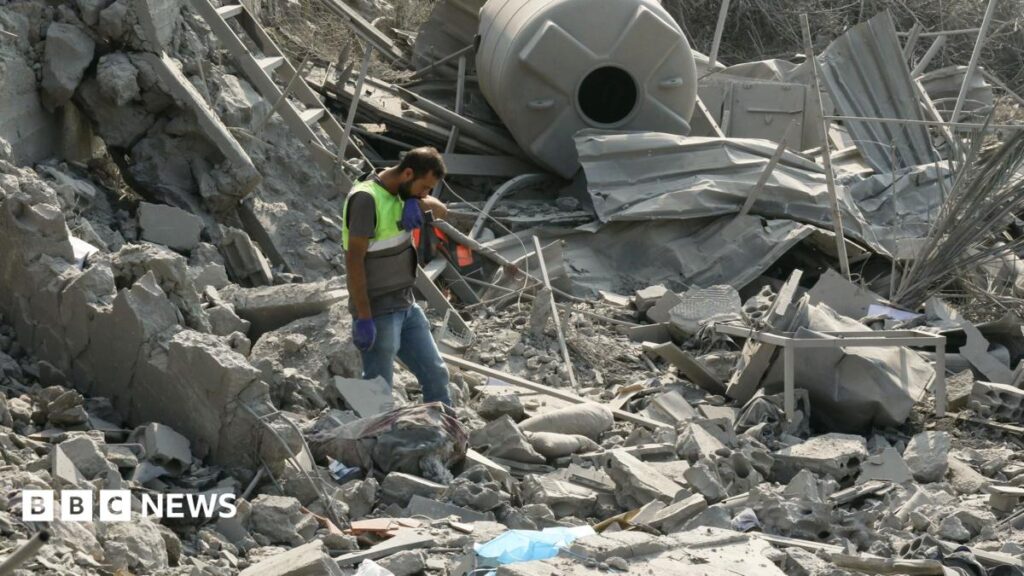
On the morning of 15 August, the Israel Defense Forces (IDF) announced that it had hit a network of underground bunkers and command posts belonging to Hezbollah in the towns of Marjeyoun and Bint Jbeil. The operation, described by the IDF as a “precision strike,” reportedly involved a combination of air‑dropped munitions and artillery fire.
Lebanese authorities later confirmed that eleven people were killed, including two civilians and nine combatants identified as Hezbollah fighters. The death toll sparked outrage in Beirut, where the Health Ministry said the victims ranged in age from 19 to 45 and that many of the wounded were taken to hospitals already stretched by the country’s economic crisis.
Why the attack matters beyond the border
The latest escalation is more than a localized flare‑up; it signals a possible shift in Israel’s strategic calculus. By targeting what it calls “terror infrastructure,” the IDF appears to be moving from a reactive posture to a pre‑emptive one, a trend observed in its recent operations in Gaza and the West Bank.
For regional powers, the strike raises the stakes of any broader confrontation. Iran, Hezbollah’s chief patron, has warned of “proportionate retaliation,” while Saudi Arabia and the United Arab Emirates monitor the situation closely, fearing that a wider conflict could spill into the Red Sea shipping lanes that are vital for global oil trade.
African stakes: trade routes, diaspora, and diplomatic calculations
African nations have indirect but significant interests in the Israel‑Lebanon flashpoint. The Red Sea, a conduit for more than 10 % of the world’s oil and a major artery for African exporters of minerals, cocoa, and coffee, could see disruptions if hostilities expand toward the Gulf of Aqaba.
Moreover, the Lebanese diaspora includes a sizable African community—primarily Ethiopian, Ghanaian, and Nigerian migrant workers who rely on the country’s informal economy. According to a 2024 report by the International Organization for Migration, over 30 000 African nationals work in Lebanon, many in construction and domestic work. Escalating violence threatens their safety and could trigger a wave of irregular migration toward Europe, complicating already strained asylum systems.
African foreign ministries are watching closely. South Africa’s Department of International Relations and Cooperation, for instance, has reiterated its support for UN‑mediated dialogue, while Kenya’s ambassador to the UN warned that any disruption of maritime trade could raise shipping costs for Kenyan tea and horticultural exports.
International reactions and diplomatic maneuvering
The United Nations quickly called for restraint. UNIFIL (United Nations Interim Force in Lebanon) deployed additional observers to the strike zone, and Secretary‑General António Guterres urged both sides to “avoid civilian casualties and preserve the fragile peace.” The United States, speaking through its embassy in Tel Aviv, framed the strike as a legitimate act of self‑defence, whereas the European Union’s foreign policy chief condemned the loss of civilian lives and urged an immediate cease‑fire.
In Africa, the African Union’s Peace and Security Council issued a brief statement urging “regional actors to prevent any spill‑over that could destabilise the Horn of Africa and the Sahel.” The statement, released on 16 August, reflects the AU’s growing awareness that Middle‑East conflicts can have cascading effects on African security, especially through arms flows and refugee movements.
What comes next? Scenarios and possible outcomes
Analysts at the Middle East Institute in Washington outline three plausible trajectories. The first is a limited retaliation by Hezbollah, targeting Israeli outposts along the border, which could keep the clash contained but prolong the humanitarian toll for civilians on both sides. The second scenario involves a broader escalation, potentially drawing Iran into direct involvement and threatening maritime traffic in the Red Sea. The third, less likely but hopeful, is a diplomatic de‑escalation spurred by pressure from the UN and key African states that risk economic fallout.
For African stakeholders, the priority will be to safeguard trade routes and protect migrant workers. Several shipping companies have already rerouted vessels around the Bab al‑Mandab strait, adding days to transit times. Meanwhile, NGOs operating in Lebanon are calling for emergency assistance for African migrants who may be displaced by renewed fighting.
Quick Answers
How many people were killed in the Israeli strike on southern Lebanon in August 2026?
Eleven people were reported dead, including two civilians and nine Hezbollah fighters.
Why does the Israel‑Lebanon conflict matter to African countries?
It can disrupt Red Sea shipping lanes critical for African exports and endanger African migrant workers living in Lebanon.
What are the possible next steps after the recent strike?
Experts see three paths: a limited Hezbollah retaliation, a wider regional escalation involving Iran, or a diplomatic de‑escalation driven by international pressure.
Source: www.bbc.co.uk




💬 Comments 0