Elon Musk vs Mukesh Ambani: Starlink’s Indian launch battle and its global fallout in 2026
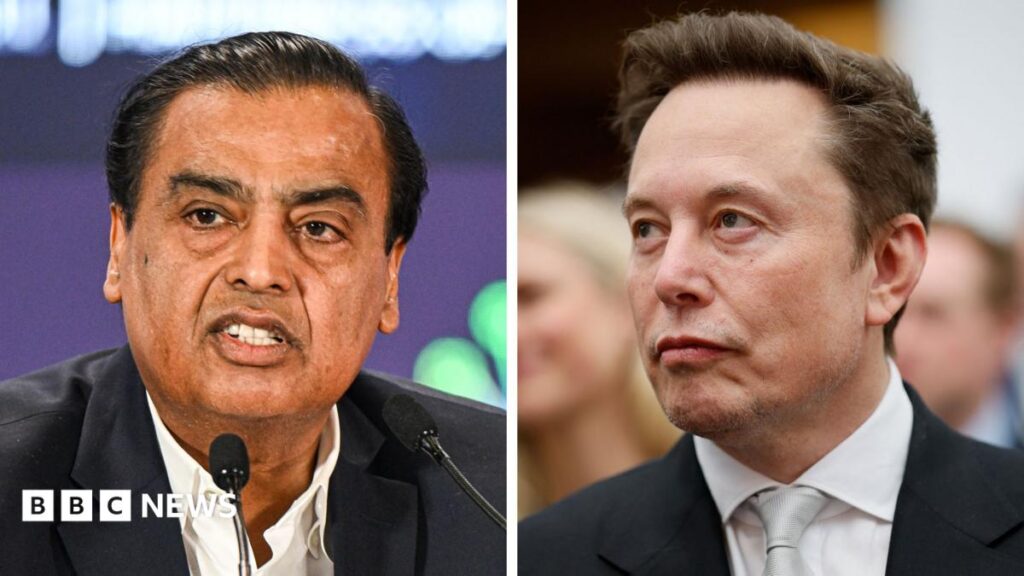
Background: two tech titans, two visions for connectivity
Elon Musk’s SpaceX has been rolling out its Starlink satellite broadband service worldwide, promising high‑speed internet to places where fiber or mobile networks struggle to reach. In India, the service has been delayed for years by a maze of spectrum rules, local partnership demands and security clearances, leaving the market eager but still waiting.
Mukesh Ambani, the chairman of Reliance Industries, controls Jio Platforms – a digital ecosystem that already dominates mobile data in India with more than 450 million subscribers. In recent months Ambani announced plans for a low‑Earth‑orbit (LEO) satellite constellation, dubbed JioSpace, positioning his firm as a direct competitor to Starlink in the same underserved markets.
The clash erupted publicly in early October 2026 when Musk posted a series of tweets questioning why India’s regulator had not cleared Starlink, while Ambani’s spokesperson replied that the Indian government prefers “home‑grown solutions” that align with national security and data‑sovereignty goals.
Musk vs Ambani: the showdown in words and policy
Musk’s tweets, which have historically moved markets, framed the delay as “bureaucratic red‑tape that hurts millions of Indians who can’t get reliable internet.” He also hinted that Starlink could partner with Indian telecoms if the rules were clarified, a line that seemed aimed at Jio’s dominant position in the sector.
Ambani’s response, reported by Indian business daily Business Standard, emphasized that Reliance is already investing $5 billion in satellite infrastructure and that any foreign entrant must respect India’s “strategic autonomy.” The tone suggested that the billionaire sees Musk’s jabs as an attempt to sideline a home‑grown alternative that could erode Jio’s market share.
Industry analysts, such as Raghav Sharma of the Centre for Internet and Society, say the public spat reflects deeper policy friction: the Indian government is balancing its ambition to become a global digital hub with concerns over foreign control of critical communications infrastructure.
Why the feud matters for India’s digital future
If Starlink finally secures a licence, it could force Indian operators to upgrade back‑haul capacity, improve latency, and perhaps lower prices for rural broadband. That would challenge Jio’s pricing power, especially in the 100‑200 km radius where fiber is still costly to lay.
Conversely, a successful JioSpace rollout would cement Reliance’s grip on both terrestrial and satellite broadband, giving the conglomerate a near‑monopoly over data services. Regulators have warned that such concentration could stifle competition and slow innovation, a concern echoed by the Competition Commission of India in a recent hearing.
The battle also has geopolitical overtones. The United States sees Starlink as a tool for digital diplomacy, while India’s strategic partnership with the United States is increasingly tied to technology cooperation. A Starlink presence could therefore be interpreted as a soft‑power lever, something the Indian government is wary of handing to a private foreign entity.
Ripple effects for Africa and the Indian diaspora
African nations watching the Indian showdown are keen to learn which model will prove more scalable in low‑density markets. South Africa’s telcos, for example, have been in talks with both SpaceX and JioSpace to extend coverage to remote mining towns and rural schools. A win for Starlink could accelerate similar contracts across the continent, while a Jio‑led success story would showcase an emerging market‑originated satellite network competing with U.S. giants.
The Indian diaspora in Africa, especially in Kenya, Tanzania and Nigeria, runs several businesses that rely on stable internet for cross‑border trade. A broader rollout of affordable satellite broadband—whether from Starlink or JioSpace—could lower operational costs for these entrepreneurs, enabling them to compete with larger firms that already enjoy fiber connectivity in urban hubs.
Financial analysts note that both SpaceX and Reliance have been courting African investors. In 2025, Reliance raised $1.2 billion from African sovereign wealth funds to fund JioSpace, while SpaceX’s African subsidiary announced a $300 million partnership with Kenya’s Ministry of ICT. The outcome of the India dispute may therefore influence where African capital flows in the next two years.
What’s next: regulatory road‑maps and market bets
The Department of Telecommunications (DoT) has scheduled a public hearing on LEO satellite licences for late November 2026. Sources close to the ministry say the panel will evaluate security protocols, spectrum sharing mechanisms and the extent of foreign equity permissible in satellite operators.
Both Musk and Ambani have signalled readiness to negotiate. Musk hinted in a recent interview with Bloomberg that Starlink could offer “local data‑hosting” to satisfy sovereignty concerns, while Ambani’s Jio team reportedly prepared a joint‑venture proposal with state‑run Indian Space Research Organisation (ISRO) to co‑manage the satellite fleet.
Investors are watching closely. Indian stock indices have already reflected the uncertainty, with Reliance shares slipping 2 % after Musk’s tweets, while SpaceX’s private valuation remained steady. The next few months will likely determine whether India becomes a testing ground for a dual‑satellite ecosystem or leans toward a single, domestically controlled network.
Quick Answers
When is Starlink expected to launch in India?
Starlink could receive its first commercial licence after the DoT’s hearing in November 2026, but exact launch dates will depend on final regulatory approvals.
How could the Musk‑Ambani clash affect African internet users?
If Starlink or JioSpace expands after the Indian decision, African telcos may secure cheaper satellite bandwidth, improving connectivity for remote areas and diaspora‑run businesses.
What is JioSpace?
JioSpace is Reliance Industries’ planned low‑Earth‑orbit satellite constellation aimed at providing broadband services across India and potentially overseas markets.
Source: www.bbc.co.uk




💬 Comments 0