France 2026 education protests: Riot police clash with students at 735 schools
Background: Growing discontent in French schools
Since early 2025, France has seen a wave of unrest in its public education system. Teachers have repeatedly warned that class sizes are swelling beyond manageable limits, while many schools struggle to recruit qualified staff. The Ministry of National Education’s budget cuts, coupled with a stagnant hiring pipeline, have left thousands of classrooms without permanent teachers, prompting unions to organise strikes and sit‑ins across the country.
Students, many of whom are from immigrant backgrounds, have joined the protests, arguing that deteriorating standards jeopardise their future prospects. In the past year, demonstrations have moved from symbolic rallies in Paris to more confrontational actions inside school grounds, where pupils have blocked corridors and demanded immediate government action. The tension has been simmering, setting the stage for the violent clashes that erupted in October 2026.
The flashpoint: Police confront students across 735 schools
On October 2, police units equipped with riot gear entered more than 700 schools after local authorities declared the occupations illegal. According to French interior ministry figures, about 735 schools faced disruption as officers used tear‑gas and batons to disperse students who had barricaded themselves inside classrooms. Video footage circulating on social media shows a mixture of teenage protesters shouting slogans and police attempting to clear hallways while protecting teachers who returned to work.
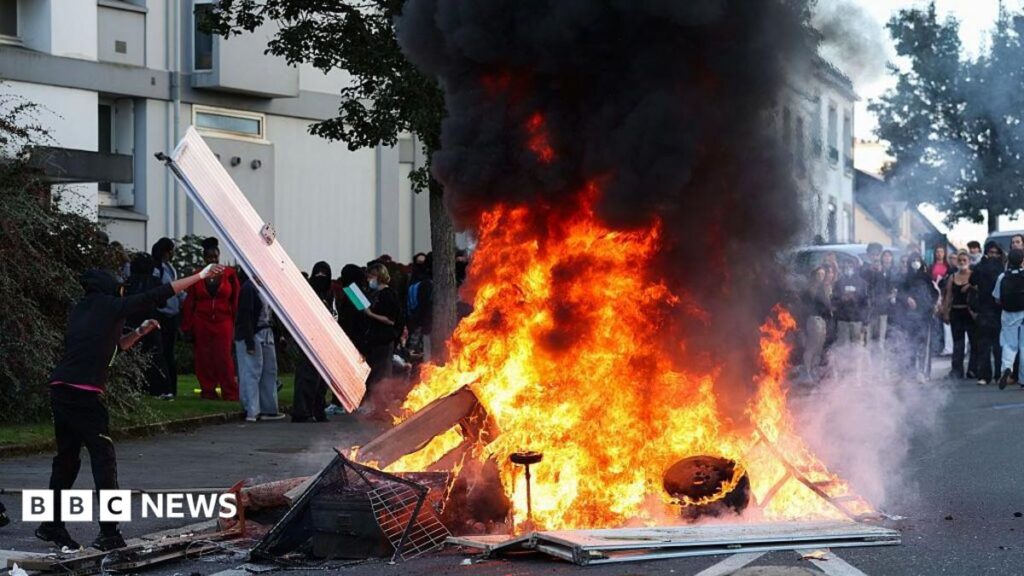
The confrontations quickly turned violent in several cities, including Marseille, Lille and Toulouse, where students threw objects and set fire to furniture. Police reported dozens of injuries on both sides, though the exact numbers remain unverified. The Ministry of Education announced an emergency meeting with union leaders, promising to review funding allocations, while the President’s office called for “calm and dialogue” in a televised address.
Why the unrest matters beyond France
The education protests in France have implications that ripple far beyond its borders. France remains the largest provider of higher‑education scholarships to African students, particularly from West and Central Africa, through programs such as the Eiffel Excellence Scholarship and the Francophonie network. Any prolonged disruption to secondary education could delay graduation timelines, jeopardising these scholarship pipelines and affecting the flow of talent to French universities.
Moreover, the French education system is a key soft‑power instrument in francophone Africa. French curricula, language instruction, and cultural exchanges shape the identities of millions of African youths. A crisis that undermines confidence in French schooling may prompt African governments and families to reconsider the value of sending their children abroad, potentially opening space for rival education models from other European or Asian partners.
Echoes in Africa: Parallel education struggles
The grievances voiced by French students echo a broader continental trend. Across sub‑Saharan Africa, governments are wrestling with teacher shortages, underfunded infrastructure, and rising pupil‑to‑teacher ratios. In Nigeria, for example, the 2025 teachers’ strike highlighted similar concerns about pay, workload and classroom conditions. In Kenya, student protests over exam reforms have also turned violent, underscoring a shared frustration with systemic underinvestment.
These parallel crises suggest a global pattern: education systems built on post‑pandemic austerity are reaching breaking points. Analysts note that while the French protests are more visible due to Europe’s media reach, they are part of a larger conversation about how societies value educators and the long‑term economic costs of neglecting schools.
Impact on African diaspora students and scholars
France hosts an estimated 250,000 African students, many of whom are enrolled in secondary schools that follow the French national curriculum before moving on to university. The sudden lockdown of 735 schools has forced many to switch to remote learning, a shift that is unevenly accessible. Students from low‑income immigrant families often lack reliable internet, widening the digital divide and threatening academic progress.
Beyond the classroom, the unrest has sparked fear among African parents about safety on campuses. Community organisations in Paris and Lyon have issued advisories, urging families to keep children home until police presence eases. Some NGOs are mobilising to provide tutoring and legal aid for students who may face disciplinary actions for participating in protests, reflecting a growing civil‑society response to protect vulnerable diaspora youth.
What comes next: Possible outcomes and policy paths
In the short term, the French government is likely to negotiate a temporary funding boost to hire substitute teachers and reduce class sizes, a move that could calm the most immediate flashpoints. However, experts warn that without structural reform—such as revising teacher training pipelines, improving salary competitiveness, and modernising school infrastructure—the protests could re‑ignite later in the academic year.
Long‑term, the situation may accelerate discussions about decentralising education policy to regional authorities, a proposal championed by some left‑wing parties. For African stakeholders, the key will be monitoring how France reshapes its scholarship and exchange programmes in response to the unrest. A more robust, well‑funded French education system could reinforce its attractiveness to African talent, while continued instability might push African students toward emerging alternatives in Canada, the United Kingdom or even within the continent’s own growing university sector.
Quick Answers
How many French schools have been disrupted by the education protests?
About 735 schools have faced disruption since police moved in on October 2, 2026.
What are the main grievances behind the French student protests?
Students are protesting declining education standards and a severe shortage of teachers caused by budget cuts and hiring freezes.
How might the protests affect African students studying in France?
The unrest threatens classroom continuity, may limit access to scholarships, and raises safety concerns for African diaspora students on French campuses.
Source: www.bbc.co.uk




💬 Comments 0