France bans stun grenades after Paris teen loses hand in protest, raising stakes for policing and African diaspora
Background: Student unrest and police crowd‑control in France
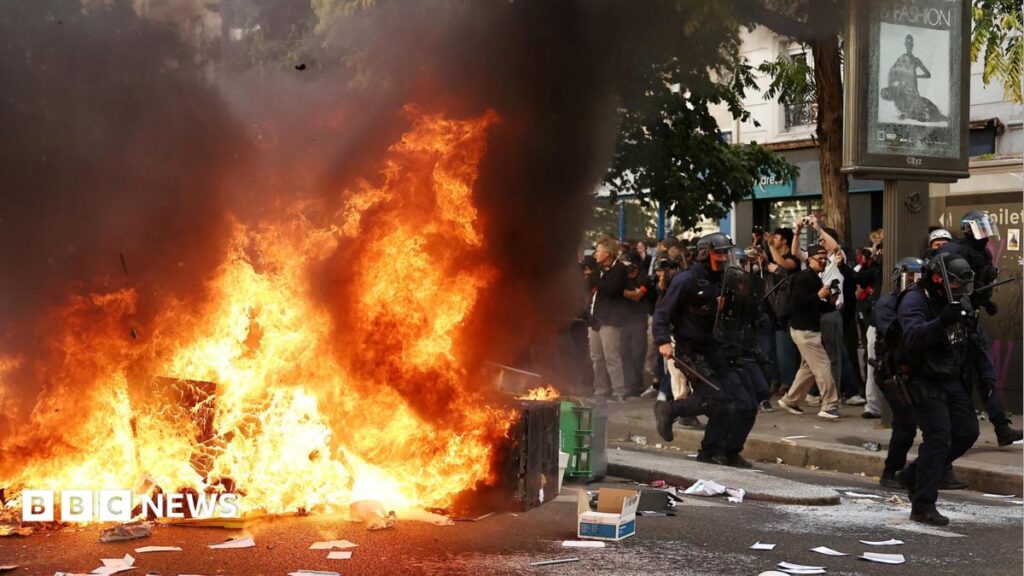
Since early 2024, French universities have seen a wave of demonstrations over tuition hikes, climate policies and perceived government indifference. The protests have often spilled onto the streets of Paris, Lyon and Marseille, where police have relied on a suite of non‑lethal weapons to disperse crowds, including tear‑gas canisters, water cannons and, increasingly, flash‑bang or stun grenades.
Stun grenades, officially known as "flash‑bangs," emit a blinding flash of light and a loud bang intended to disorient demonstrators without causing permanent injury. Their use has been controversial across Europe, with several human‑rights groups warning that the devices can cause serious burns, hearing loss and, in rare cases, traumatic amputations.
France’s interior ministry defended the tools as “necessary for public order,” citing a rise in violent clashes during the 2024 academic year. However, critics argued that the police were deploying them disproportionately against young people, many of whom come from immigrant families in the banlieues.
The incident that sparked the ban
On 3 September 2026, a 15‑year‑old boy named Youssouf Diarra was caught on video as police fired a flash‑bang near a student encampment outside the Sorbonne. The explosion reportedly sent shrapnel into his left hand, which had to be amputated above the wrist in a nearby hospital.
The footage quickly went viral on social media, igniting outrage not only in France but also among diaspora communities in West Africa and the United Kingdom. Parents, teachers and civil‑society organisations demanded accountability, describing the incident as a “preventable tragedy” and a symptom of an over‑militarised police force.
Human Rights Watch, citing medical reports, called the use of the device "grossly disproportionate" and urged the French government to review its crowd‑control policy. The incident also prompted a wave of petitions that gathered over 250,000 signatures within a week.
Government response: A pause on flash‑bangs
On 12 October 2026, Interior Minister Gérald Darmanin announced a temporary suspension of stun grenades for domestic policing, pending a comprehensive safety review. The decision was framed as a “precautionary measure” while the Ministry of the Interior commissions an independent panel of medical experts and law‑enforcement analysts.
The ban does not extend to the military or to overseas operations, a nuance that some activists highlighted as a loophole. Nonetheless, the move marks the first time since the 1990s that France has formally restricted a non‑lethal weapon in civilian contexts.
Opposition parties, including the far‑right National Rally, criticized the suspension as “soft on law‑breakers,” while left‑wing legislators praised it as a step toward “police accountability and the protection of youth.”
Why it matters for the African diaspora and French society
A significant proportion of the students involved in the protests are of African descent, many being first‑ or second‑generation immigrants from Mali, Senegal, Ivory Coast and the Democratic Republic of Congo. The incident therefore resonated deeply within the African diaspora, which has long complained about systemic bias in French policing.
Community leaders argue that the use of flash‑bangs reinforces a narrative that young Black and Arab‑French bodies are treated as threats. "When a boy from the banlieue loses his hand, it sends a message that our lives are disposable," said Fatoumata Diallo, director of the Paris‑based NGO La Voix des Jeunes.
Beyond the immediate trauma, the ban could influence how French authorities engage with African student unions, potentially opening space for dialogue on broader issues such as university funding, visa restrictions for African scholars, and the integration of diaspora voices in policy‑making.
A broader European pattern and African lessons
France is not alone in reassessing flash‑bangs. In the United Kingdom, the Home Office halted the use of similar devices after a 2025 incident in Liverpool that left a protester with permanent eye damage. Germany and the Netherlands have also faced court rulings that restrict their deployment in public order operations.
African nations, many of which receive French police training through bilateral security agreements, are watching these developments. Senegal’s Ministry of Interior, for example, has been piloting “de‑escalation” modules for its gendarmerie, inspired by European reforms. A shift in French policy could accelerate the adoption of less‑lethal tactics across Francophone Africa.
Conversely, some analysts warn that the suspension may push French police to rely more heavily on other controversial tools, such as rubber bullets or facial‑recognition surveillance, which have also raised human‑rights concerns in African contexts where similar technologies have been exported.
What’s next: reforms, legal battles and public sentiment
The independent panel tasked with reviewing flash‑bang safety is expected to deliver its report by mid‑2027. Its mandate includes evaluating alternative crowd‑control methods, establishing clear usage protocols, and recommending compensation mechanisms for victims like Youssouf Diarra.
Legal experts predict that families of injured protesters may file civil suits against the state, potentially setting precedents for compensation in cases of excessive force. In parallel, a coalition of student groups has announced a series of “peaceful sit‑ins” to keep pressure on the government while the ban remains in place.
Public opinion polls conducted by IFOP in early November show that 62 % of French citizens now support stricter limits on non‑lethal weapons, up from 48 % a year earlier. Among respondents of African heritage, support climbs to 71 %, indicating that the incident has galvanized broader demands for policing reform.
Quick Answers
What are stun grenades and why were they used by French police?
Stun grenades, or flash‑bangs, create a bright flash and loud bang to disorient crowds; French police used them to disperse protests they deemed violent.
Why did France decide to halt the use of flash‑bangs in 2026?
After a teenager lost his hand when a flash‑bang exploded near a student protest, public outcry and human‑rights pressure led the interior ministry to suspend the devices pending a safety review.
How could the ban on stun grenades affect African communities in France?
Many protest participants are of African descent, and the ban addresses longstanding concerns about disproportionate force against Black and Arab‑French youths, potentially improving trust between the diaspora and law enforcement.
Source: www.bbc.co.uk




💬 Comments 0