France riots 2026: Why African migrants, French politics and security are at stake after the deadliest unrest in decades
Background: the flashpoint that ignited France’s worst riots in modern history
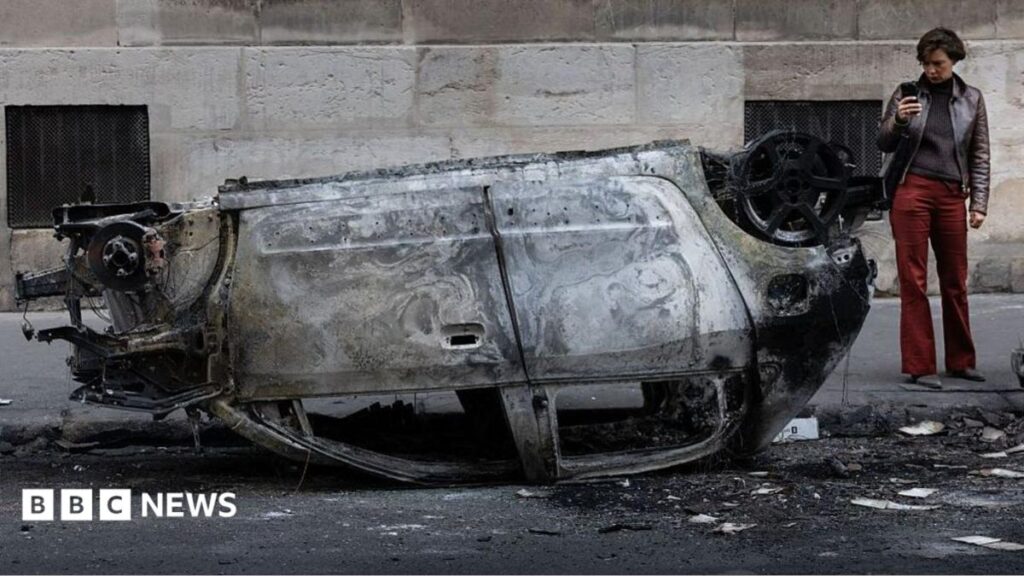
On September 14, 2026, a 19‑year‑old of Senegalese descent was fatally shot by police in the northern suburb of Saint‑Denis, a flashpoint that instantly sparked weeks of street battles across Paris, Marseille, Lyon and smaller towns. The incident echoed the 2005 and 2023 unrest, but the scale of the violence—over 3,000 arrests, more than 200 injuries and extensive arson—has been described by French officials as the most severe since the 1968 protests.
Underlying grievances had been simmering for years: rising youth unemployment that now exceeds 20 % in the banlieues, a housing shortage that forces many families into cramped, under‑maintained apartments, and a perception that law‑enforcement practices disproportionately target residents of African and Arab origin. The death of the teenager acted as a catalyst that turned long‑standing discontent into open confrontation.
The riots unfolded in three distinct phases. First, spontaneous protests erupted near the scene of the shooting, quickly spreading through social media hashtags that called for “justice for [the victim]”. Second, organized groups—some linked to left‑wing activist networks, others to far‑right nationalist militias—joined the streets, turning peaceful chants into clashes with police. Finally, a wave of looting and property destruction swept through commercial districts, prompting the government to declare a state of emergency on September 20.
Who is to blame? The political tug‑of‑war over responsibility
The French left immediately pointed to systemic racism and police brutality, demanding an independent inquiry and the resignation of Interior Minister Gérald Darmanin. In a televised interview, Socialist MP Barbara Pompili said the riots were “the tragic consequence of a state that has failed to protect its own citizens for decades”.
Conversely, the right‑wing coalition, led by Marine Le Pen’s National Rally, framed the unrest as a failure of immigration policy and a breakdown of law and order. Le Pen’s spokesperson claimed the riots were “fuelled by illegal migrants who refuse to integrate”, a narrative echoed by several mainstream conservative outlets. This framing has heightened tensions within the already fragmented French parliament, where no party holds a clear majority.
A third, less vocal camp—centrist and technocratic figures such as President Emmanuel Macron—has tried to steer the conversation toward economic reforms, arguing that the riots are a symptom of “structural inequality” rather than a purely identity‑based conflict. According to a report from Le Monde, the president’s advisers are preparing a package of youth‑job programs, but critics warn it may be too little, too late.
The African diaspora angle: why the unrest matters for Africans in France and beyond
Approximately 30 % of the demonstrators identified themselves as French citizens of African descent, according to a survey conducted by the NGO SOS Racisme. Many of them are second‑ or third‑generation immigrants from Senegal, Mali, Côte d’Ivoire and the Democratic Republic of Congo, whose families have long contributed to France’s economy through labor, entrepreneurship and remittances.
The riots have triggered a wave of anxiety among African community leaders. In a statement, the French‑based African Union diaspora network warned that the “collective punishment” of entire neighborhoods threatens to erode the social contract that has allowed African migrants to thrive in French cities for decades. They also highlighted that the unrest could jeopardise the $3 billion annual remittance flow from France to West Africa, a vital source of household income for millions.
Beyond France’s borders, African governments are watching closely. Senegal’s foreign ministry issued a diplomatic note urging French authorities to conduct a transparent investigation, while the Nigerian diaspora in Paris organized a peaceful vigil to honour the victim and call for “justice without prejudice”. The episode underscores how domestic French unrest can ripple across the continent, influencing diaspora politics, bilateral relations and even foreign investment decisions.
Political and security fallout: elections, reforms and the risk of further escalation
The riots have arrived at a politically volatile moment. The next French presidential election is scheduled for April 2027, and opinion polls show a surge in support for both far‑right and far‑left candidates, each promising starkly different solutions. Analysts from the Institut Français des Relations Internationales warn that the unrest could become a decisive issue, swaying undecided voters toward parties that appear toughest on security or most committed to social justice.
In response, the government has deployed an additional 5,000 police officers and activated the National Gendarmerie’s anti‑riot units. However, human‑rights groups such as Amnesty International have criticized the heavy‑handed tactics, citing reports of excessive force and arbitrary arrests. The tension between security measures and civil liberties is likely to shape legislative debates on police accountability for months to come.
On the reform front, a bipartisan commission chaired by former Prime Minister Édouard Philippe has been tasked with drafting a “Comprehensive Equality Act”. Early drafts propose a national database to track police stops, mandatory de‑escalation training, and a €2 billion fund for youth employment in disadvantaged suburbs. Whether these proposals will survive the parliamentary stalemate remains uncertain, but they represent the most concrete policy response since the 2023 riots.
Economic ripple effects: business, tourism and African investment at risk
The immediate economic toll of the unrest is already visible. Retail sales in the hardest‑hit districts fell by 12 % in the week following the state of emergency, according to data from INSEE. International hotel chains reported a 20 % drop in bookings in Paris and Marseille, prompting concerns that the upcoming “Euro 2027” football tournament could suffer from reduced tourist confidence.
African entrepreneurs operating in France are feeling the pressure too. A survey by the African Business Council found that 45 % of French‑based African SMEs reported supply‑chain disruptions and a slowdown in client demand. Some business owners fear that the stigma attached to banlieue neighborhoods may deter investors from Africa looking to expand into the French market.
On the flip side, the crisis has opened a window for African governments to pitch alternative partnerships. Senegal’s Ministry of Trade announced a new bilateral agreement with France to boost joint vocational training programs, hoping to showcase a model of cooperation that counters the narrative of “failed integration”. If successful, such initiatives could reshape the economic relationship between France and its African diaspora in the long term.
What comes next? Paths toward reconciliation or deeper division
The next few weeks will determine whether France can move from reaction to resolution. Civil‑society groups are already organizing town‑hall meetings in affected suburbs, inviting police representatives, local officials and community leaders to discuss concrete steps. Early reports suggest that some municipalities are piloting “community safety councils” modeled after similar programs in Canada, where residents co‑design policing priorities.
However, the risk of a relapse remains high. If the independent inquiry into the September 14 shooting does not meet the expectations of the African diaspora, protests could reignite, especially as the summer holiday season approaches—a period traditionally marked by heightened tensions in French cities. Moreover, any perceived softening of security measures could embolden far‑right groups to stage counter‑demonstrations, potentially sparking a cycle of confrontations.
International observers, including the European Commission, have signaled willingness to fund anti‑racism education and youth employment schemes across the EU, with a particular focus on France’s banlieues. Whether these resources are deployed swiftly enough to address the root causes will be the litmus test for French authorities and could set a precedent for how European nations handle similar unrest in the future.
Quick Answers
What triggered the 2026 riots in France?
The riots began after a 19‑year‑old of Senegalese descent was shot dead by police in Saint‑Denis on September 14, 2026, igniting long‑standing frustrations over unemployment, housing and police bias.
How are African communities in France affected by the unrest?
African‑origin residents make up a large share of the protesters, face increased police scrutiny, and risk losing remittance flows and business opportunities as the riots disrupt local economies.
What reforms is the French government considering after the riots?
A bipartisan commission is drafting a “Comprehensive Equality Act” that includes a national police‑stop database, mandatory de‑escalation training, and a €2 billion youth‑employment fund for disadvantaged suburbs.
Source: www.bbc.co.uk




💬 Comments 0