France shuts down up to 500 schools on Monday over student protests in Paris, 2026
What triggered the nationwide walk‑outs
The unrest that forced French authorities to order the closure of up to 500 schools on Monday stems from a government proposal to overhaul the nation’s higher‑education financing. The draft law, unveiled in early September, would raise tuition fees for non‑EU students and tighten eligibility for state scholarships, prompting fears of reduced access for poorer and international learners. Student unions quickly labeled the move as a betrayal of the principle of free education that underpins the French Republic.
At the same time, the administration’s broader security agenda – a set of measures aimed at expanding police powers on campuses – added fuel to the fire. Critics argue that the legislation would curb freedom of expression and give law‑enforcement agencies a legal foothold to intervene in peaceful demonstrations. According to Le Monde, the combined effect of financial pressure and perceived authoritarianism sparked a wave of coordinated protests across high schools and universities.
The timing of the protests coincided with the start of the academic year, a period when students are most vulnerable to disruptions. Parents, teachers and local officials expressed alarm that the protests could derail learning for millions of pupils, especially those in disadvantaged districts where alternative schooling options are scarce.
How the day unfolded: closures and clashes
By early morning, the education ministry announced that lessons would be "totally or partly suspended" in roughly 500 secondary schools, primarily in the Île‑de‑France region but also in several provincial cities. The directive gave school administrators the discretion to halt classes for the entire day or to keep a reduced schedule for students who could safely attend. In Paris, more than 150 high schools reported full closures, leaving thousands of teenagers at home.
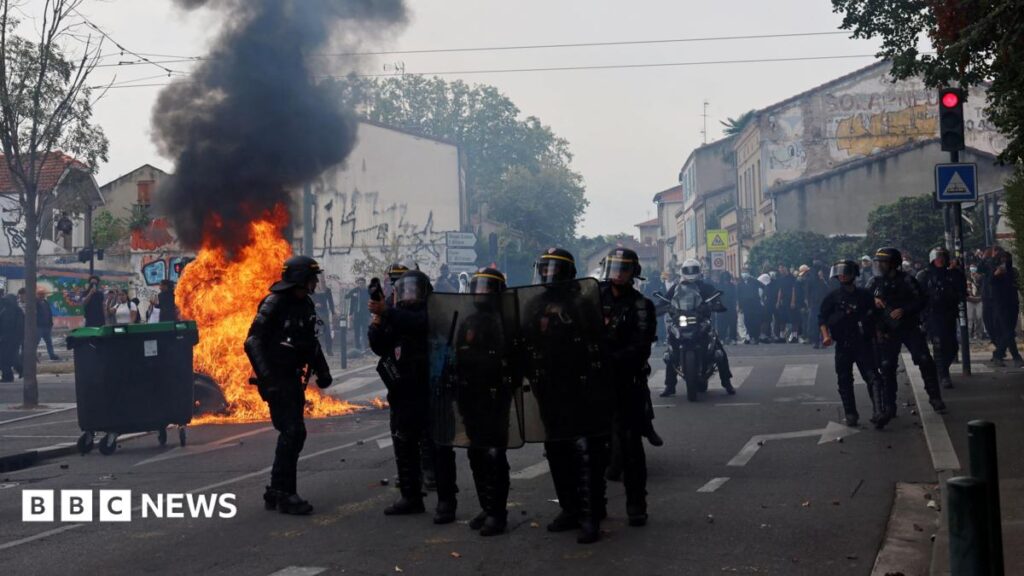
Protesters gathered outside several campuses, chanting slogans and waving banners that read "Education for all" and "No to tuition hikes". Riot police were deployed to disperse the crowds, leading to several skirmishes that resulted in minor injuries on both sides. The education minister, Gabriel Attal, later confirmed that police used tear‑gas in two locations after demonstrators attempted to breach police cordons, a decision he defended as necessary to protect public order.
Social media platforms lit up with live streams and on‑the‑ground footage. While many students documented peaceful sit‑ins, others posted images of broken windows and police shields. The visual contrast highlighted the fragmented nature of the movement, with some groups advocating non‑violent civil disobedience and others pushing for more confrontational tactics.
Why the school shutdown matters for French society
Beyond the immediate disruption of lessons, the closures signal a deeper erosion of trust between young citizens and the state. Education Minister Attal warned that prolonged unrest could force the government to reconsider the financing bill, but he also cautioned that repeated school shutdowns risk normalising disruption as a political tool. Analysts from the Institut Montaigne note that repeated interruptions could depress graduation rates and widen existing educational inequalities.
The economic cost is also significant. A study by the French Ministry of Economy estimates that each day of school closure costs the state roughly €12 million in lost productivity, ancillary services and overtime for emergency staff. For families, especially those reliant on school‑based meals and childcare, the sudden loss of routine adds financial strain and forces many parents to take unpaid leave from work.
Politically, the episode adds pressure on President Emmanuel Macron’s administration, which is already grappling with pension reform protests and a series of strikes in the transport sector. The convergence of multiple social movements could embolden opposition parties ahead of the upcoming municipal elections, as they seek to capitalise on public fatigue with the government's reform agenda.
Impact on African students and the diaspora in France
African students, who make up a sizable proportion of the non‑EU cohort targeted by the financing bill, are among the most vocal opponents of the proposed changes. According to the Association of African Students in France (AASF), the tuition hike would disproportionately affect learners from Senegal, Côte d’Ivoire and the Democratic Republic of Congo, many of whom rely on state‑funded scholarships that could be reduced under the new rules.
The protests have also reignited discussions within the broader African diaspora about representation and integration in French public life. Community leaders in Paris’s 13th arrondissement, home to a large West African population, organised a solidarity rally on Monday evening, demanding that policymakers consider the socioeconomic realities of immigrant families. "Education is the gateway to upward mobility for our children," said AASF president Fatoumata Diarra during a televised interview, echoing concerns that the reforms could deepen existing disparities.
Businesses that employ a large number of African graduates – particularly in tech start‑ups and the hospitality sector – are watching the situation closely. A recent report by the African Business Council in Europe warned that any reduction in university access could shrink the talent pipeline that French companies rely on for digital transformation projects, potentially prompting firms to look elsewhere for skilled labour.
What comes next: possible scenarios and African parallels
In the short term, the government is likely to reopen schools on Tuesday while it negotiates with student unions. Sources close to the education ministry say a compromise could involve a phased implementation of the tuition increase, coupled with a guarantee that scholarship eligibility will not be reduced for low‑income African students. Such a concession would aim to defuse tensions without abandoning the broader fiscal objectives of the reform.
Long‑term, the episode may catalyse a new wave of youth activism across Europe, mirroring movements that have recently taken root in several African nations. In Kenya, for example, students have been organising mass demonstrations against university fee hikes and restrictive campus policies. Observers note that digital mobilisation tactics – livestreams, hashtag campaigns and coordinated walk‑outs – are becoming a shared playbook for young people demanding affordable education worldwide.
For the African diaspora, the protests could serve as a catalyst for greater political engagement in France. Civic groups are already planning voter‑registration drives ahead of the 2027 legislative elections, hoping to translate the energy on the streets into electoral influence. If the French government ultimately revises the financing bill, it may set a precedent for other European states to reconsider similar policies that affect immigrant and African student communities.
Quick Answers
Why did France close up to 500 schools on Monday?
The closures were ordered after student protests against a proposed tuition‑increase and security law led to clashes with police, prompting the education ministry to suspend lessons for safety.
How might the school shutdown affect African students in France?
African students, many of whom rely on state scholarships, fear the financing bill will raise costs and cut aid, prompting diaspora groups to join the protests and demand policy revisions.
What are the possible next steps for the French government?
Officials are expected to negotiate a compromise, possibly phasing in tuition changes while protecting scholarships for low‑income and African students, to reopen schools and calm unrest.
Source: www.bbc.co.uk




💬 Comments 0