France teen loses hand in Pas-de-Calais protest, raising questions on police tactics and diaspora impact
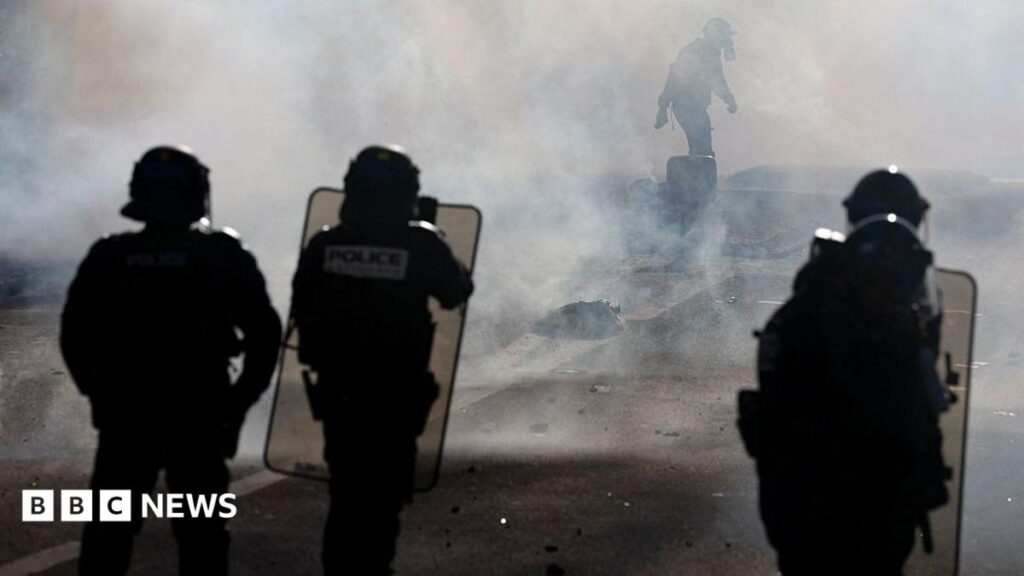
Background: school protests and the wider unrest in France
Since early 2024, French secondary schools have been hotbeds of dissent, with students rallying against a series of education reforms that they say will erode their rights and increase workload. The protests have often merged with larger national movements, such as the pension‑reform strikes that have paralyzed transport and public services across the country.
In the northern department of Pas‑de‑Calais, a region already marked by economic hardship and a sizable immigrant population, the tension has been especially palpable. Local authorities have repeatedly deployed police units equipped with crowd‑control devices, citing the need to protect school property and maintain order.
The Pas‑de‑Calais incident: what happened to the 15‑year‑old
On 4 October 2026, a 15‑year‑old student was caught in a clash between demonstrators and police near a high‑school in Béthune. According to statements from the prefecture, a police‑issued stun grenade detonated close to the teenager, causing the loss of his hand. The prefect later assured that the boy’s life was “not in danger,” but the injury was described as “very serious.”
Eyewitness accounts, reported by local media, suggest the grenade was launched from a distance of less than two metres, a range that exceeds the recommended safety guidelines for such devices. The teenager’s family has filed a formal complaint, and human‑rights groups are already calling for an independent investigation.
Why it matters: police tactics, youth safety and legal scrutiny
The use of explosive crowd‑control weapons against minors raises immediate legal questions under French law, which restricts the deployment of “dangerous weapons” in public spaces. Legal scholars at the University of Paris warn that the incident could trigger a judicial review of the police’s rules of engagement, especially in settings involving children.
Beyond the courtroom, the episode fuels a broader debate about the proportionality of force. Critics argue that the French police have increasingly relied on high‑impact tools—such as flash‑bangs, tear‑gas canisters, and now stun grenades—to disperse protests, a trend that many say normalises violence against peaceful demonstrators.
African diaspora perspective: how the incident resonates in French suburbs
Pas‑de‑Calais, like many northern French departments, hosts a large African‑origin community, many of whom live in the banlieues that have historically been over‑policed. Residents of these neighborhoods point out that the same police tactics that injured the teenager have been used repeatedly during anti‑racism marches and football‑stadium disturbances involving African‑French youths.
Community leaders, quoted by Le Monde, say the incident underscores a feeling of marginalisation: “When a young Black teenager loses a hand because of a police device, it confirms a narrative that our children are treated as expendable.” The statement has sparked calls for a dialogue between the Ministry of the Interior and diaspora organisations to rethink crowd‑control policies in multicultural districts.
Potential reforms: political and institutional responses
In the days following the injury, opposition parties in the National Assembly demanded a parliamentary inquiry into the use of stun grenades in civilian contexts. President Emmanuel Macron, speaking at a press conference, pledged to “review the deployment protocols of all non‑lethal weapons” and to ensure that any future use complies with European human‑rights standards.
If the investigation confirms that the device was fired at an unsafe distance, the Ministry of the Interior may face pressure to ban the weapon from school‑related operations altogether. Some NGOs are already preparing a legislative proposal to create a “Youth‑Protection Clause” that would categorically forbid explosive devices in any protest involving minors.
Looking ahead: the incident in a European and African context
The Pas‑de‑Calais case mirrors a growing pattern across Europe where police forces are expanding their arsenal of “less‑lethal” weapons, often with insufficient oversight. Recent incidents in the United Kingdom and Germany have sparked similar outcries, suggesting a continental shift toward more aggressive crowd‑control strategies.
For African governments and diaspora organisations, the French episode serves as a cautionary tale. Nations such as Nigeria and Kenya, which are monitoring European policing reforms for possible export, may reconsider adopting comparable technologies. Moreover, the incident could galvanise trans‑national activist networks that link French youth movements with African student protests against authoritarian policies.
Quick Answers
What exactly happened to the 15‑year‑old in Pas‑de‑Calais?
A police‑issued stun grenade exploded near the teenager during a school protest on 4 October 2026, causing the loss of his hand while his life remained stable.
Why are French police using stun grenades on school demonstrations?
Police say the devices are intended to quickly disperse crowds and protect property, but critics argue they are disproportionate, especially when minors are present.
How might this incident affect African communities in France?
The event has heightened fears among African‑French residents that aggressive policing disproportionately targets their neighborhoods, prompting calls for policy reforms and greater dialogue with authorities.
Source: www.bbc.co.uk




💬 Comments 0