Francis Halzen wins 2026 Nobel for IceCube ‘ghost particles’ detection – impact
From the Antarctic Ice to the Nobel Stage
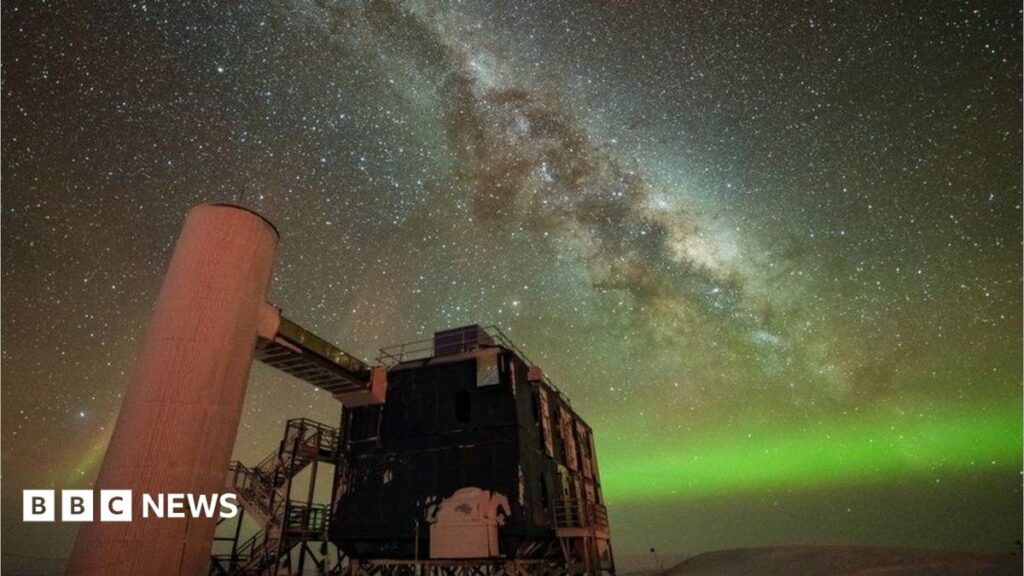
On October 2, 2026, the Nobel Committee announced that Belgian‑born physicist Professor Francis Halzen would share the Nobel Prize in Physics for his pioneering work on the IceCube Neutrino Observatory. The detector, buried a kilometre beneath the Antarctic ice sheet, watches for fleeting flashes of light that betray the passage of neutrinos—often dubbed “ghost particles” because they rarely interact with matter. Halzen’s vision, first sketched in the mid‑1990s, turned a remote, frozen landscape into a window on the high‑energy universe, capturing the first unmistakable signatures of astrophysical neutrinos in 2013 and cementing IceCube’s place in multi‑messenger astronomy.
The award marks a rare moment when a project based on pure curiosity and extreme engineering receives the highest scientific accolade. While the Nobel citation highlighted the observatory’s role in opening a new observational channel, it also underscored the collaborative nature of the effort: more than 300 scientists from over 30 countries contributed to IceCube’s design, construction, and data analysis. Halzen, now a professor at the University of Wisconsin‑Madison, has long championed the idea that studying neutrinos can reveal the origins of cosmic rays and the mechanisms powering the most energetic phenomena in the cosmos.
Why Neutrinos Matter for Modern Science
Neutrinos are unique messengers because they can travel unhindered across billions of light‑years, escaping dense astrophysical environments that block photons or charged particles. Detecting high‑energy neutrinos therefore provides a direct line to the heart of supermassive black holes, gamma‑ray bursts, and the still‑mysterious sources of ultra‑high‑energy cosmic rays. IceCube’s 2018 identification of a neutrino coincident with a flaring blazar in the constellation Orion was a watershed moment, proving that neutrino astronomy can pinpoint individual cosmic accelerators.
Beyond astrophysics, neutrino research pushes the boundaries of particle physics. The tiny masses and oscillation behavior of neutrinos hint at physics beyond the Standard Model, a puzzle that could reshape our understanding of matter, antimatter, and the early universe. Halzen’s work, by delivering a steady stream of astrophysical neutrinos, offers a natural laboratory for testing these theories at energies unattainable in terrestrial accelerators.
Implications for African Science and Collaboration
Although IceCube is stationed at the South Pole, its scientific reach extends to Africa through several key channels. African universities, notably the University of Cape Town and the University of Nairobi, have been part of the IceCube collaboration for over a decade, contributing to data analysis, software development, and detector calibration. The Nobel win shines a spotlight on these contributions, potentially unlocking new funding streams from both continental bodies such as the African Union’s Science, Technology and Innovation (STI) framework and international donors keen to support African participation in frontier research.
The award also fuels discussions about building neutrino detectors on African soil. Projects like the proposed African Neutrino Observatory (ANO) in the Sahara, which would use radio‑detection techniques to capture ultra‑high‑energy neutrinos, have gained renewed interest. Halzen himself has spoken in recent months about leveraging the expertise of African engineers and physicists to expand the global neutrino network, arguing that a diversified geographic footprint improves sky coverage and reduces systematic uncertainties.
The Growing Trend of Multi‑Messenger Astronomy
IceCube’s Nobel recognition is part of a broader shift toward multi‑messenger astronomy, where gravitational waves, photons across the spectrum, and neutrinos are combined to study cosmic events. The success of the 2017 neutron‑star merger, observed in gravitational waves by LIGO/Virgo and across the electromagnetic spectrum, set a precedent that the scientific community has been building on. Neutrinos now complete the trio, offering a probe of the most opaque regions of the universe.
For African observatories, this trend opens doors to collaborative campaigns. The South African Radio Astronomy Observatory (SARAO), home to the MeerKAT and soon the Square Kilometre Array (SKA), already coordinates with space‑based telescopes and ground‑based detectors. Adding neutrino data from IceCube or future African facilities could transform the continent into a hub for coordinated, real‑time astrophysical alerts, boosting its scientific profile and attracting high‑skill talent.
What Comes Next: New Detectors and Funding
Looking ahead, the Nobel win is likely to accelerate the next generation of neutrino observatories. IceCube‑Gen2, a planned expansion that will increase the instrumented volume by an order of magnitude, is slated for construction later this decade. Funding agencies in the United States, Europe, and Japan have already signaled increased budgets, citing the Nobel prize as validation of the scientific payoff.
In Africa, the momentum is translating into concrete proposals. The African Union’s Science, Technology and Innovation (STI) policy now lists “high‑energy astrophysics” as a priority area, and the African Development Bank has earmarked a $200 million fund for large‑scale research infrastructure, part of which could be directed to neutrino detection projects. If these plans materialize, the continent could host complementary detectors that fill blind spots in the current global network, ensuring that the “ghost particles” continue to illuminate the universe for researchers worldwide.
Quick Answers
What did Francis Halzen win the Nobel Prize for?
He was awarded the 2026 Nobel Prize in Physics for his role in creating the IceCube Neutrino Observatory, which detects high‑energy neutrinos from space.
How does the Nobel win affect African scientific research?
It highlights African contributions to IceCube, may attract new funding, and strengthens calls for building neutrino detectors on the continent.
What is the next step for neutrino astronomy after IceCube?
The planned IceCube‑Gen2 expansion and proposed African neutrino observatories aim to increase detection volume and improve global sky coverage.
Source: www.bbc.co.uk



💬 Comments 0