Gabriel Attal claims French student protests are being weaponised ahead of 2027 election
Background: A volatile protest climate in France
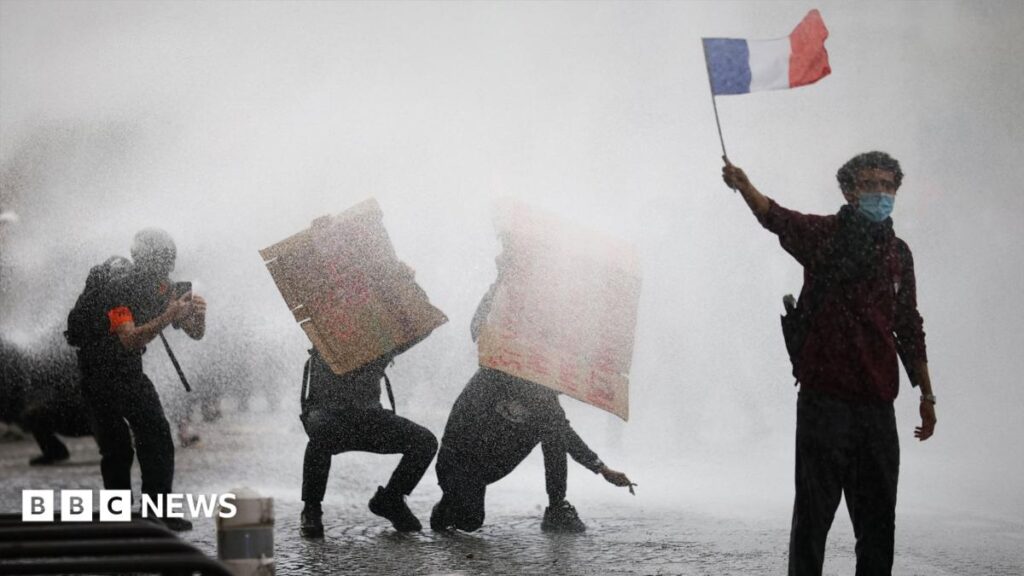
Student unrest has been a recurring feature of French politics since the famous May 1968 uprising, but the current wave is driven by a mix of rising tuition fees, cuts to university funding, and a broader cost‑of‑living crisis that has hit young people hardest. Recent strikes have seen thousands of students block campuses in Paris, Lyon and Marseille, demanding a reversal of the government's recent education reforms that tighten eligibility for scholarships and increase private-sector partnerships.
At the same time, France’s labour unions, historically powerful actors in the country’s social dialogue, have signalled their readiness to join the demonstrations. The Confederation Générale du Travail (CGT) and the French Democratic Confederation of Labour (CFDT) have warned that any attempt to ignore student grievances could spark a wider movement that threatens public order in the run‑up to the 2027 presidential election.
Prime Minister Gabriel Attal, who took office in early 2024, has repeatedly warned that protest movements are increasingly being co‑opted by political actors seeking to sway the electorate. His comments echo a broader European trend where governments accuse opposition groups of “instrumentalising” dissent for electoral gain.
What Attal said and why the claim matters
During a press briefing on October 15, Attal suggested that “some actors are deliberately amplifying student anger to create a political flashpoint before the presidential campaign.” He did not name specific organisations, but cited intelligence reports that indicate coordinated messaging on social media platforms aimed at mobilising students on particular dates that coincide with key campaign milestones.
The allegation matters because it raises the spectre of a “political echo chamber” where protest narratives are shaped not only by genuine grievances but also by campaign strategists, foreign interests, or even extremist groups. If true, it could undermine the legitimacy of the protests, give the ruling coalition a pretext to tighten security measures, and shift public attention away from the underlying issues of education funding.
Critics argue that Attal’s remarks may be a tactical move to delegitimise the unions and student bodies that have traditionally challenged his government’s reform agenda. By framing the unrest as a manipulation, the prime minister can justify a tougher police response while positioning himself as a defender of national stability ahead of the election.
African diaspora and student voices in the French debate
France hosts one of the largest African student populations in Europe, with estimates suggesting that over 200,000 students from West and Central Africa are enrolled in French universities. Many of these students are directly affected by the same tuition hikes and scholarship cuts that sparked the current protests, making the issue a flashpoint for the African diaspora community.
Student organisations such as the Association des Étudiants Africains en France (AEAF) have issued statements warning that any attempt to dismiss the protests as merely “political manipulation” ignores the lived realities of African youths who already face higher barriers to education, discrimination, and precarious immigration status. According to a survey by the African Students Union (ASU) in March 2026, 68 % of African respondents said they felt the reforms would make university access “unaffordable.”
Beyond campus, the protests could reverberate in France’s foreign policy toward Africa. Historically, French presidents have leveraged educational exchanges and scholarships as soft‑power tools in the Francophone region. A crackdown on student activism might strain those ties, especially if African governments perceive the French response as hostile to their nationals. Moreover, any escalation could fuel anti‑French sentiment in countries that already view Paris as a neo‑colonial power.
What comes next: Election stakes and possible scenarios
The 2027 presidential election is set for April 2027, with the first round expected in early spring. Opinion polls show a fragmented field, with the incumbent centrist coalition trailing behind a resurgence of the far‑right National Rally and a revitalised left‑wing coalition led by the Socialist Party. In such a tight race, any surge of street unrest could become a decisive narrative for candidates on both sides.
If the government proceeds with heightened security measures, such as expanded police powers on campuses, it could trigger a backlash that fuels the very mobilisation Attal hopes to contain. Conversely, a genuine dialogue with student representatives could defuse tensions, but would require the government to roll back at least part of the contested reforms—a move that could alienate fiscal conservatives within the ruling party.
International observers, including the European Union’s Fundamental Rights Agency, have warned that the misuse of anti‑terrorism legislation to curb peaceful protest could breach EU standards on civil liberties. Should such concerns materialise, France could face scrutiny at the European Court of Human Rights, adding another layer of complexity to an already volatile electoral landscape.
Quick Answers
Who said French student protests are being weaponised?
Prime Minister Gabriel Attal made the claim during an October 15 press briefing.
How could the protests affect African students in France?
Higher tuition fees and scholarship cuts directly impact many African students, and a crackdown could strain France‑Africa educational ties.
What impact might the protests have on the 2027 French presidential election?
The unrest could become a campaign focal point, influencing voter sentiment and prompting candidates to adopt tougher law‑and‑order or reform‑reversal stances.
Source: www.bbc.co.uk




💬 Comments 0