Gaza declared ‘toxic wasteland’ by Oxfam 2026: contamination risks and global aid implications
Background: Gaza’s environmental crisis before the latest attacks
Even before the intensification of hostilities in 2023, Gaza’s fragile ecosystem was under pressure from decades of blockade, limited waste‑management infrastructure and periodic military strikes that left behind debris, unexploded ordnance and polluted water sources. The United Nations Office for the Coordination of Humanitarian Affairs (OCHA) had repeatedly warned that the enclave’s sewage treatment plants operated at a fraction of capacity, forcing residents to rely on unsafe wells and makeshift latrines.
The 2020‑2022 COVID‑19 pandemic added another layer of strain, as international donors diverted funds to health emergencies, leaving environmental projects under‑funded. Local NGOs such as the Palestinian Environmental NGOs Network reported rising levels of heavy metals in soil samples near industrial zones, but without robust monitoring tools the data remained anecdotal. This pre‑existing vulnerability set the stage for a full‑scale ecological disaster when the latest wave of airstrikes hit.
In the months leading up to the October 2024 offensive, satellite imagery showed extensive damage to the Gaza Strip’s main desalination plant and several key agricultural fields. Analysts at the International Crisis Group noted that the loss of these assets could push food‑security indicators beyond emergency thresholds, but the focus of most media coverage remained on immediate casualties rather than long‑term environmental fallout.
Oxfam’s 2026 report – findings and methodology
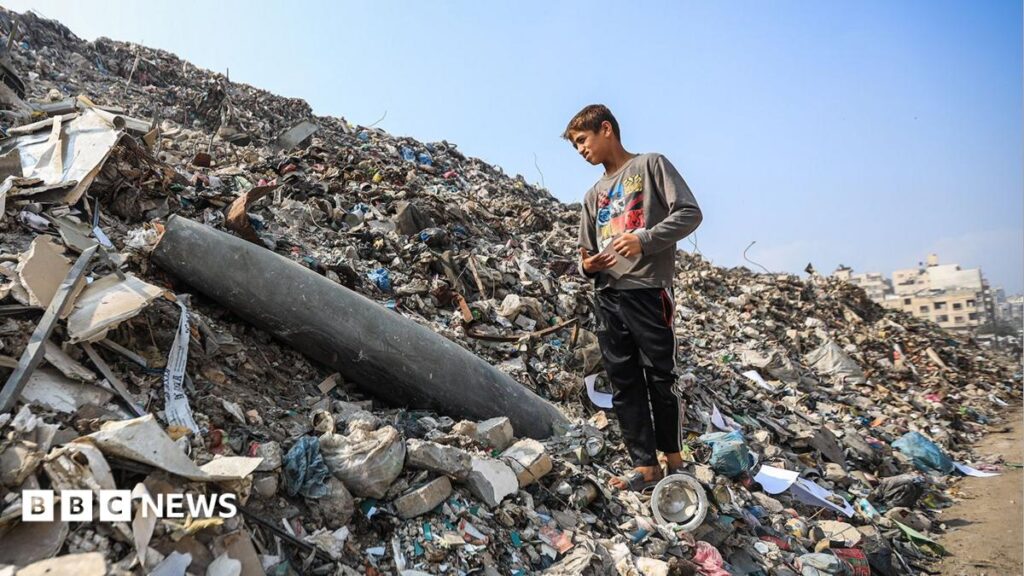
In a 120‑page briefing released on 21 November 2026, Oxfam warned that Israeli air and artillery strikes had turned large swathes of Gaza into what it termed a “toxic wasteland”. The organization combined on‑the‑ground sampling, drone‑borne spectroscopy and interviews with local health workers to map contamination hotspots. According to Oxfam, pollutants were detected in 87 % of the sites surveyed, ranging from lead and mercury to residues of explosive compounds such as TNT and RDX.
The report highlighted three main pathways of exposure: (1) airborne dust settling on homes and schools, (2) leaching of chemicals into groundwater that feeds the already over‑extracted aquifer, and (3) accumulation of hazardous waste in agricultural soils that threatens the safety of staple crops like wheat and tomatoes. Oxfam’s field team, working under the protection of UNRWA, documented that children playing in rubble were regularly coughing and showing signs of skin irritation, a pattern the agency linked to the identified toxins.
While Oxfam’s methodology has been praised for its rigor, some Israeli officials called the findings “politically motivated”. The Israeli Ministry of Defense, citing its own environmental assessment, argued that the majority of the debris consisted of conventional construction material. Nonetheless, independent scientists from the University of Nairobi, who reviewed a sample set provided by Oxfam, confirmed the presence of heavy metals at levels exceeding World Health Organization (WHO) safety limits.
Why the contamination matters: health, food security and regional spill‑over
The immediate health implications are stark. WHO estimates that exposure to lead concentrations above 10 µg/dL can cause irreversible cognitive damage in children, and Oxfam’s data suggest that many Gaza neighborhoods now exceed that threshold. Chronic exposure to mercury and explosive residues also raises the risk of cancers and respiratory diseases, potentially adding a long‑term burden to an already overstretched health system that has lost half of its hospitals.
Food security is equally at risk. Gaza’s agricultural output already accounts for roughly 15 % of its domestic food supply; contamination of soil could render large tracts of farmland unsuitable for cultivation. The Oxfam report warned that if remediation does not begin within the next two years, up to 40 % of the enclave’s produce could be unsafe for consumption, forcing reliance on imported food aid that is already constrained by the blockade.
Perhaps more concerning for neighboring states is the potential for cross‑border environmental spill‑over. The Gaza aquifer underlies parts of southern Israel and the Sinai Peninsula, and pollutants can travel through underground water channels. Experts from Egypt’s Ministry of Water Resources have expressed alarm that contaminated runoff could reach the Mediterranean coast, affecting fisheries that employ thousands of Egyptian and Palestinian workers.
African and diaspora dimensions: aid, activism and geopolitical stakes
African humanitarian actors are now confronting a new set of challenges in Gaza. Organizations such as Nigeria’s Red Cross Society and Kenya’s Oxfam branch have pledged additional funding for emergency water‑purification kits, but they also face donor fatigue after years of responding to crises in the Sahel and the Horn of Africa. The Oxfam report has spurred calls from African diaspora groups in the United States and Europe to lobby their governments for a “toxic‑wasteland” designation that would unlock targeted environmental assistance.
The contamination issue also intersects with broader African geopolitical interests. The African Union (AU) has historically supported Palestinian self‑determination, and its 2025 resolution on “environmental justice in conflict zones” now cites Gaza as a case study. If the AU pushes for an international investigation, it could set a precedent for future African‑led inquiries into environmental damage caused by warfare, echoing similar efforts in the Democratic Republic of Congo’s eastern provinces.
From a market perspective, the crisis may affect African exporters of construction materials and chemicals that have contracts in the region. Companies based in South Africa and Egypt that supply cement, steel and remediation chemicals are watching the situation closely, as sanctions or procurement freezes could disrupt supply chains. Conversely, a surge in demand for decontamination technology could open new business opportunities for African firms specializing in low‑cost water‑treatment solutions.
What’s next: policy options, reconstruction challenges and monitoring
Internationally, the Oxfam report has reignited debate over the legal status of environmental damage in armed conflict. Human rights lawyers argue that the Geneva Conventions already consider deliberate contamination a war crime, and they are urging the International Criminal Court to open a preliminary examination. Meanwhile, the United Nations Environment Programme (UNEP) has offered to lead a joint monitoring mission, but its mandate depends on the cooperation of both Israeli and Palestinian authorities—a hurdle that has stalled similar initiatives in the past.
On the ground, the path to remediation is fraught with logistical and political obstacles. Rebuilding Gaza’s water infrastructure will require billions of dollars, and donors are split between immediate humanitarian relief and long‑term environmental restoration. Oxfam recommends a phased approach: first, rapid deployment of portable air‑filtration units for schools; second, safe removal and containment of unexploded ordnance; and third, a comprehensive soil‑remediation program using phytoremediation techniques that African research institutes have pioneered.
For African observers, the key takeaway is that environmental devastation is increasingly becoming a front‑line weapon in modern warfare, with consequences that ripple far beyond the immediate theater. Monitoring mechanisms that integrate satellite data, local expertise and African scientific capacity could become a model for future conflict‑environment assessments, ensuring that the “toxic wasteland” label translates into concrete, accountable action rather than rhetorical condemnation.
Quick Answers
What pollutants did Oxfam find in Gaza?
Oxfam detected lead, mercury, TNT, RDX and other heavy metals in 87 % of sampled sites, exceeding WHO safety limits.
How could Gaza’s contamination affect neighboring countries?
Contaminated groundwater can flow into southern Israel and the Sinai, while runoff may reach the Mediterranean, threatening fisheries and water supplies in Egypt.
What role are African organizations playing in the Gaza crisis?
African NGOs are providing water‑purification aid, diaspora groups are lobbying for international investigations, and the AU is using the case to push for broader environmental‑justice mechanisms.
Source: www.bbc.co.uk




💬 Comments 0