German student strike over new voluntary military service law sparks fears of conscription, 2026 protests
A new defence agenda after Ukraine
Since Russia’s invasion of Ukraine in 2022, Berlin has dramatically reshaped its defence posture, abandoning the post‑Cold War self‑image of a nation that relies on diplomatic soft power. In late 2025 the Bundestag passed a law that introduced a voluntary military service programme for citizens aged 18‑30, allowing them to sign up for six‑month stints in the Bundeswehr without a career commitment.
The legislation was framed as a way to broaden the pool of trained reservists while keeping the principle of conscription, abolished in 2011, firmly out of reach. Government officials, including Defence Minister Boris Pistorius, argued that a modern, volunteer‑based force would better match Germany’s NATO obligations and the growing demand for troops in overseas missions.
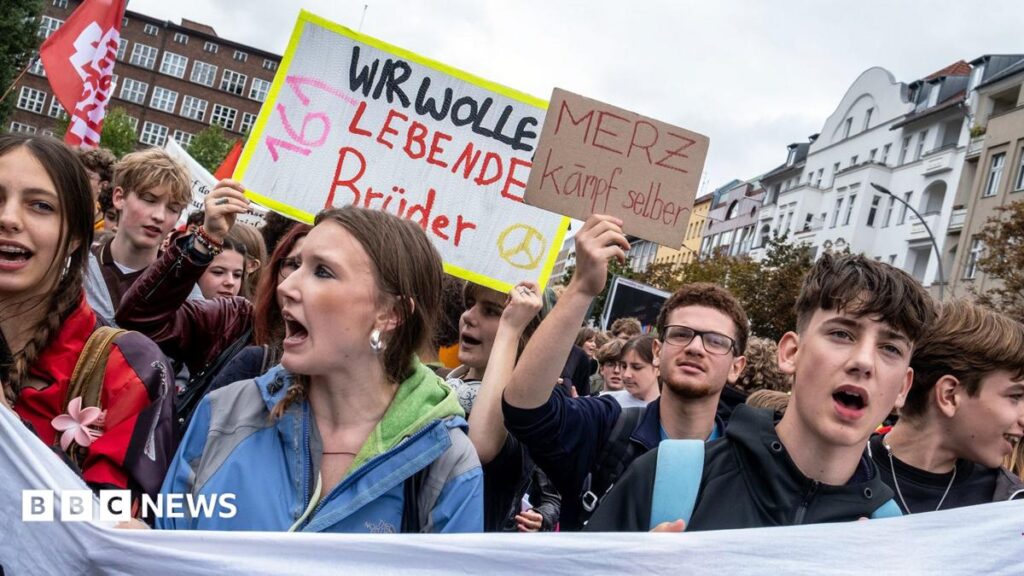
Students take to the streets
On 24 September 2026, university campuses in Berlin, Munich, Hamburg and several smaller towns saw coordinated walk‑outs. Roughly 12,000 students, many of them members of the nationwide student union (Ver.di‑Studierenden), gathered outside parliamentary buildings holding banners that read “No draft, no war” and “Voluntary service, not compulsory duty”.
Organisers, led by student activist Lena Schreiber of the Berlin University of the Arts, warned that the voluntary scheme could be a stepping‑stone toward reinstating compulsory service. They demanded a legal safeguard that would permanently ban any future draft, as well as greater investment in civilian alternatives such as civil defence and climate‑related national service.
Why the protest matters beyond campus walls
The strike highlights a deeper societal rift: a younger generation that grew up with a Europe focused on climate and digital innovation now confronts a security narrative that leans toward militarisation. If Germany were to re‑introduce conscription, it would affect not only students but also the broader labour market, potentially pulling young professionals away from critical sectors like renewable energy and tech.
For the sizable African diaspora in Germany—estimated at over 1.5 million people—this debate carries personal stakes. Many diaspora youths are enrolled in German universities and would be subject to the same service rules. Community leaders fear that a draft could complicate the already fragile integration process, especially for those holding dual citizenship or temporary residency.
European defence trends and African security links
Germany’s move sits within a wider European trend of bolstering armed forces after 2022, with France, Italy and the Netherlands all expanding conscription‑like programmes. This shift has repercussions for Africa, where German defence firms such as Rheinmetall and Krauss‑Maffei Wegmann dominate the market for armored vehicles and drones.
Arms sales to African states—including Kenya, Nigeria and the Democratic Republic of Congo—have risen by roughly 18 % over the past two years, according to a 2026 report by the Stockholm International Peace Research Institute. A larger, more combat‑ready German military could translate into deeper training partnerships and joint exercises on the continent, raising concerns among human‑rights groups about the export of German weaponry to conflict zones.
Political and civil‑society reactions
The governing coalition responded cautiously. Chancellor Olaf Scholz reiterated that the voluntary scheme is “strictly optional” and promised a parliamentary review before any draft could be considered. Opposition parties, notably the Greens and the Left, welcomed the student protests and called for a constitutional amendment to enshrine the abolition of conscription.
Civil‑society organisations, including the German Peace Council and several African student associations, issued joint statements. They argued that security should be pursued through diplomatic channels and development aid rather than expanding the military footprint. A spokesperson for the Nigerian Students in Germany (NSG) said the community would monitor the law’s implementation closely, fearing that a draft could deter future African students from studying in Germany.
What could happen next?
Legal experts predict that any attempt to re‑introduce compulsory service would face constitutional challenges, as the German Basic Law explicitly protects personal freedom of choice regarding military service. A court case is already being prepared by a coalition of student unions, citing the 2011 abolition as a binding precedent.
Meanwhile, activist groups have scheduled a second wave of demonstrations for early November, aiming to pressure the Bundestag into passing a “no‑draft” clause before the next budget cycle. If successful, the clause could become a symbolic safeguard that reassures both German youths and the African diaspora that military obligations will remain a matter of personal choice.
Quick Answers
What is the voluntary military service law passed in Germany in 2026?
The law, enacted in January 2026, allows citizens aged 18‑30 to sign up for six‑month voluntary service in the Bundeswehr without a long‑term commitment.
Why are German students protesting the new military service law?
Students fear the voluntary scheme could be a prelude to reinstating compulsory conscription, which they argue would limit personal freedom and divert talent from civilian sectors.
How might the German defence policy shift affect African diaspora students?
If a draft is introduced, African diaspora youths studying in Germany could be required to serve, complicating their integration and potentially discouraging future enrolment.
Source: www.bbc.co.uk




💬 Comments 0