Hebron home demolitions displace Palestinian families after soldiers killed, Oct 2026
Background: a pattern of punitive demolitions
Since the early 2000s, Israel has repeatedly used the demolition of Palestinian homes as a punitive measure following attacks on its soldiers or civilians. The practice is justified by the Israeli military as a deterrent, but human‑rights groups such as B'Tselem and Amnesty International argue it violates international law and deepens resentment among Palestinians. In the West Bank, Hebron remains a flashpoint because it houses a dense mix of Israeli settlers and Palestinian residents, making any security operation highly visible and politically charged.
Hebron’s Old City, a UNESCO World Heritage site, has seen more than 200 demolitions since 2000, according to the United Nations Office for the Coordination of Humanitarian Affairs (OCHA). The demolitions often target houses deemed to have been built without permits – permits that are virtually impossible for Palestinians to obtain under the current planning regime. This creates a cycle where loss of shelter fuels anger, which in turn fuels further violence.
The October 2026 incident: what happened on the ground
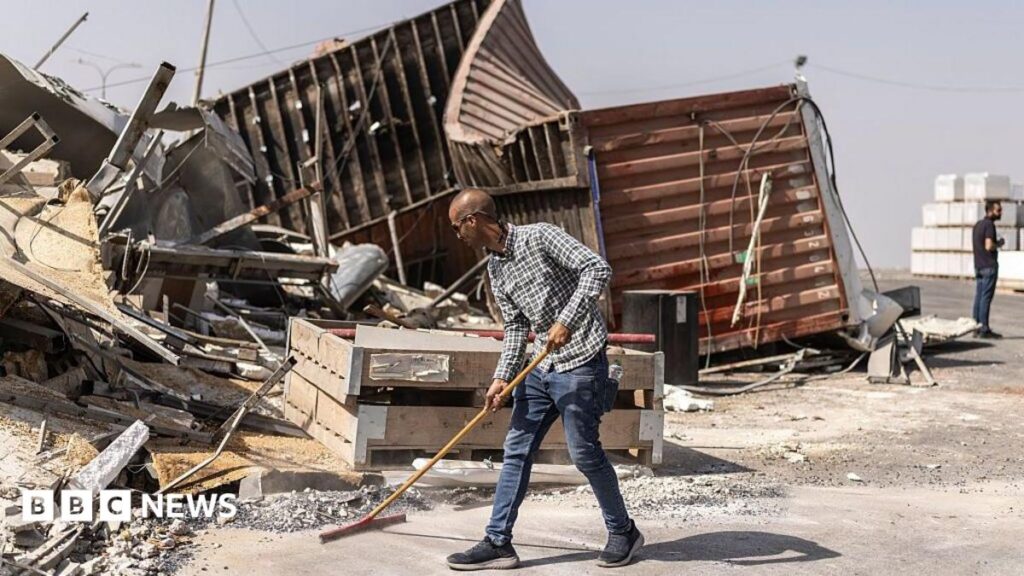
On Friday, two Israeli soldiers were shot dead by two Palestinian gunmen near the Hebron settlement of Kiryat Arba. Israeli forces responded with a rapid security sweep, entering several Palestinian neighborhoods and ordering residents to evacuate. Within hours, demolition crews began tearing down three adjacent homes in the al‑Khalil district, rendering at least six families homeless, according to statements from the Palestinian Ministry of Interior.
Eyewitnesses reported that demolition crews worked under a heavy military presence, using bulldozers and heavy machinery while soldiers blocked any attempt by residents to intervene. The Israeli army released a brief statement saying the demolitions were “a necessary response to terrorist attacks that threaten the safety of our soldiers.” No official figure on the total number of displaced persons has been published yet, but local NGOs estimate the immediate humanitarian need to be around 30 individuals.
Why it matters: security, politics and the peace process
The timing of the operation is crucial. Israel is slated to hold a national election on 2 November 2026, and the ruling coalition is using a hard‑line security narrative to rally its base. By framing the demolitions as a direct retaliation, the government hopes to portray itself as decisive against terrorism, a message that resonates with voters in both Jewish and settler communities.
However, the demolitions risk inflaming an already volatile environment. Palestinian leadership, including President Mahmoud Abbas, condemned the action as “collective punishment” and warned of a broader escalation. International mediators fear that such moves could derail any renewed talks on a two‑state solution, especially after the United Nations warned that the West Bank’s humanitarian situation is nearing a crisis point.
African angle: diaspora, diplomacy and economic ripple effects
While the conflict is often framed as an Israeli‑Palestinian issue, it also touches African interests. Israel hosts a sizable community of African migrants, primarily from Eritrea, Sudan and Ethiopia, many of whom live in precarious legal status. The heightened security clampdown in Hebron has prompted Israeli authorities to increase checkpoints and raids in other parts of the West Bank, which sometimes spill over into areas where African migrants work as laborers. According to a report by the African Union’s Humanitarian Office, incidents of harassment against African migrants have risen by 12% in the past month.
On the diplomatic front, several African Union member states, including South Africa and Kenya, have issued statements calling for restraint and an end to punitive demolitions. South Africa’s Department of International Relations and Cooperation cited the demolitions as “contrary to international law and detrimental to regional stability.” These statements, while largely symbolic, signal a growing willingness of African nations to engage more directly in Middle‑East peace advocacy, a shift from the traditionally muted stance of many African governments.
Economically, Israel’s tech sector – a key partner for many African startups seeking venture capital or market access – could feel indirect pressure. Investors often watch political stability as a risk metric; the escalation ahead of the election may cause a short‑term slowdown in cross‑border funding flows. African tech hubs in Nairobi and Lagos, which have cultivated partnerships with Israeli firms, could see delayed deals or reduced mentorship programs as Israeli investors adopt a more cautious posture.
What’s next: possible scenarios and international response
In the immediate term, humanitarian agencies are scrambling to provide temporary shelter for the displaced families. The United Nations Relief and Works Agency (UNRWA) has pledged emergency tents and food parcels, while local NGOs are organizing cash‑for‑work programmes to help residents rebuild. The Israeli military has not announced a pause to the demolitions, but pressure from the United States and the European Union – both of which have warned that excessive force could jeopardise diplomatic talks – may force a temporary halt.
Looking ahead, the election results will shape Israel’s security policy for the next four years. If a hard‑line coalition wins, further demolition orders and settlement expansion could become more frequent, deepening the humanitarian crisis. Conversely, a centrist or left‑leaning government might pursue a de‑escalation strategy, potentially reopening channels for dialogue. For African stakeholders, the outcome will influence everything from migrant treatment to the stability of tech collaborations, making the upcoming weeks a critical window for advocacy and diplomatic engagement.
Quick Answers
How many Palestinian families were displaced by the Hebron demolitions in October 2026?
At least six families, roughly 30 individuals, were reported to have lost their homes after the demolition of three houses.
What triggered the Israeli demolition of homes in Hebron?
The demolition was carried out as a punitive response to the killing of two Israeli soldiers by Palestinian gunmen on the same day.
When is Israel's next national election scheduled?
Israel's national election is set for 2 November 2026.
Source: www.bbc.co.uk




💬 Comments 0