Paris protests erupt with fireworks and tear gas as police clash – Nick Beake reports, June 2026
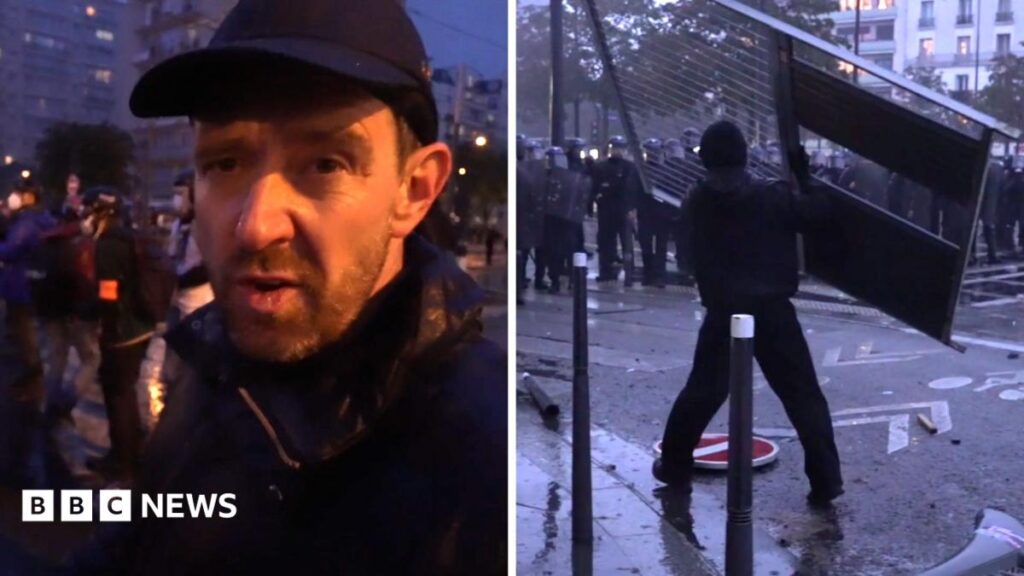
Background: why Paris streets boiled over
The unrest in Paris traces its roots to a series of pension reform bills that the French government pushed through in early 2026. Workers across the country, from railway unions to teachers, argued that the changes would raise the retirement age and erode hard‑won benefits, sparking weeks of organized strikes and demonstrations.
Beyond the pension issue, a growing sense of frustration over perceived police heavy‑handedness added fuel to the fire. Last month, a high‑profile case of alleged police brutality in Marseille ignited protests nationwide, with activists demanding clearer accountability mechanisms.
Against this backdrop, the French capital became a focal point for a coalition of unions, left‑wing parties, and grassroots groups. They scheduled a large rally for the evening of June 24, hoping to pressure President Emmanuel Macron’s administration before the upcoming municipal elections in November.
The night of fireworks and tear gas
What began as a largely peaceful march along the Champs‑Élysées took a sharp turn after dark. According to Europe correspondent Nick Beake, a handful of demonstrators ignited fireworks near the Place de la Concorde, prompting a swift response from riot police who deployed tear‑gas canisters to disperse the crowd.
Witnesses reported that the tear‑gas clouds lingered for several minutes, forcing protesters to retreat into the surrounding streets. Some participants retaliated with makeshift projectiles, while others shouted slogans demanding the resignation of the interior minister, a move that underscored the intensity of the anger on the ground.
Police officials later released a statement saying they used “proportionate force” to protect public order and that the deployment of tear gas was a “necessary measure” after the fireworks escalated into a public safety threat.
Why the clash matters for Europe and beyond
The Paris episode is more than a local flashpoint; it signals a broader strain on the European social contract. Economists warn that repeated disruptions to transport and commerce could dent France’s already fragile post‑pandemic recovery, especially as the country battles high inflation and energy price volatility.
Politically, the incident arrives at a delicate moment for President Macron, whose centrist platform is being squeezed between a resurgent far‑right and a revitalised left. The unrest may force the administration to reconsider its reform timetable, or risk alienating moderate voters ahead of the municipal polls.
Security experts also note that the tactics employed by French police—particularly the use of tear gas in densely populated urban areas—are being watched closely by other European nations grappling with their own protest movements. The episode could set a precedent for how governments balance civil liberties with crowd‑control imperatives.
African diaspora in Paris feels the ripple
Paris is home to one of the largest African diaspora communities in Europe, with sizable populations from Senegal, Mali, Côte d’Ivoire and the Democratic Republic of Congo. For many in these communities, the police response reignited memories of past confrontations, such as the 2005 riots in the banlieues that disproportionately affected residents of African descent.
Community leaders, speaking to local media, expressed concern that the heavy‑handed police tactics could deepen mistrust between African‑origin residents and law‑enforcement agencies. They called for dialogue and for the government to invest in community‑based policing models that reflect the multicultural reality of the city.
At the same time, several African‑French cultural groups used the protest platform to highlight issues like unemployment and discrimination that disproportionately affect their members. By linking pension reforms to broader socioeconomic grievances, they aimed to ensure that the African voice remains part of the national conversation.
A pattern emerging across the continent
The Paris unrest mirrors a wave of demonstrations that have swept through major European capitals this summer, from Brussels to Berlin. In each case, a mix of labor grievances, climate activism, and anti‑police sentiment has converged, creating a volatile mix that authorities are still learning to manage.
For African migrants and students studying in Europe, the pattern raises practical concerns. Travel disruptions, heightened police scrutiny, and the potential for sudden curfews can affect their daily lives and academic schedules. Moreover, the growing visibility of African‑led protest narratives may empower diaspora activists to push for policy changes both at home and abroad.
Observers suggest that the convergence of economic discontent and policing debates could reshape European politics for the next decade. If governments fail to address the root causes—particularly the socioeconomic marginalisation of immigrant communities—future protests may become more frequent and less predictable.
What comes next: government, unions and the streets
In the immediate aftermath, the French interior ministry announced a review of the police’s crowd‑control protocols, pledging greater transparency about the deployment of tear gas. Simultaneously, union leaders have scheduled another mass rally for early July, signaling that the mobilisation is far from over.
Analysts predict that the government may seek a compromise on the pension bill, perhaps by softening the retirement age increase or adding transitional safeguards for low‑income workers. Such a move could defuse tension, but it also risks emboldening other protest movements seeking concessions on unrelated issues.
For the African diaspora, the next steps will likely involve intensified community organising, with NGOs and cultural groups planning forums to discuss policing reforms and socioeconomic integration. Their engagement could shape how Paris—and by extension, other European cities—navigate the delicate balance between security and inclusion.
Quick Answers
What sparked the Paris protests on June 24, 2026?
The demonstrations were triggered by controversial pension reform bills that would raise the retirement age, combined with growing anger over recent police‑brutality allegations.
Who were the main groups involved in the clashes with police?
The clashes involved a coalition of labor unions, left‑wing activists, and African‑French community organisations confronting riot police.
What is the French government’s next move after the unrest?
The interior ministry promised a review of crowd‑control tactics, while the executive is under pressure to amend the pension reforms before the November municipal elections.
Source: www.bbc.co.uk




💬 Comments 0