Ghana bans pastors preaching on public buses from 2027, ending a 30‑year tradition
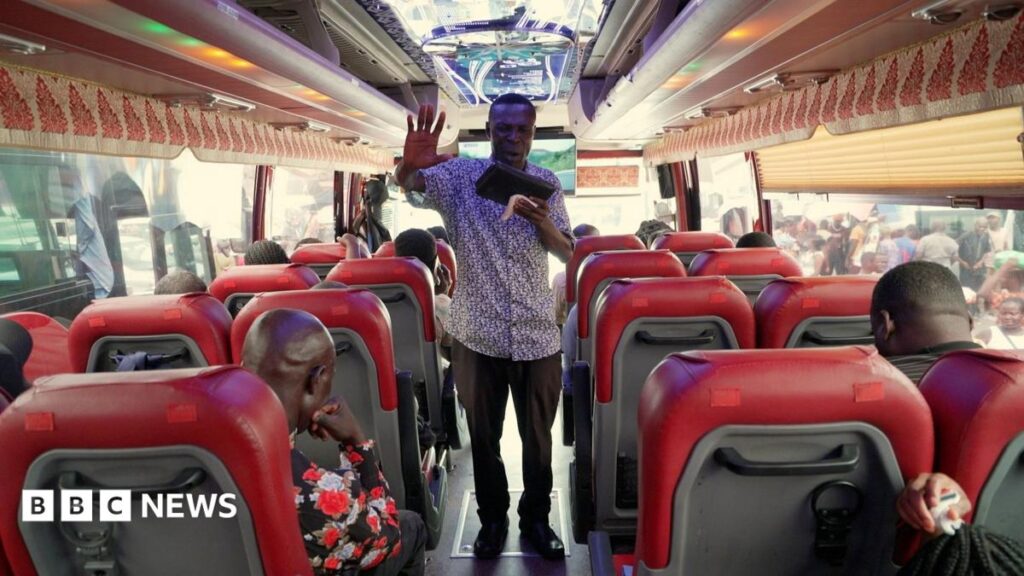
Faith on the move: how bus preaching became Ghana's daily soundtrack
For three decades the hum of diesel engines has been punctuated by the booming voices of pastors delivering sermons on the back of minibuses, known locally as “trotros”. The practice began in the early 1990s when clergy saw the crowded commuter routes as free‑to‑air pulpits that could reach people who rarely set foot in a church.
The sermons are typically short, ranging from a quick biblical proverb to a full‑blown exhortation about morality, politics, or personal prosperity. They are broadcast through loudspeakers mounted on the vehicle, and many drivers even pause at traffic lights to let the pastor finish a point before moving on.
A 2022 survey by the Ghana Institute of Public Opinion found that 68% of regular commuters recognised at least one pastor by name, and 42% said the messages sometimes influenced their daily decisions, from voting choices to financial planning. The phenomenon has therefore become a cultural fixture as much as a religious one.
The new rule: Transport Authority moves to curb on‑board preaching
In March 2026 the Ghana Highway Authority announced a draft regulation that would prohibit any non‑transport‑related audio broadcasting on commercial vehicles, citing safety concerns and the need to keep public spaces secular. The draft mandates that all loudspeakers be disabled during passenger pick‑up and drop‑off, with a compliance deadline of 31 December 2026.
Transport Minister Kwame Asiedu confirmed that the rule will be enforced through random inspections and fines of up to GHS 5,000 per violation. He argued that the constant noise interferes with drivers’ concentration and that the state must protect commuters who may not wish to be part of a religious service while traveling.
The regulation also aligns Ghana with a broader African trend of formalising public‑space usage. Similar policies have already been enacted in Kenya’s Nairobi County, where city officials banned “street preaching” on matatus in 2024 after complaints of noise pollution and discrimination.
Why it matters: public space, secularism, and the economics of preaching
Bus preaching sits at the intersection of three contested domains: freedom of religion, the commercial use of public transport, and the right to a quiet environment. By classifying sermons as “commercial advertising”, the Authority frames the practice as an unlicensed use of a transport service, a stance that could set legal precedent for other forms of on‑board messaging.
The move also raises questions about Ghana’s constitutional guarantee of religious freedom. Legal scholars at the University of Ghana note that while the constitution protects the right to practice faith, it does not guarantee the right to broadcast it in a shared, commercial space without consent from the operator or regulator.
Economically, many pastors earn a modest income from the exposure they receive on busy routes, which drives attendance at their churches and boosts sales of books and recordings. A 2025 report by the Ghana Evangelical Council estimated that bus preaching contributed roughly GHS 12 million annually to the religious‑media market, a figure that will evaporate if the ban is enforced.
A wider African pattern: state control of street ministry
Ghana’s crackdown is part of a growing pattern across sub‑Saharan Africa where governments are redefining the limits of religious expression in public. In South Africa, the Johannesburg municipality introduced a “noise curfew” for street preachers in 2023, while Nigeria’s Lagos State began issuing permits for any amplified religious activity in 2025.
These policies often emerge from urban planning concerns: rapid city growth creates denser traffic, louder environments, and more competing claims for auditory space. At the same time, they reflect a subtle shift toward secular governance that seeks to treat all faiths equally by removing overt religious messaging from state‑controlled infrastructure.
Critics argue that the regulations disproportionately target Christian ministries because they dominate the bus‑preaching scene, leaving smaller faith groups without a platform. Conversely, supporters claim that a neutral, secular public sphere protects minority religions from being drowned out by louder, more organised churches.
Reactions on the ground: pastors, commuters and civil society weigh in
Pastors have responded with a mixture of defiance and adaptation. Rev. Samuel Osei of the Grace Fellowship Network warned that “silencing the bus is silencing the people who cannot afford a church seat”, and announced plans to livestream sermons on WhatsApp groups that already serve many commuters.
Commuters themselves are split. A focus group organised by the Ghana Consumer Rights Association found that 55% of respondents welcomed the quieter rides, while 30% felt the sermons provided moral guidance that they would miss. Younger riders, who are more likely to stream content on their phones, tended to favour the ban.
Human‑rights NGOs such as the Ghana Centre for Democratic Development have filed a petition with the High Court, arguing that the regulation infringes on Article 21 of the Ghanaian Constitution. The case is expected to be heard in early 2027, potentially delaying enforcement.
What comes next: digital evangelism and new public‑space strategies
If the ban takes effect, many ministries are already pivoting to digital channels. Data from mobile‑network operator MTN shows that religious streaming traffic on Ghanaian networks grew by 28% in 2025, a trend that is likely to accelerate as pastors seek to replace the lost bus audience.
Some churches are also exploring partnerships with transport companies to create “faith‑friendly” zones inside larger buses, where a designated area can host a low‑volume audio system with passengers’ consent. Such models echo experiments in Tanzania, where a limited‑time “quiet prayer car” was trialled on Dar es Salaam’s BRT line in 2024.
Ultimately, the debate may push Ghanaian society to rethink how religion engages with everyday life. Whether through smartphones, community radio, or re‑imagined public‑space arrangements, the spirit of bus preaching is likely to survive, albeit in a format that reflects the country’s evolving urban landscape.
Quick Answers
When will Ghana’s ban on bus preaching take effect?
The regulation is slated to be enforced from 1 January 2027, after a compliance period that ends on 31 December 2026.
Why is the Ghanaian government restricting sermons on public transport?
Officials say the move aims to improve road safety, reduce noise pollution, and keep public spaces neutral for all commuters.
How are pastors planning to reach commuters after the ban?
Many are shifting to digital platforms like WhatsApp, YouTube, and livestream services, while some are negotiating limited‑audio zones with bus operators.
Source: www.bbc.co.uk




💬 Comments 0