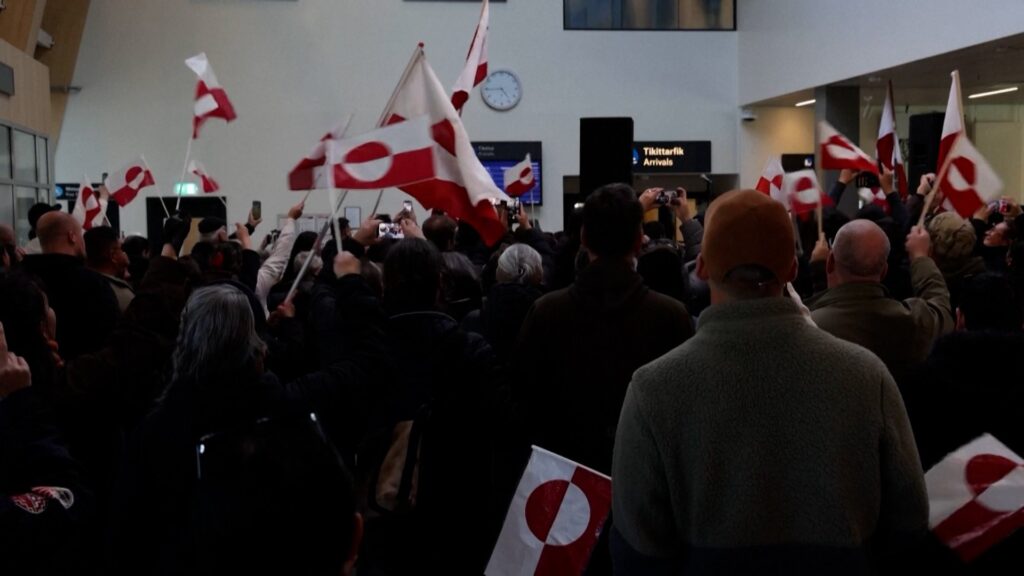
Greenland delegation receives hero’s welcome after signing US‑Denmark defense pact, 2026
Background: The strategic shift in the Arctic
The Arctic has moved from a remote frontier to a geopolitical hotspot, driven by melting ice that opens new shipping lanes and exposes untapped mineral deposits. Over the past decade, the United States, Denmark, and other NATO members have pushed for stronger defense cooperation to safeguard these emerging interests.
Greenland, an autonomous territory within the Kingdom of Denmark, hosts the United States' Thule Air Base, the northernmost American military installation. The base is critical for early‑warning missile detection and satellite communications, making Greenland a linchpin in NATO's northern defense architecture.
In early September 2026, a delegation led by Greenlandic Premier Múte Bourup Egede traveled to Washington and Copenhagen to negotiate a trilateral agreement that updates the 2019 defense framework. The new pact expands joint exercises, modernises infrastructure, and includes provisions for climate‑resilient operations.
What the pact actually says
The three‑year agreement outlines a $1.2 billion investment in Greenland’s infrastructure, split between runway upgrades, renewable‑energy upgrades for military installations, and a new Arctic‑research hub that will be co‑funded by Denmark and the United States.
A key clause allows the United States to station additional surveillance drones on Greenlandic soil, subject to Greenland’s consent and a joint oversight board. This provision is meant to replace aging radar systems with satellite‑linked drones that can operate in extreme weather, according to the U.S. Department of Defense press release.
The pact also contains a civilian component: a scholarship program for Greenlandic students to study engineering and climate science in the United States and Denmark, and a joint venture to explore rare‑earth mining in the Kangerlussuaq region, which has attracted interest from European and Asian firms.
Why it matters for Africa and the global south
African nations are watching the Arctic closely because the same rare‑earth elements that are now being mapped in Greenland are also present in African mining belts, especially in the Democratic Republic of Congo and Tanzania. The new Greenland pact signals a willingness by the West to secure supply chains for critical minerals, a move that could reshape global trade routes and pricing.
South Africa, which chairs the Arctic Council’s observer group, has repeatedly warned that climate‑driven Arctic development must not repeat the extractive mistakes made in Africa. The inclusion of a climate‑resilience clause in the Greenland agreement is therefore seen as a test case for how the West might balance security, resource extraction, and environmental stewardship in other regions.
Furthermore, the scholarship and research components create pathways for Greenlandic scholars to collaborate with African universities on climate‑adaptation technologies. Partnerships are already being explored between the University of Greenland and the University of Nairobi on permafrost monitoring, a field that has parallels in high‑altitude African ecosystems.
Reactions at home and abroad
Back in Nuuk, the capital, thousands gathered at the airport to greet the delegation, waving Danish flags and chanting “Kalaallit Nunaat first!” The hero’s welcome reflects a surge in Greenlandic nationalism that has grown since the 2021 independence referendum, according to local media reports.
In Copenhagen, Danish Foreign Minister Lars Løkke Rasmussen praised the pact as “a milestone for a secure, sustainable Arctic,” while critics in the Danish Parliament warned that the agreement could entangle Denmark in U.S. strategic competition with China, especially as Beijing has been courting Greenlandic mining firms.
The United States’ ambassador to Denmark, James P. Clements, highlighted the pact as part of a broader “Indo‑Pacific‑Arctic” strategy, linking security in the far north to naval deployments in the South China Sea. Analysts at the Brookings Institution noted that the agreement may serve as a template for similar trilateral deals with other Arctic territories, such as Canada’s Nunavut.
What comes next: Implementation and potential flashpoints
The next six months will see the formation of a joint oversight board, composed of representatives from Greenland, Denmark, and the United States. This board is tasked with approving infrastructure projects and monitoring the environmental impact of any new mining activities, a process that NGOs say must be transparent to avoid past mistakes in the Arctic.
If the drone surveillance component is approved, it could provoke a diplomatic response from Russia, which has repeatedly accused NATO of militarising the Arctic. Russian officials have already issued a statement calling the pact “a provocation that destabilises the region,” according to Sputnik news.
For African stakeholders, the real test will be whether the climate‑focused clauses become a genuine model for resource extraction elsewhere. Observers from the African Union’s Department of Economic Affairs plan to attend the first oversight board meeting in early 2027 to assess whether the Greenland agreement can inform similar frameworks for African mining projects.
Quick Answers
What are the main components of the US‑Denmark‑Greenland defense pact signed in 2026?
The pact includes $1.2 billion for infrastructure upgrades, permission for U.S. surveillance drones, a joint Arctic‑research hub, and a scholarship program for Greenlandic students.
How could the Greenland agreement affect African countries?
It signals Western interest in securing rare‑earth supply chains, which may influence trade and investment in African mineral‑rich nations and offers a climate‑focused model for future African mining deals.
When will the joint oversight board for the pact be established?
The board is expected to be formed within the next six months, with its first meeting slated for early 2027.
Source: www.aljazeera.com




💬 Comments 0